Startups
VIDEO: Conquering Deep Tech from Saudi’s Eastern Province

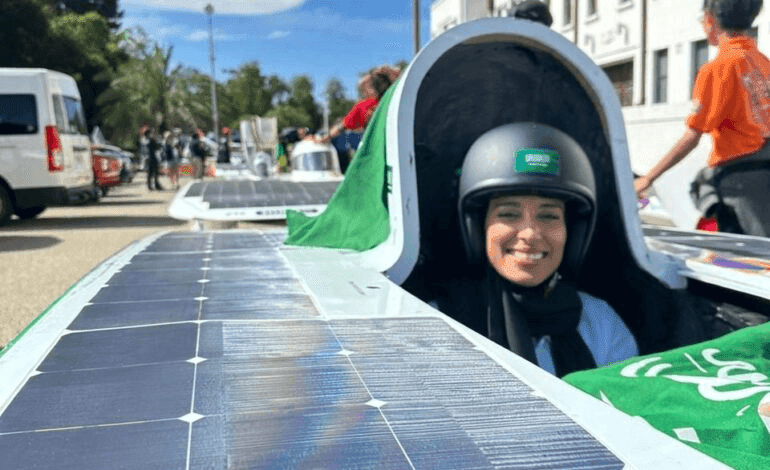
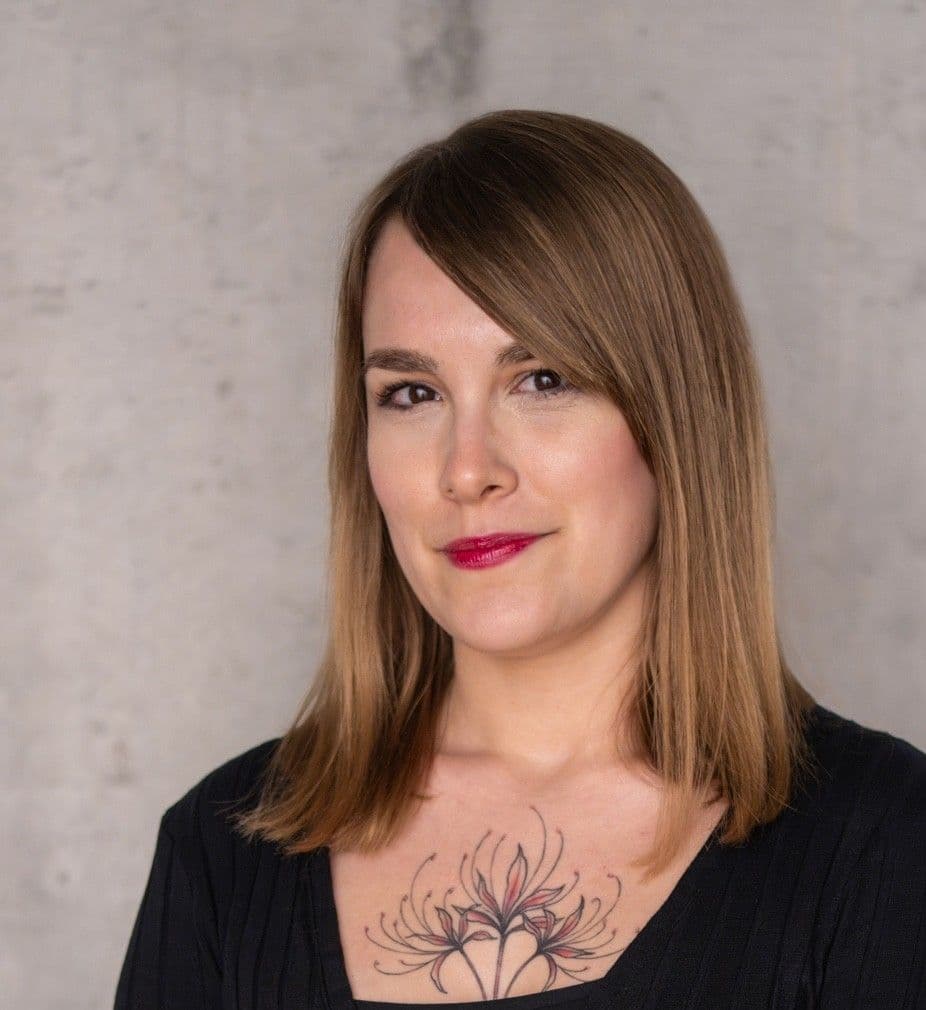
When Srrah Algheithy sat down with The Next Big Thing podcast in Dhahran, she shared a journey defined by risk-taking, resilience, and relentless curiosity.
When Srrah Algheithy sat down with The Next Big Thing podcast in Dhahran, she shared a journey defined by risk-taking, resilience, and relentless curiosity. From studying electrical engineering abroad in a male-dominated field, to managing data centres at Saudi Aramco, to racing solar cars across the Australian desert — her career has been anything but ordinary.
Today, as CEO and co-founder of Sustainable Innovations , she is tackling her greatest challenge yet: bridging the gap between academia and industry, and ensuring that Saudi Arabia’s homegrown innovations compete with the world.
Algheithy’s story begins with a bold choice: studying electrical engineering abroad. “I never really had a passion for engineering,” she admitted during the interview. “But I liked challenges. Even in school, my physics teacher used to tell me I always got the difficult questions right and the simple ones wrong. That sums up why I took on engineering and later deep tech — I enjoy what’s difficult and new.”
Her decision to leave Saudi Arabia for her studies was more than an academic pursuit; it was a crash course in independence. “At first, I thought studying abroad was just about getting a competitive edge. But what I really learned was independence — financial responsibility, accountability, prioritising myself. Those skills shaped how I approached entrepreneurship later on,” she explained.
Upon returning home, Algheithy joined Saudi Aramco through a scholarship programme, working across various technical roles from engineering to data centre management. Each step took her deeper into the operational and innovation sides of technology. “I always wanted to get back to hands-on development,” she recalled. “Managing data centres gave me that operational perspective, and volunteering in renewable energy projects like solar racing cars opened doors to innovation.”
That volunteer work led her to Sustainable Innovations , a hard-tech product development company founded in 2017. Initially joining as a volunteer on a solar car project, Algheithy soon became a co-founder. The turning point came during the grueling World Solar Challenge in Australia, a 3,000-kilometre test of endurance and engineering.
“Driving a solar-powered car across the Australian desert was unlike anything else. On paper, the tech seems straightforward, but in reality, temperatures hit 100 degrees Celsius and failures can be catastrophic. One team’s battery even caught fire,” she recounted. “It was a race of innovation, not just speed. That experience made us realise: if you don’t own your technology, there’s nothing you can do when things go wrong. That’s why Sustainable Innovations is built on developing and owning our tech.”
Her company’s name reflects its vision. “People hear ‘Sustainable Innovations’ and think it’s just about being green,” she said. “But for us, it means creating technologies that are self-sustaining, scalable, and globally competitive. Our mission is to maximise the impact of Saudi’s knowledge-based economy.”
Sustainable Innovations focuses on bridging what Algheithy calls the tech death valley — the gap where prototypes fail to make it to market. “This is where most technologies die,” she explained. “We provide product development and venture-building services to help prototypes survive that transition into scalable, market-ready solutions.”
Projects range from carbon offset management systems to defence-grade carbon fibre boats — all developed with market competitiveness in mind. “We don’t just innovate for the sake of innovation,” she noted. “We look at the market need and scalability potential. Can this product transition into a new market easily? That’s how we decide where to invest.”
While deep tech is difficult globally, the regional challenges add extra layers. “Deep tech is always risky, but in Saudi, we face additional hurdles. Funding is limited because most VCs focus on software and service-based startups. It’s left to angel investors and private equity to take the risks on hard tech,” Algheithy explained.
Adoption is another challenge. “Industry players often don’t want to test unproven technologies. We need sandbox environments where founders can test and industry leaders can see the tech in practice. That would make adoption easier and encourage investment.”
Yet Algheithy remains optimistic, drawing parallels with international innovation ecosystems. “Globally, countries were also reluctant in the beginning. But once they saw competitors thriving, the risk felt smaller. Saudi is following the same path. With more enablers and success stories, we’ll get there.”
Based in Dhahran, Algheithy believes the city offers unique advantages. “We’re next to Saudi Aramco, the number one energy provider, and some of the country’s top universities. That proximity creates a cluster where academia and industry naturally connect. Each city in the Kingdom has its own focus — Dhahran on energy and sustainability, Jeddah on EVs. For us, Dhahran is the best place to start and scale.”
Her vision extends beyond individual projects. “We want to create a full value chain of services — from early-stage product development to mass manufacturing. The goal is for Saudi to be seen as a place for agile innovation: where an idea can move to market fast because the whole ecosystem is in place.”
For aspiring entrepreneurs, Algheithy offers practical advice. “Take the fastest path to market. Think with the market in mind, and don’t underestimate consistency. Deep tech is a long road, so surround yourself with a strong founding team that’s aligned with the vision. Forget about quick wins — discipline and alignment matter most.”
Looking ahead, she sees her company as a pivotal player in Saudi’s knowledge economy. “Our next steps are to keep scaling, supporting industries in Saudi and beyond. The more startups we help bring to life, the stronger the ecosystem becomes. That’s how we ensure Saudi’s innovation competes globally.”