MENA News
Egypt moves forward with plans for NVIDIA-powered AI factory

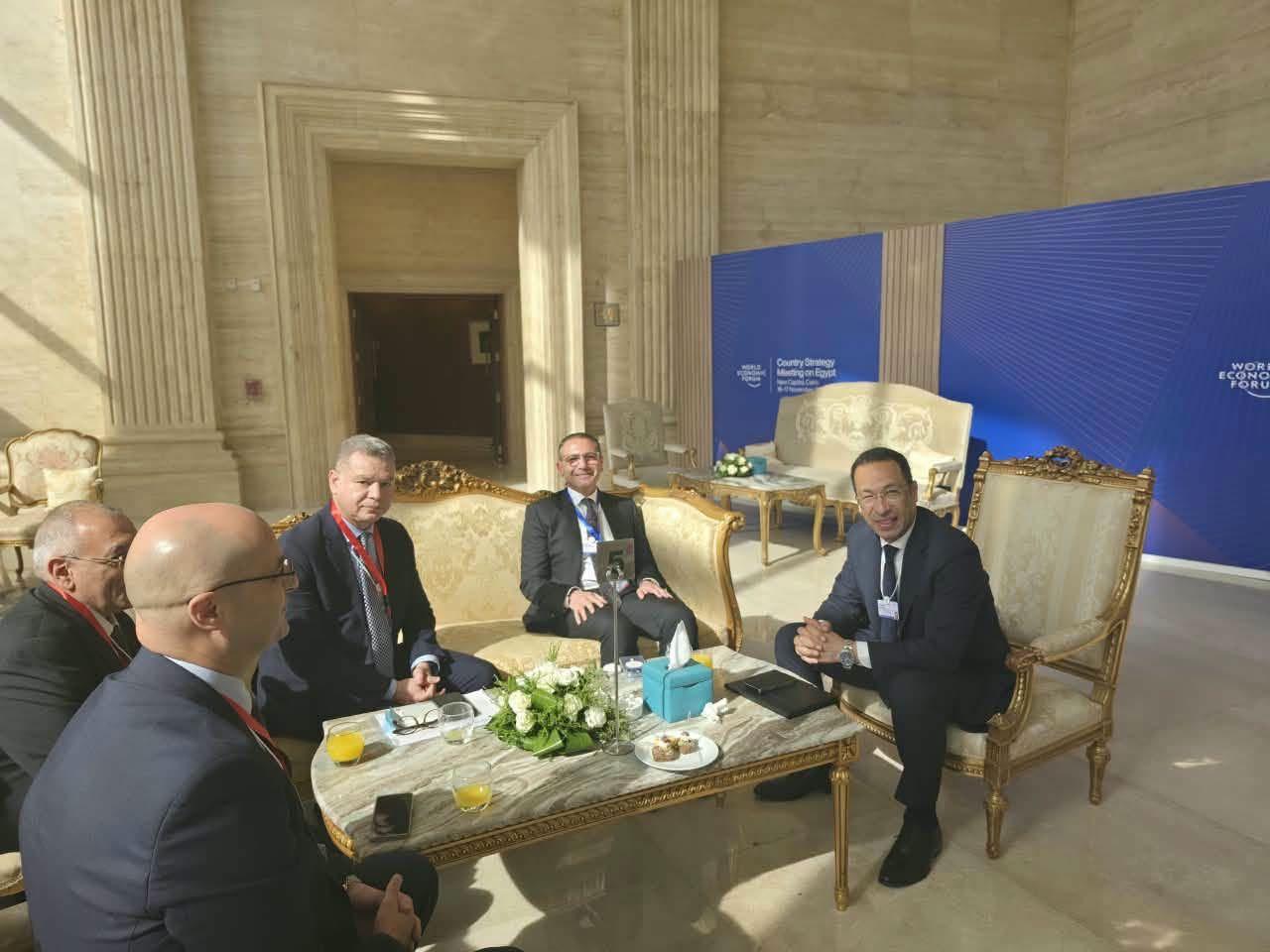
Egypt's communications ministry has reviewed Cassava AI and Vodafone Business plans for a locally hosted AI factory, building on a September agreement to expand advanced computing capacity.
[For more news, click here]
Egypt is expanding its efforts to develop local artificial intelligence infrastructure as demand grows for advanced computing and data processing. Building this capacity is increasingly important for businesses developing AI applications, particularly those seeking to process sensitive information locally rather than relying entirely on overseas cloud services.
Egypt's Minister of Communications and Information Technology, Raafat Hendy, has met with Ahmed El Beheiry, CEO of Cassava AI, to discuss plans for developing an AI factory and a specialized data center in partnership with Vodafone Business. According to a November 17 statement from the ministry, the projects aim to support advanced AI applications using NVIDIA computing technologies while keeping data hosting and processing within Egypt.
The discussions took place during the World Economic Forum's Country Strategy Dialogue in Egypt's New Administrative Capital. They follow a strategic partnership announced in September 2026 and represent continued planning for the project rather than a new agreement.
Expanding local AI computing capabilities
The proposed AI factory is intended to provide infrastructure for developing and operating artificial intelligence applications across different sectors. Unlike conventional data centers primarily used for storing information and hosting business systems, AI factories are designed around the computing resources needed to train, develop and run AI models.
Through its partnership with Vodafone Business, Cassava plans to provide access to NVIDIA accelerated computing technologies, supporting organizations that need substantial processing capacity for AI applications. The companies previously outlined plans to offer GPU-as-a-Service (GPUaaS), allowing businesses to use advanced graphics processing resources without purchasing and operating their own hardware.
In its September announcement, Cassava said the partnership would also support government institutions and enterprises through locally hosted AI infrastructure and specialized training programs. The proposed services are intended to help organizations develop applications while maintaining greater control over where their data is processed.
However, the November update does not disclose the facility's planned computing capacity, investment value, construction timeline or expected operational date.
Building on Egypt's data center investments
The AI factory plans form part of a wider partnership between Vodafone Business, Elsewedy Electric and Cassava Technologies to expand Egypt's digital infrastructure.
In September, the companies announced Africa Data Centres Egypt, a separate data center development expected to provide an initial 20 megawatts of capacity within three years, with the potential to expand to 200 megawatts. The project's first phase is expected to attract approximately $200 million in foreign investment, while total investment could eventually reach $1 billion.
The sovereign AI facility represents another component of these partnerships, focused specifically on advanced computing and AI applications. The $1 billion investment target and 200MW capacity projection relate to the broader Africa Data Centres Egypt project and should not be attributed to the AI factory.
For businesses and government institutions, locally available computing infrastructure could reduce reliance on overseas services and help address data residency requirements. However, keeping data within Egypt does not automatically establish regulatory compliance, which also depends on appropriate security controls and governance.
Egypt targets wider AI infrastructure development
The discussions align with Egypt's National AI Strategy for 2025–2030, which focuses on strengthening AI infrastructure, developing local technologies and improving access to computing resources.
During Cairo ICT 2026, Hendy said the government was working to attract further investment in AI data centers while expanding digital skills development. He also announced plans to make up to one gigawatt of electricity capacity available for several potential data center investments, highlighting the importance of reliable energy supplies to the sector's expansion.
The ministry is also preparing a national data center strategy covering computing demand, investment incentives and regulatory development, with the aim of attracting international technology companies and expanding locally hosted digital services.
While the latest talks indicate continued government engagement with Cassava AI and Vodafone Business, the companies have not announced additional investment commitments or a confirmed launch date. The project's next milestone will depend on translating the existing partnership into operational infrastructure capable of supporting AI development and deployment in Egypt.