MENA News
Zayed University launches 88 initiatives focused on AI and student innovation

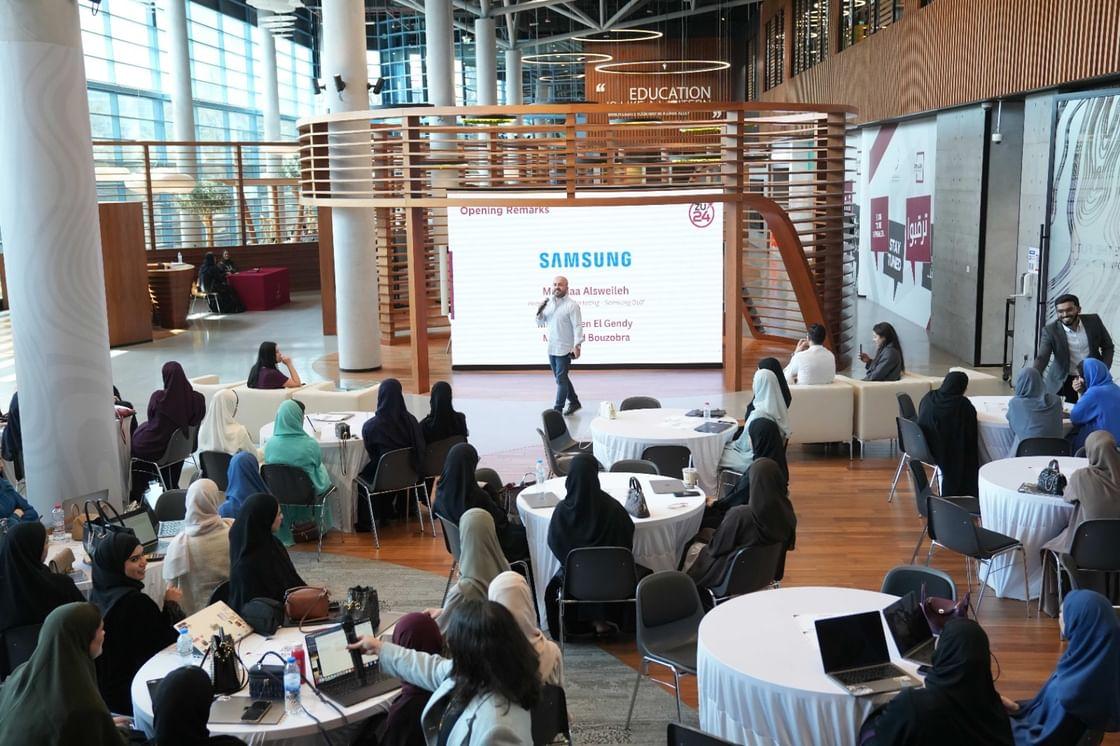
Zayed University is introducing 88 initiatives during UAE Innovates 2026, including AI-focused hackathons, industry challenges and sustainability projects designed to develop students' practical innovation skills.
[For more news, click here]
Universities are playing a growing role in preparing students for industries increasingly shaped by artificial intelligence and emerging technologies. Beyond traditional academic learning, students need opportunities to apply their technical knowledge, work with industry partners and develop solutions to practical challenges. These experiences are becoming more important as governments and businesses expand their use of AI and digital systems.
Zayed University has launched 88 initiatives as part of UAE Innovates 2026, bringing together student hackathons, research activities, technology challenges and sustainability projects throughout November. The program aims to strengthen practical innovation skills and encourage students to develop solutions addressing technological, economic and social challenges.
The initiatives involve students from different academic disciplines, with opportunities to collaborate with industry partners and explore applications in artificial intelligence, public services, cybersecurity awareness and environmental sustainability.
AI hackathons target real-world challenges
Among the initiatives is the Agentic AI Assistant for Smart Government Services Hackathon, which explores how AI systems capable of performing tasks with a degree of autonomy could improve government operations and customer experiences.
The hackathon will take students through idea development and rapid prototyping, allowing them to examine how intelligent assistants could support public service delivery. The focus is on exploring potential applications rather than introducing operational AI services, and the university has not announced any government deployments resulting from the program.
Another initiative, ZU Solves, brings together students from different colleges over an academic semester to address challenges identified with university partners. Projects cover areas including AI-powered market analysis, healthcare, safety, sustainability and awareness of social engineering risks.
The program uses challenge-based learning, where students investigate specific problems and develop proposals or practical solutions. This approach allows participants to apply technical knowledge while considering how their ideas might work outside the classroom.
Connecting students with industry partners
Industry collaboration is another part of the university's innovation program. The College of Interdisciplinary Studies Student Hackathon, organized with Ather Plus, will bring interdisciplinary teams together to develop technology-based prototypes responding to challenges identified by the company.
By working on problems supplied by an external partner, students can gain experience with requirements that go beyond academic assignments, including technical feasibility, practical implementation and potential commercial applications.
Professor Kevin Hall, President and CEO of Zayed University, said the institution aims to connect academic work with national development priorities.
“In collaboration with our partners, we aim to translate knowledge into meaningful impact,” Hall said.
The initiatives build on Zayed University's wider efforts to strengthen connections between education, research and industry. In July, the university launched a dual-campus initiative with the Korea Advanced Institute of Science and Technology, including plans for joint research activities and a global startup hackathon.
These partnerships reflect the growing emphasis on giving students practical experience in developing technologies that could eventually support businesses, public services and emerging industries.
Sustainability and technology development
The university's innovation program also includes Innovate for Impact: Sustainability Sprint, which challenges students to develop solutions addressing waste, water and energy management across university campuses.
Participants will work in interdisciplinary teams to create prototypes, digital concepts or storyboards supported by implementation plans. These activities are designed to encourage students to evaluate whether their proposed solutions could be developed further and applied in practical environments.
The initiatives form part of the university's Foundations for the Future 2026–2029 strategy, which emphasizes student development, research, innovation and stronger collaboration with external partners.
They also take place during UAE Innovates 2026, a nationwide program running throughout November that brings together government entities, educational institutions and businesses to showcase new ideas and technologies.
Although Zayed University has announced the scope of its activities, it has not disclosed how many student prototypes are expected to progress into commercial products or operational systems.
The program highlights the increasing role of universities in developing practical technology skills and connecting students with industry needs. Its longer-term impact will depend on whether participating teams can advance their projects beyond demonstrations and apply their ideas in real-world settings.