Cybersecurity
UAE Blocks 750,000 Cyberattack Attempts, With Energy and Education Among Main Targets

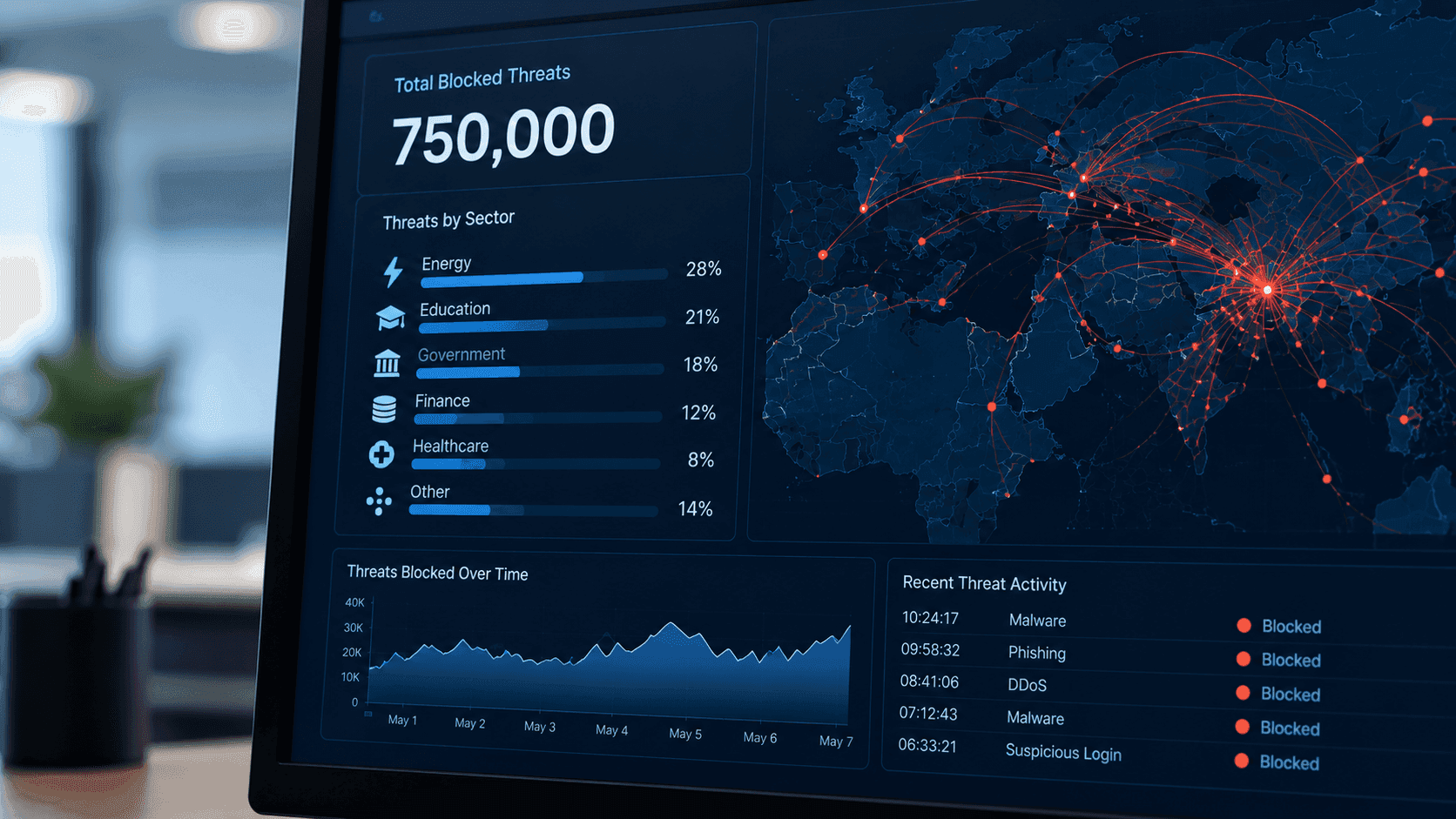
The latest figures from the UAE Cyber Security Council highlight the pressure on national cyber defenses as attackers target essential sectors and use AI to adapt familiar methods.
[For more news, click here]
The UAE has detected and countered nearly 750,000 attempted cyberattacks, with the energy and education sectors among the main targets, according to the UAE Cyber Security Council. Announced on October 21, the figures cover an unspecified recent period and include phishing, distributed denial-of-service (DDoS) attacks, remote code execution attempts, and attacks involving artificial intelligence (AI). The council said the activity was detected and countered through national cybersecurity systems that use continuous monitoring, early detection, technical analysis, and coordination with relevant authorities.
The announcement comes as businesses and government institutions rely on increasingly connected systems to manage operations and sensitive information. Energy companies use digital networks to monitor industrial processes, while schools and universities depend on online platforms for student records, research, and administration. A successful intrusion can affect more than the organization initially targeted, particularly when attackers gain access to systems that support essential services. The council has not identified those responsible for the latest activity, named affected organizations, or disclosed how many attempts resulted in compromised accounts or devices. It has also stressed that the number of detected attempts should not be interpreted as the number of successful breaches.
Earlier attacks show how intrusions can develop
On August 10, the council announced that it had thwarted coordinated cyberattacks targeting aviation, energy, and education. In an investigation published on August 17, reported details from Dr. Mohamed Al Kuwaiti, head of cybersecurity for the UAE government. According to Al Kuwaiti, a limited number of corporate accounts and devices had been compromised, but security teams contained the intrusions before the attackers reached systems controlling essential services.
The August campaign was separate from the nearly 750,000 attempts announced in October, and no public evidence establishes a connection between the two. The earlier incident nevertheless provides a useful example of how cyberattacks can progress after an initial compromise. Once inside a corporate network, attackers may seek additional credentials, examine internal communications, or try to reach more sensitive systems. In the energy sector, that can raise concerns about industrial control environments, while in education it can put personal information, research, and institutional systems at risk.
AI is changing how attackers operate
The council included AI-assisted attacks among the threats it detected but did not publish technical details about how the technology was used or how many attempts involved it. In the August campaign, Al Kuwaiti described how attackers used AI-assisted research and tailored phishing messages to approach selected employees and operationally relevant accounts. AI can help attackers research potential targets, produce convincing correspondence, and adapt messages more quickly. These capabilities can make established social engineering techniques easier to scale, even though the underlying objective often remains the same: obtaining credentials or finding a way into a network.
For businesses, that means familiar security weaknesses still deserve attention. An employee may be tricked into sharing login details, unpatched software may expose a system to exploitation, or excessive account permissions may give an intruder access to information beyond what is needed. AI can help attackers work faster, but it does not eliminate the need to exploit weaknesses in software, access controls, or human behavior. Organizations need to address those weaknesses while ensuring that security teams can investigate suspicious activity and contain compromised accounts before an intrusion spreads.
The UAE is also investing in local cybersecurity expertise and technology. In May, the council and CPX announced the UAE Cyber Factory, an initiative intended to develop cybersecurity technologies and capabilities within the country. In October, the council and SCC Middle East announced a Centre of Excellence for Cyber Resilience and Trusted Technology, bringing together skills development, technology testing, and support for cybersecurity startups. These initiatives address the country's need for technical expertise and locally developed solutions as its digital infrastructure expands, although their practical value will depend on how successfully the resulting capabilities are deployed.
Related Articles
Microsoft Brings its Bug-Hunting AI, MDASH, to UAE Government Systems
Why the UAE Decided to Stop Buying Its Cybersecurity and Start Making It
UAE Looks to Build a Local Pipeline for Cybersecurity Innovation