Startups
Zipline Raises $1.5 Billion to Expand US Drone Delivery Network

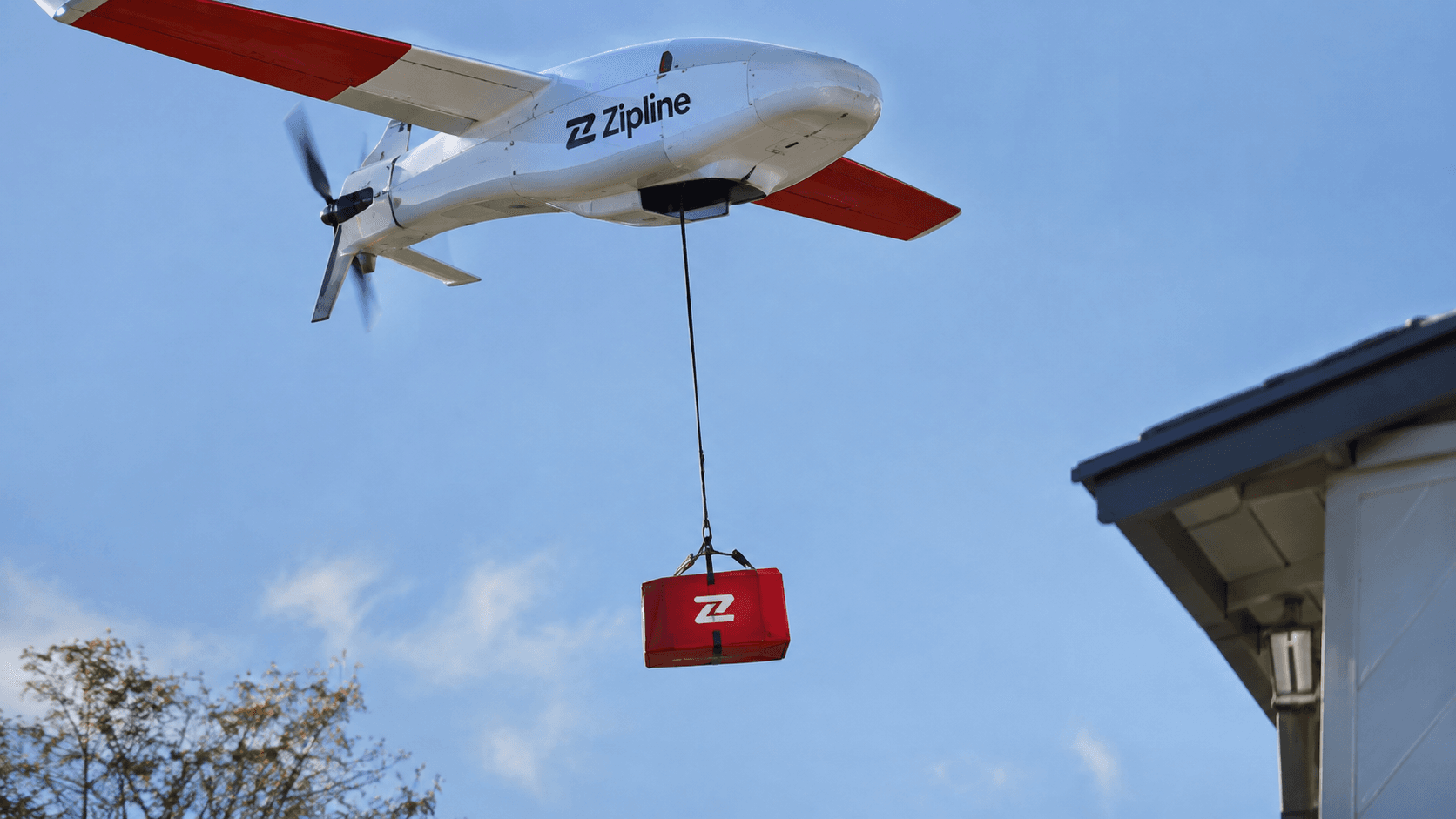
Drone delivery startup Zipline has raised $1.5 billion at a $21.5 billion valuation, nearly tripling its value in ten months. The funding comes alongside plans to expand Walmart's drone delivery network across the United States.
[For more news, click here]
Drone delivery companies have spent years trying to turn autonomous flights into a practical alternative to traditional delivery services. Although the technology has demonstrated its potential in healthcare and retail, regulatory restrictions, operating costs, and the challenge of building large delivery networks have slowed wider adoption.
Now, growing investment and commercial partnerships are bringing the industry closer to operating at a larger scale.
US-based drone delivery company Zipline has raised $1.5 billion in a funding round that values the company at $21.5 billion post-money, up from $7.6 billion earlier this year.
The round was led by Paradigm, WCM Investment Management, and Layer Global, with participation from Uber, Tiger Global, J.P. Morgan, Fidelity Management & Research Company, and other investors.
Zipline plans to use the funding to expand its US manufacturing operations, increase hiring, and develop a nationwide autonomous delivery network.
Walmart Expands Its Drone Delivery Network
The investment comes alongside a new multi-year agreement between Zipline and Walmart to establish 300 additional drone delivery sites across the United States.
The companies currently operate 21 sites together, making the planned expansion a significant increase in their existing network.
Walmart has worked with Zipline since 2021 and says its broader drone delivery program has completed more than two million deliveries.
Customers in eligible areas can order thousands of everyday products through Walmart's website or mobile application and receive them in as little as 30 minutes.
Zipline's home delivery system uses autonomous drones capable of carrying packages weighing up to eight pounds. The aircraft remain approximately 330 feet above the ground while a separate delivery pod lowers the package on a tether.
The approach allows deliveries without requiring the aircraft itself to land at the customer's property.
However, the companies have not disclosed a completion timeline for all 300 additional sites or the financial terms of their expanded agreement.
From Medical Deliveries to Consumer Logistics
Founded in 2014, Zipline initially developed its operations around delivering blood and medical supplies in Rwanda before expanding into other countries and commercial sectors.
The company now operates across four continents, serving healthcare providers, retailers, and other businesses.
According to Zipline, its network completed more than one million deliveries in the Dallas-Fort Worth area during 2026.
The company reported a median delivery time of 19 minutes from checkout in October, compared with more than 30 minutes for traditional delivery services.
Zipline also shared results from a group of its longest-standing restaurant partners, reporting a 26% increase in delivery gross merchandise value between March and October.
However, those figures reflect a selected group of partners and do not establish equivalent results across the entire network.
The company has also expanded its relationship with Uber, which is targeting one million daily deliveries through Zipline by 2029. That figure remains a future target rather than current operating volume.
Regulation Remains a Barrier to Expansion
Despite growing investment, scaling drone delivery depends on more than aircraft production and customer demand.
Commercial operators must secure aviation approvals, establish suitable operating locations, and address concerns around safety, noise, and airspace management.
Zipline received its US Federal Aviation Administration (FAA) Part 135 air carrier certification in June 2022, allowing it to conduct commercial delivery operations subject to regulatory requirements.
The FAA also requires operators to obtain relevant airspace authorizations and comply with operational and environmental requirements.
Zipline CEO Keller Cliffton told Reuters that the company initially expanded overseas because US restrictions limited commercial flights beyond a pilot's direct line of sight.
He also described the company's underlying challenge:
"None of our customers care about drones. They care about teleportation."
The comment reflects the distinction between developing autonomous aircraft and building a delivery service that customers can use reliably.
Can Drone Delivery Become a Mainstream Business?
Zipline's latest valuation reflects investor confidence in autonomous delivery, but the economics of operating a nationwide network remain difficult to assess.
The company has not publicly disclosed detailed profitability figures or delivery costs that would allow direct comparisons with traditional logistics providers.
Expanding to hundreds of additional locations will also require manufacturing capacity, local infrastructure, regulatory approvals, and sufficient order volumes to support ongoing operations.
Competition is increasing as companies including Amazon and Alphabet-owned Wing develop their own drone delivery services.
For Zipline, the next challenge is translating its technology and existing delivery volumes into a sustainable national network.
The wider industry faces a similar test. Drone delivery has demonstrated that small packages can be transported quickly without roads. Whether it becomes a routine part of retail logistics will depend on operating costs, regulatory progress, and demand beyond early adopters.