AI
AI Classroom Empowers People of Determination Through Amazon’s New Initiative with Rashid Center in UAE

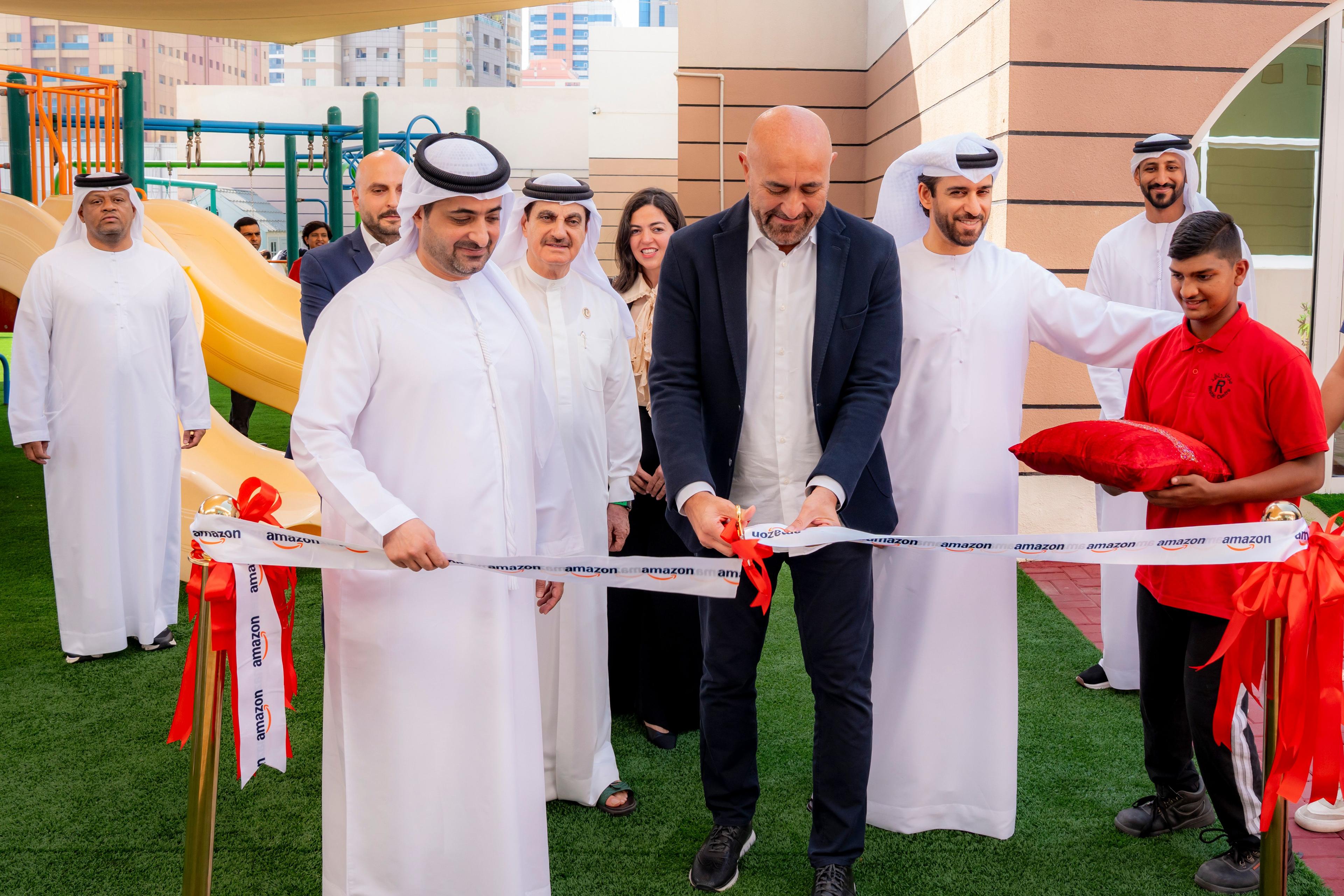
Amazon has launched an AI-enabled classroom at Dubai’s Rashid Center for People of Determination, adding new sensory and digital learning tools to an institution that has long used assistive technology.
[For more news, click here]
The role of AI in education is widely debated. Experts and professors argue that traditional education has been more impactful, while innovators believe AI can introduce new learning opportunities that traditional systems lack. While this debate can lean on either side the new AI-enabled classroom in Dubai’s Rashid Center for People of Determination can provide students with a better way of communication, independence and access to learning.
The Amazon Class is a dedicated classroom equipped with AI-powered and multisensory learning technologies. Along with an upgrade to the center’s Smart Unit, Amazon is also providing additional learning equipment. The tools combine light, sound, images, vibration, and interactive technology intended to support communication, attention, sensory regulation, and practical skills.
Compared with what the center already provides, this project offers significant improvements to learning. The center has spent more than three decades building an education model around individualized learning, integrated therapy, and assistive technology. Amazon’s classroom therefore adds capacity to an existing system rather than introducing technology into a conventional school environment for the first time.
Rashid Center Builds Individual Learning Plans
Rashid Center, established in 1994, provides education and therapy for students with physical, cognitive, sensory processing, and learning challenges. The current population includes 340 students from more than 42 nationalities. Unlike a conventional school organized by age, the center groups students according to individual learning requirements and functional needs.
Before admission, students are evaluated by a multidisciplinary team that can include an occupational therapist, speech therapist, physiotherapist, psychologist and teacher. Once enrolled, further baseline assessment informs an Individual Education Plan or Individual Training Plan, with goals built around each student’s abilities and areas requiring support.
The center already has a dedicated Assistive Technology program where specialists work alongside teachers, physiotherapists, occupational therapists, speech-language therapists, and families to identify appropriate tools for individual students. Those tools range from low-tech communication aids to speech-generating devices, alternative and augmentative communication systems and individualized digital supports.
The center’s speech and language teams also use both low- and high-tech AAC systems for students with more complex communication needs.
Within its Integrated Learning Groups, the school already uses digital resources, adapted keyboards, and specialist programs such as Clicker 7 to support reading, writing, and access to the curriculum. (Rashid Center)
His Highness Sheikh Juma bin Maktoum bin Juma Al Maktoum, acting Chairman of the Rashid Center for People of Determination, said: "For more than three decades, the Rashid Center has been guided by the belief that every child deserves the opportunity to learn, grow, and participate fully in society. This belief reflects the UAE's vision of building an inclusive nation that recognizes the abilities and potential of people of determination. We welcome Amazon's support, which brings modern technology into our classrooms and creates new opportunities for our students to develop their skills and realize their potential."
The Sensory Technology Fits an Existing Learning Model
The immediate beneficiaries of the new classroom will be students enrolled in the center’s Integrated Learning Groups and Integrated Sensory Learning programs, which account for roughly 75% of students. This program is designed specifically for children with significant sensory, communication and learning challenges.
Its teaching model already combines approaches such as sensory integration, Total Communication, Intensive Interaction and combined sensory and academic learning. For example, in Total Communication, it may combine spoken language with Makaton signs, symbols, body language, and the Picture Exchange Communication System.
Rashid Center’s model is not limited to classroom attainment. Its program combines academics with therapy, communication, mobility, self-care, socialization and vocational preparation. Students aged 18 and above can enter vocational programs aimed at building independence and employability.
One example is the center’s IT and Printing Workshop, where trainees learn skills ranging from digital design and Photoshop to printing, lamination and production work. Individual Training Plans determine which tasks students work toward based on their abilities.
The center also operates transition planning for older students, focusing on their strengths, interests and potential routes into life after formal education. This makes independence an important metric for the new initiative. A technology that enables a student to complete an everyday task independently may ultimately be more valuable than one that simply focuses on lessons.
The UAE is Building Assistive Technology into Education Policy
The UAE has been pushing inclusive education and the UAE Ministry of Education‘s Inclusive Education Policy requires providers to support students of determination through individualized plans, specialist services and accessible learning environments. The ministry specifically recognizes assistive technologies as part of the support students may require inside and outside classrooms.
The UAE’s National Digital Accessibility Policy extends the same principle to the digital environment, calling for modern technologies, including AI, to make digital services more accessible for people of determination. That policy context matters because accessibility works better when it is designed into systems rather than added after deployment.
If Rashid Center can prove the AI-powered classroom’s usefulness and benefits for particular learning needs, the project could provide useful evidence for other specialist schools and education systems deciding where assistive AI is worth adopting.
This would also help experts answer a bigger question: will AI enable students to benefit? If yes, then what technologies will be adopted and under what conditions? Ultimately, for people of determination, this is a great initiative, and real value comes from whether they can complete a task independently that they could not yesterday, not from how sophisticated the classroom looks.
Related Articles
Abu Dhabi Launches AI Tools to Rewrite Arabic Texts for Different Reading Levels
Why Teacher Training, Not Better Tools, Will Decide AI’s Future in the Classroom
Exclusive: Why the GCC’s Next Healthtech Opportunity Is Bigger Than AI