AI
Abu Dhabi Launches AI Tools to Rewrite Arabic Texts for Different Reading Levels Summary

Abu Dhabi has launched BAREC 2.0, an AI-powered project that assesses and rewrites Arabic texts for different reading abilities, building on years of linguistic research.
[For more news, click here]
Making Arabic digital content accessible to different readers involves more than translating words or simplifying sentences. Vocabulary, grammar, and reading proficiency all shape how easily people understand written information, creating challenges for educators, publishers, and developers building Arabic-language applications.
Artificial intelligence offers new ways to address these differences, but developing reliable tools requires detailed linguistic data and a consistent framework for measuring text complexity.
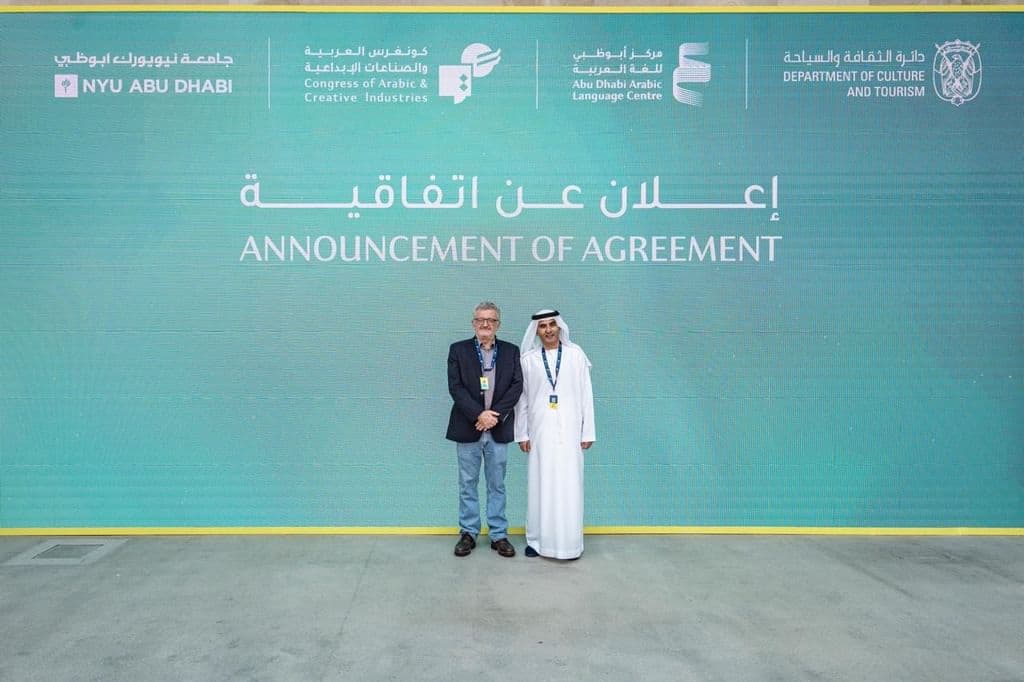
The Abu Dhabi Arabic Language Centre, in partnership with New York University Abu Dhabi (NYUAD), has launched BAREC 2.0, the second phase of the Balanced Arabic Readability Evaluation Corpus project.
Developed in collaboration with Mohamed bin Zayed University of Artificial Intelligence (MBZUAI) and Zayed University, the initiative introduces AI-powered tools that assess and rewrite Arabic texts according to different reading proficiency levels.
Unlike conventional text simplification tools, the project also provides explanations of how readability classifications are determined, allowing users to understand the linguistic factors behind each assessment.
From 69,000 Sentences to AI-Powered Text Adaptation
BAREC was established in 2023 to develop a structured linguistic resource for assessing Arabic readability.
Its first major dataset contained 69,441 sentences spanning more than one million words, manually annotated across 19 reading levels, ranging from kindergarten to postgraduate comprehension.
A 2025 research paper published in the Association for Computational Linguistics proceedings reported an average pairwise agreement of 81.8% among annotators, measured using Quadratic Weighted Kappa.
The results provided a foundation for developing automated systems capable of evaluating Arabic text complexity.
Further research published in May 2026 documented BAREC-10M, an expanded corpus containing 10 million words across 45 sub-corpora, including news, educational materials, literature, children's texts, and religious content.
The expanded dataset incorporates morphological, syntactic, and readability information, supporting research into how Arabic language complexity varies across different types of content.
BAREC 2.0 builds on this work by moving beyond readability assessment toward actively adapting texts for different audiences.
Its AI models can modify vocabulary and sentence structure to simplify complex passages or rewrite material for more advanced readers.
The tools are intended to help teachers prepare level-appropriate educational resources, support curriculum development, and allow students to work with material suited to their reading abilities.
Why Explainable AI Matters for Arabic Readability
A central feature of BAREC 2.0 is its ability to explain why a passage receives a particular readability classification.
This addresses an important limitation of automated text assessment: a system may assign a difficulty level without showing which linguistic features influenced the decision.
Researchers have already begun examining this challenge through BAREC-related work.
A 2026 study introducing BAREC-X presented 1,793 Arabic sentences annotated with explanations of their readability levels.
The researchers evaluated large language models alongside a rule-based system using 67 linguistic features covering morphology, syntax, vocabulary, and syllabic structure.
The study found differences in how accurately the systems identified linguistic explanations, demonstrating the difficulty of producing assessments that are both accurate and interpretable.
Although this research does not independently validate BAREC 2.0's new rewriting tools, it provides relevant context for the project's emphasis on explainability.
Dr. Ali bin Tamim, Chairman of the Abu Dhabi Arabic Language Centre, said the initiative aims to "develop practical tools that help educators, writers and students assess and adapt Arabic texts."
The Challenge of Scaling Arabic AI Tools
BAREC 2.0 could have applications beyond classrooms, including digital publishing, educational technology, and accessible public information.
However, the announcement did not provide independent performance benchmarks for the new rewriting capabilities or specify how the tools perform across different types of Arabic content.
It also did not detail public access arrangements or how reliably rewritten passages preserve their original meaning.
These questions matter because reducing linguistic complexity does not necessarily guarantee better comprehension. Automated rewriting must also maintain accuracy, context, and the intended message.
For developers of Arabic-language AI systems, resources such as BAREC provide structured data that can support more consistent evaluation and future model development.
The broader opportunity extends to educational platforms and digital services seeking to serve readers with different levels of language proficiency.
Ultimately, the project's significance will depend on whether its research foundations translate into reliable tools that educators and content providers can use at scale. Making Arabic text easier to understand is one challenge; demonstrating that AI-generated adaptations preserve meaning and improve accessibility is another.