AI
Du launches National HyperAI across five UAE data centers for sovereign AI workloads

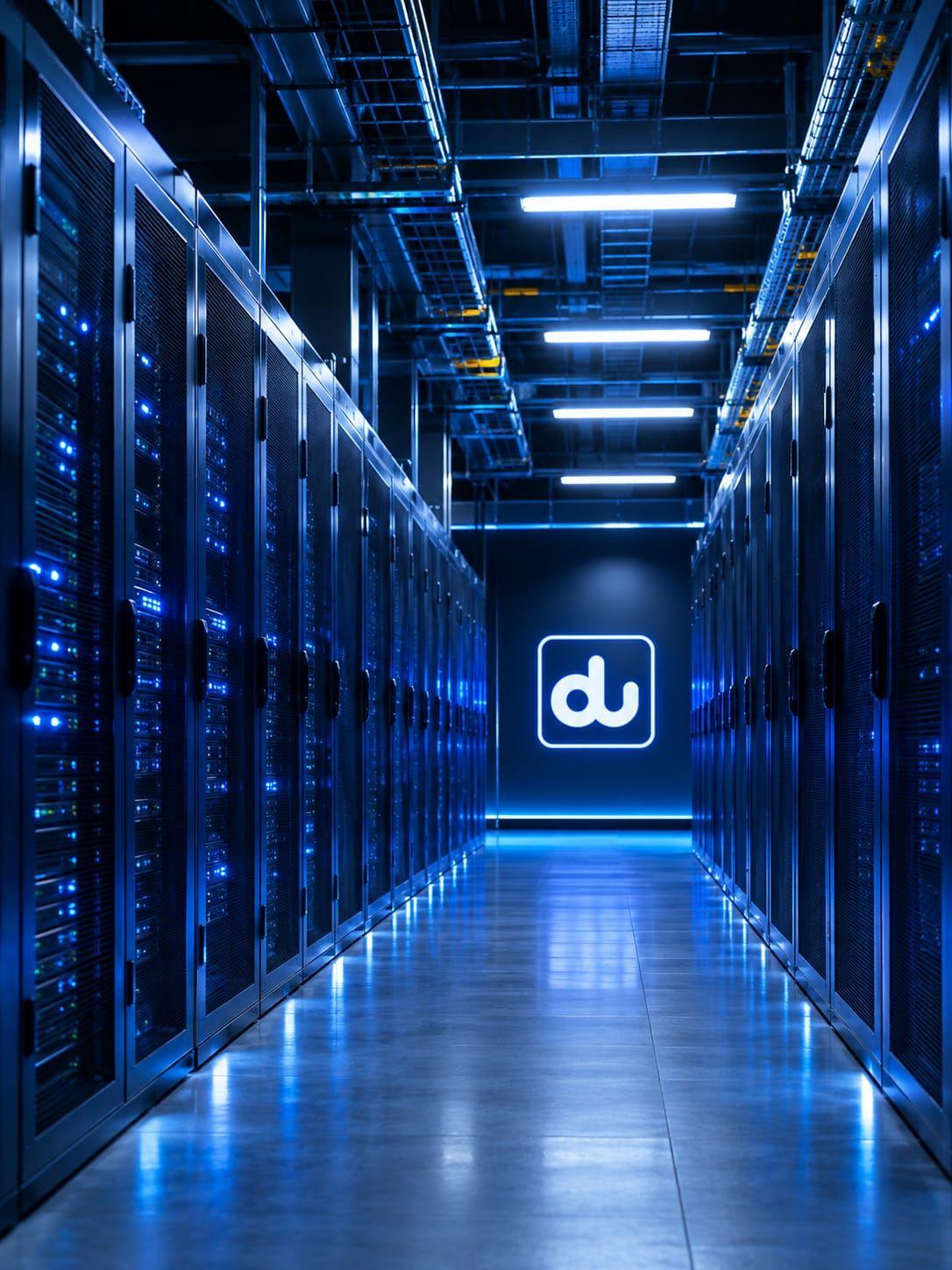
UAE telecom operator du has launched National HyperAI, combining locally hosted computing, AI models and agent workflows across five domestic data centers for government and enterprise customers.
[For more news, click here]
Businesses and government agencies are increasingly using artificial intelligence to improve operations and automate everyday tasks. However, growing AI adoption is also raising concerns about data security, infrastructure control and how sensitive information is handled.
UAE telecom operator du has launched National HyperAI through its business technology arm, du Tech, targeting government entities and businesses seeking to deploy AI applications and autonomous agents within the country. The platform combines AI inference, access to graphics processing units (GPUs), hosted models and autonomous agent workflows under a single commercial agreement. Du says the service operates across five existing UAE data centers that it owns and manages.
AI services built on domestic infrastructure
National HyperAI includes three core services: Sovereign AI Inference for running models, Model as a Service (MaaS) for accessing hosted models and GPU as a Service (GPUaaS) for renting computing resources. Du also offers autonomous agent workflows through technology partners, allowing organizations to connect AI capabilities to applications and operational processes.
The architecture uses bare-metal NVIDIA GPU computing, liquid-cooled data center infrastructure, fiber connectivity and 5.5G networks, according to the company’s announcement. It also includes machine-learning operations tools, curated open-weight models and agent orchestration capabilities. Du has not identified the GPU models or disclosed available computing capacity, making it difficult to assess the platform’s scale against competing services.
The offering builds on du Tech’s National Hypercloud, a sovereign cloud platform launched in July 2025 using Oracle Alloy technology. Du says the underlying cloud has been certified by the UAE Cyber Security Council. By connecting existing enterprise workloads, databases and applications to local AI inference, the company aims to reduce the need to transfer sensitive data to external environments.
Keeping data and model weights within national borders can support data residency requirements, although regulatory compliance also depends on how organizations configure access controls, manage information and govern AI applications.
Building on an existing sovereign cloud strategy
The launch forms part of du’s broader expansion into cloud and AI infrastructure rather than the construction of five new facilities. In June 2026, the company announced a collaboration with Open Innovation AI to combine National Hypercloud with GPU orchestration technology for in-country AI workloads. The partnership was designed to help organizations build and operate AI agents while retaining control over infrastructure and sensitive data.
The new service also aligns with the UAE’s Artificial Intelligence Strategy 2031, which identifies AI adoption in government services, data infrastructure and governance among its priorities. For public-sector organizations and regulated businesses, locally operated AI infrastructure could help address concerns about information sovereignty and dependence on overseas computing providers.
However, domestic hosting does not automatically resolve security, reliability or oversight challenges, particularly when autonomous agents are connected to business-critical systems.
From AI infrastructure to operational deployment
Du says National HyperAI is immediately available to government entities and enterprise customers in the UAE, with smaller businesses also among its intended users. Jasim Al Awadi, the company’s Chief ICT Officer, said moving beyond isolated AI pilots requires greater certainty around costs, sovereignty and accountability.
Those claims remain to be tested through deployments. The announcement does not disclose pricing, named customers, implementation results or independently measured cost savings, leaving questions about the platform’s commercial adoption and operational performance.
Combining computing infrastructure, hosted models and agent management tools could simplify procurement, but organizations still need to integrate the technology with existing systems, evaluate model accuracy and establish human oversight for consequential automated decisions.
National HyperAI gives du another way to commercialize its domestic infrastructure as demand for enterprise AI grows. Its longer-term significance will depend on whether customers can scale real workloads securely and demonstrate measurable benefits beyond initial deployments.