Fintech
Exclusive: Wafr and the Next Chapter of Islamic Finance

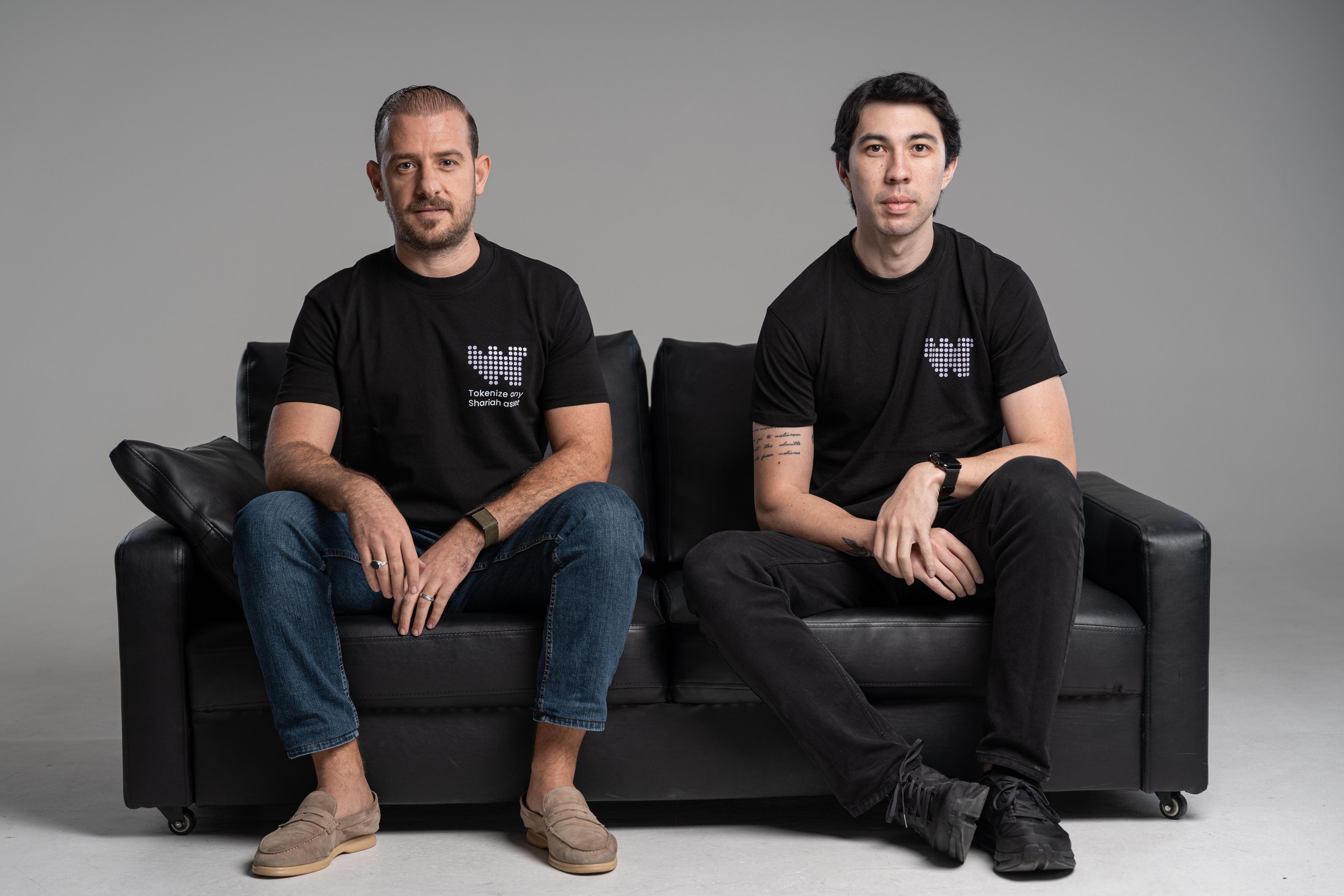
Wafr co-founders Mahmoud Bouchelif and Anthony Murphy share their perspectives on the opportunities shaping the future of Islamic finance.
[For more news, click here]
The financial industry continues to change, bringing new opportunities and challenges for established sectors. Islamic finance is no exception, as businesses look to respond to changing customer expectations and the growing role of technology in financial services.
For Mahmoud Bouchelif and Anthony Murphy, their work at Wafr brings together years of experience in different parts of the financial and technology industries. Their professional backgrounds have led them to a shared venture in a sector where traditional financial principles meet new approaches to business and innovation.
In this exclusive interview with Tech Revolt, the two founders share their perspectives on the industry, the thinking behind their venture, and what they hope to achieve with Wafr.
Where Finance, Technology and Tradition Meet
1. Why did Wafr choose sukuk as its first market rather than another area of Islamic finance? What made this particular segment commercially attractive as an entry point?
Mahmoud Bouchelif, Co-Founder and Chief Executive Officer: The main reason we chose sukuk is that it represents one of the clearest opportunities to create meaningful impact in Islamic finance, both commercially and in terms of financial inclusion. It is an established and growing market, with approximately $1.14 trillion in outstanding sukuk and $291.4 billion in annual issuance in 2025, and yet the infrastructure behind it remains highly fragmented despite that scale. A single issuance can involve eight to ten different parties, from issuers and arrangers to trustees, custodians, and distributors, and each of them keeps its own records and relies on manual reconciliation, which makes issuance, distribution, and profit payments expensive and means an issuance can take months to complete.
The other reason is that sukuk is an attractive asset class for investors who are looking for Shariah-compliant, asset-linked investments with defined profit structures, depending on the instrument. Access to it remains largely institutional, however, because the high investment thresholds put many opportunities beyond the reach of everyday investors. For us, this created an opportunity to address both sides of the market by helping institutions reduce costs and improve efficiency while enabling broader access to sukuk investments through tokenization.
From a commercial point of view, what made the segment attractive is that we are entering an established market in which institutions already issue, distribute, and invest in these instruments. We do not have to create demand from scratch because the demand already exists, and our focus is on building infrastructure that serves it more efficiently and unlocks new distribution opportunities.
2. What was the most difficult design or implementation decision you faced while developing WafrChain for institutional use, and what did you have to change from your original approach?
Anthony Murphy, Co-Founder and Chief Product Officer: The most difficult decision for us was how to make blockchain technology fit for regulated institutions, which is one of the biggest hurdles we need to overcome as an industry if we are to realize the promise of the technology. Financial institutions need privacy because banks and asset managers cannot expose their positions or their investors’ details to competitors, and so we had to build a private, permissioned chain on which everything is encrypted. Participants share a single record, but each party can only see what its role allows, and investor identities stay off-chain with their banks, which was a key change from our original approach.
The second change was the creation of WafrSouq. We realized quite quickly that tokenization was only half of the problem because tokenizing an asset is only valuable if you can also connect those tokens to people who are willing to acquire them, and this is where we have seen a lot of tokenization efforts fail. We knew that WafrChain would only be successful if we could also create a marketplace, and WafrSouq brings issuers and distributors together on one platform to provide liquidity for tokenized assets.
3. What determines whether a transaction on WafrChain uses fiat settlement or stablecoins? What still needs to happen outside the blockchain for these settlement routes to work with existing financial infrastructure?
Anthony Murphy: When we designed WafrChain, it was important to us that new infrastructure still connects to the world as it works today because it would be impossible to create the financial infrastructure of the future by ignoring how business is currently conducted. Our customers felt the same way, and so WafrChain remains connected to fiat and to current settlement methods while offering better alternatives. Banks, custodians, and corporate issuers also work under different regulatory permissions and treasury processes, which is why settlement is configurable and why it is the issuer who decides whether a transaction settles in fiat or in stablecoins.
As for what needs to happen outside the blockchain, the fiat route depends on integration with the banks, payment systems, and custodial accounts that institutions already use, so that movements of money reconcile automatically with what is recorded on-chain. On the stablecoin side, wider institutional adoption of regulated, Shariah-compliant stablecoins and clearer cross-border settlement frameworks from central banks will allow more transactions to settle directly on-chain.
4. When Wafr works with an issuer whose Shariah board has its own interpretation and approval requirements, how are differences resolved? Where does Wafr’s Shariah board’s responsibility end and the issuer’s board’s authority begin?
Mahmoud Bouchelif: At Wafr, we recognize that Shariah interpretations can differ across institutions and jurisdictions, and it has never been our objective to standardize those interpretations or to replace the authority of existing Shariah boards. The way we approach it is to draw a clear distinction between the Shariah compliance of the underlying financial instrument and the Shariah compliance of the infrastructure that facilitates its issuance, distribution, and settlement.
The issuer’s Shariah board retains authority over the sukuk structure, including the underlying assets, the contractual arrangements, the profit distribution mechanisms, and any other product-specific requirements. Wafr’s Shariah board, for its part, focuses on the platform and its underlying processes, ensuring that the technology, the transaction mechanisms, and the settlement arrangements are consistent with our Shariah governance framework, and it also works with the issuer’s board to assess how the approved structure is implemented on-chain.
Where interpretations differ, we facilitate direct engagement between the two Shariah boards so that they can identify an acceptable structure or implementation approach. If a difference cannot be reconciled, we respect the issuer’s authority over its instrument while retaining the right to decline a transaction that conflicts with Wafr’s own Shariah requirements. Ultimately, we are building infrastructure that accommodates different Shariah interpretations without compromising the independence of each institution’s governance framework, and our role is to enable institutions to bring their Shariah-approved products on-chain while leaving the structuring of those products entirely to them.
5. Are Wafr’s institutional infrastructure and planned consumer services designed to operate as parts of one integrated financial platform, or do they address separate customer needs? How do you see the two sides of the business developing together?
Anthony Murphy: We see the two sides as very complementary, although our original plan was to build only the consumer side and bring fair and abundant banking to the 700 million unbanked Muslims globally. WafrChain came later, and we are launching it first for good reason. When we started to look at how to deliver low-cost international accounts, remittances, and investment products, we realized that the foundational infrastructure needed to be updated too because most financial services continue to run on infrastructure that is decades old, from paper contracts to legacy payment methods. It became clear to us that in order to solve consumer needs better, institutional infrastructure had to be modernized as well.
That is how the two sides develop together. The consumer business solves for access, while WafrChain creates the infrastructure required to serve those customers at low cost and to bring Shariah-compliant products within their reach, and over time it becomes the engine behind our consumer offering.
Sukuk is a good example when you consider how limited access to it is around the world. If we wish to make Islamic finance more accessible globally, the infrastructure it sits on needs to change, and that is something Wafr cannot do alone. It needs to be an industry-wide effort, which is why we decided to launch WafrChain and to make the infrastructure that we believe will power the next era of finance available to everyone.
6. What would be the first concrete evidence that financial institutions are willing to adopt and pay for WafrChain? Which commercial milestones will you use to assess progress over the next two to three years?
Anthony Murphy: We are getting a lot of interest from institutions, although building a marketplace is hard because you have to balance both sides at the same time. For us, the first concrete evidence will be live, recurring transactions flowing through WafrChain from end to end, from tokenization and Shariah board sign-off through to placement with distributors and profit payments, and reaching that point means getting enough initial parties onboarded to create the initial marketplace.
Mahmoud Bouchelif: Over the next two to three years, we will measure our progress against three milestones. The first is liquidity on WafrSouq, which means onboarding an initial group of sukuk issuers alongside active regional and international distributors so that primary issuances are placed smoothly on-chain. The second is expansion beyond sukuk, as we extend the same infrastructure and Shariah review framework into tokenized funds, real-world assets, tokenized deposits, and trade finance. The third is connecting our institutional issuance infrastructure to Wafr’s consumer platform, so that cross-border accounts and fractional Shariah-compliant investments run on the same foundations.
The Next Test for Islamic Finance
Islamic finance has considerable room to grow, but its future will depend on how the industry responds to a financial world that is changing around it. New technologies are creating possibilities that were once difficult to imagine, yet turning those possibilities into lasting progress will require careful decisions, institutional confidence, and a clear understanding of the needs of the people the industry serves.
The question is no longer whether Islamic finance can be part of the wider evolution of financial services, but how it will find its place within it. The decisions made by businesses, financial institutions, and regulators over the coming years will help determine the answer.
About the Founders
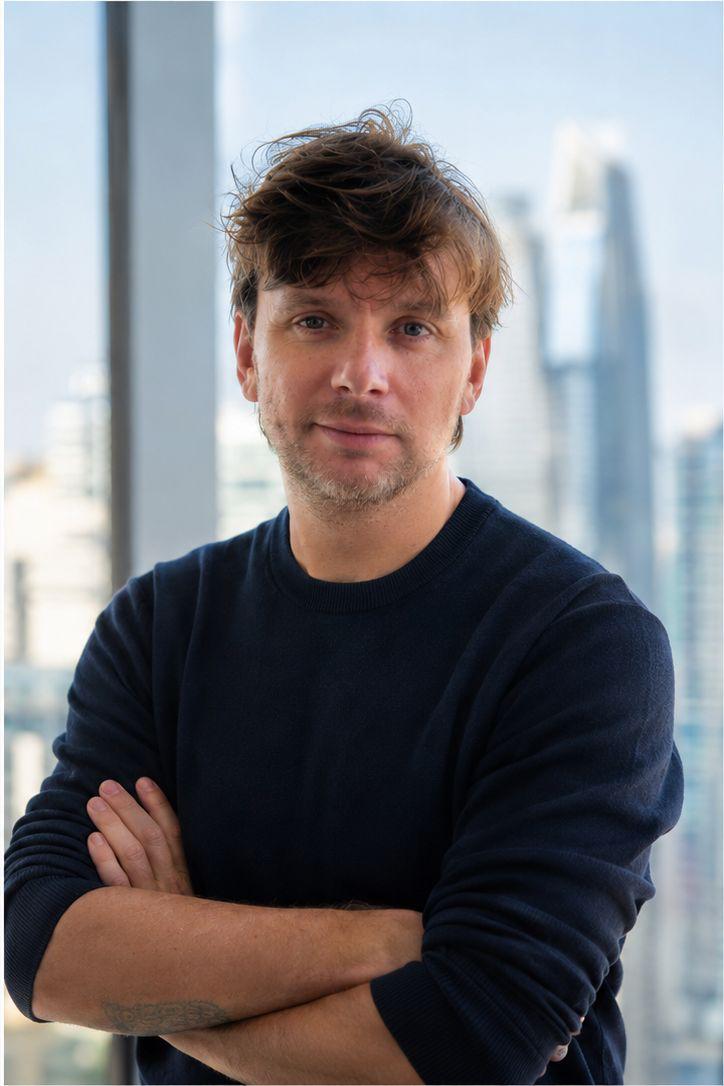
Mahmoud Bouchelif
Co-Founder and Chief Executive Officer, Wafr
Mahmoud Bouchelif is Co-Founder and Chief Executive Officer of Wafr. A former Islamic banker, he brings more than 15 years of experience across banking, technology, and financial innovation in the Middle East and Asia. He leads Wafr’s strategy to build a global Islamic financial platform, connecting on-chain infrastructure for Shariah-compliant assets with a broader financial services roadmap.
Before founding Wafr, Mahmoud built LeanTech SG, which helps banks and financial institutions across the Middle East, North Africa, and Asia-Pacific develop digital and AI capabilities. He grew the business to US$2.3 million in revenue and profitability without external funding. He has also spent approximately a decade advising banking executives across the Gulf Cooperation Council on digital transformation and digital banking.
His work at Wafr focuses on making Islamic finance more accessible and globally connected. WafrChain provides the institutional foundation, beginning with sukuk, while the company’s wider roadmap encompasses agentic AI, stablecoin-enabled settlement, and consumer financial services.
Mahmoud mentors founders through Ignyte by DIFC and Startupbootcamp. He holds a degree in Banking and Finance and hosts The Human Orbit podcast, featuring conversations with founders, investors, and business leaders.
Anthony Murphy
Co-Founder and Chief Product Officer, Wafr
Anthony Murphy is Co-Founder and Chief Product Officer of Wafr. He brings experience launching digital banking products at AMP, Commonwealth Bank of Australia, and Macquarie Bank, combining a background in software engineering with product strategy and leadership.
His career spans the full product lifecycle, from discovery and development through launch and growth. At Wafr, he brings this experience to the development of a global Islamic financial platform, connecting the institutional proposition of WafrChain with the company’s plans for consumer financial services.
Anthony founded Product Pathways and established a product coaching practice. Through his coaching and education work, he has trained more than 1,000 product managers globally and coached founders and product leaders at Miro, Stack Overflow, and Tripadvisor. His work focuses on product strategy, team development, and linking product decisions to business results.
In 2020, he co-founded the Association of Product Professionals, established to advance product management and strengthen its recognition within businesses. He also advises product discovery platform Vistaly and crypto-tax platform SUMM. His wider experience includes financial technology, software, healthcare, media, and artificial intelligence.
Related Articles
Singapore Pushes Tokenized Finance and Agentic AI Toward Real-World Use
ECB Moves Europe's Financial System On-Chain
Bridging the SME Trade-Finance Gap in the Middle East with Tokenization