Fintech
Singapore Pushes Tokenized Finance and Agentic AI Toward Real-World Use

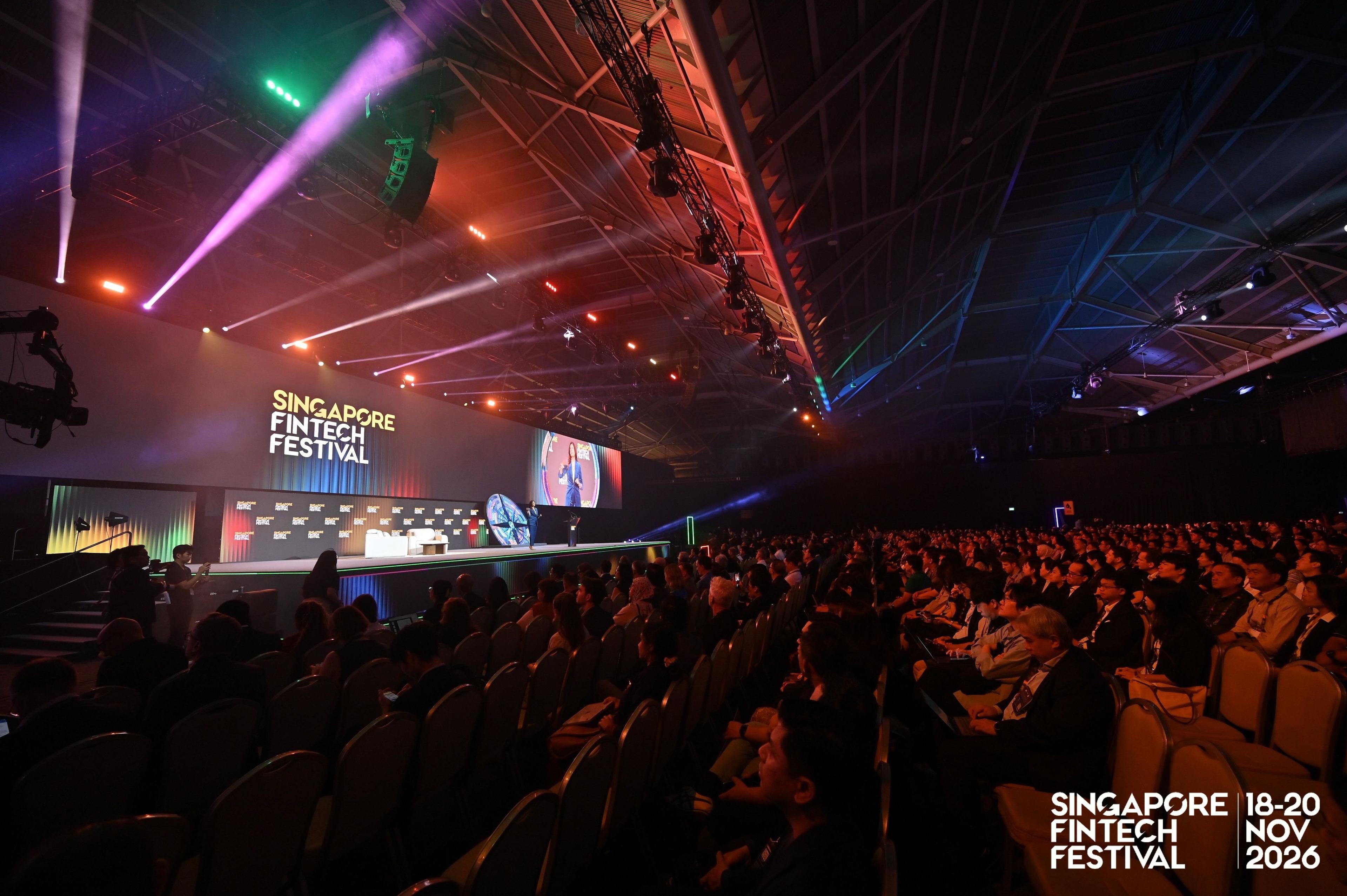
Singapore’s financial regulator outlined new frameworks for tokenized collateral, digital money and AI agents on November 19, focusing on the legal clarity, settlement infrastructure and safeguards needed to bring these technologies into wider financial use.
[For more news, click here]
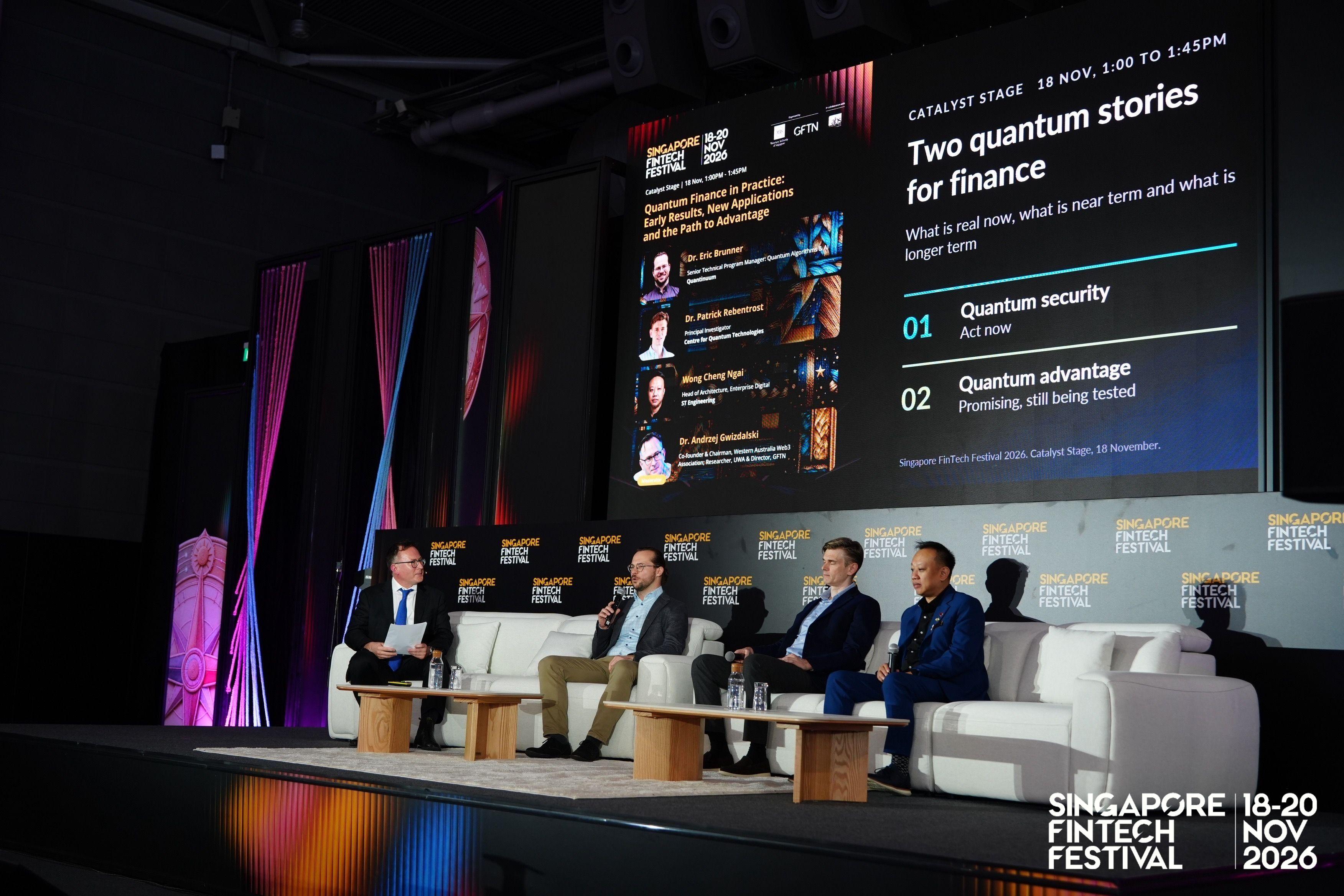
The second day of the Singapore FinTech Festival 2026 centered on the practical requirements for moving tokenization and artificial intelligence beyond isolated applications. In his keynote, Chia Der Jiun, Managing Director of the Monetary Authority of Singapore (MAS), outlined work on tokenized collateral, digital money and interoperable settlement infrastructure before turning to the controls financial institutions will need as AI agents begin carrying out financial transactions.
Tokenized assets move toward collateral use
Collateral management emerged as one of the more immediate applications for tokenization. Collateral supports derivatives, secured funding and liquidity management, but moving assets between institutions can involve multiple operational steps. Tokenization could make the posting and transfer of collateral faster and more efficient, although the underlying economic characteristics of the assets remain unchanged.
MAS and industry partners published the Guardian Tokenised Collateral Framework on November 19. Developed by members of the Guardian Tokenised Collateral Workgroup, the framework addresses operational requirements across the collateral lifecycle, including asset eligibility, custody, valuation, return and enforcement.
Regulatory and legal clarity is another part of the work. MAS is updating its Guide on Tokenization of Capital Markets Products to clarify regulatory and risk-management requirements, while engaging the Singapore Academy of Law on private-law issues related to tokenized capital markets products. Chia also said MAS intends to work with industry participants to bring additional collateral assets onto tokenized infrastructure, potentially including foreign government securities and money market funds.
A concrete example came from the issuance of tokenized MAS Bills. MAS announced that it had issued S$100 million of four-week MAS Bills natively on its Singapore Dollar Test Network on November 6, with settlement using wholesale central bank digital currency (CBDC). The issuance involved five primary dealers: DBS, HSBC, OCBC, Standard Chartered and UOB. Applications at auction exceeded twice the issuance amount.
Unlike securities issued through conventional processes and tokenized later, the Bills were issued directly in tokenized form and recorded on the distributed ledger. MAS said this approach removes the need for reconciliation and intermediaries associated with subsequent tokenization. The Bills are due to mature on December 4, 2026, with the authority planning to expand issuance, involve more financial institutions and explore wider collateral-management applications through live trials in 2027.
Chia described the issuance as a step in developing the infrastructure for these transactions. “The live issuance allowed us to test a new method of issuance and further enhance our in-house distributed ledger infrastructure. MAS will continue to improve the functionality and liquidity of tokenized MAS Bills as market acceptance grows. Over time, tokenized MAS Bills can play a complementary role to conventional MAS Bills.”
Digital money and settlement infrastructure
Tokenized assets also require reliable forms of money for settlement. MAS identified tokenized bank deposits, regulated stablecoins and wholesale CBDC as forms of digital money that can serve different purposes. The authority has issued guidance on the tokenization of bank deposits, is introducing a regulatory regime for stablecoins and has conducted live wholesale CBDC settlement for interbank payments and tokenized MAS Bills.
Its BLOOM platform brings together 24 industry members and regional policymakers to develop digital-money arrangements and test their application. MAS also published the BLOOM Field Guide to Extending Settlement Capabilities on November 19, setting out practical considerations for deploying digital money across different use cases.
The Singapore Dollar Test Network is also being repositioned as SG Digital Ledger, an operational utility intended to support settlement across institutions, tokenized assets, different forms of digital money and multiple ledgers. The change moves the network beyond its testing role as MAS looks to support a broader range of market activity.
Interoperability across networks and jurisdictions formed another part of the agenda. Through Global Layer One (GL1), MAS and industry participants have worked on standards for institutional-grade digital asset infrastructure. Five global financial institutions have established the independent, industry-led GL1 Organization in Singapore to take this work forward.
MAS also outlined progress on cross-border settlement. Together with the Bank of England and the Bank of Thailand, it tested a synchronized mechanism for settlement across separate central bank systems. In work with the Deutsche Bundesbank, it explored how independent systems could verify that settlement conditions had been met before funds were released.
MAS sets conditions for AI agents in financial services
The second half of Chia’s keynote focused on AI agents and their growing ability to act on behalf of individuals and businesses. As these systems move from providing information to initiating payments and managing financial activity, financial institutions need a way to establish who an agent represents, what it is authorized to do and where responsibility lies when a transaction goes wrong.
Chia cautioned consumers against giving personal AI agents direct access to financial account credentials, pointing to the lack of sufficient assurance around their safety. MAS instead wants financial institutions and customer agents to use trusted protocols and dedicated channels for financial activity.
The authority’s Safeguards for Agentic Finance at Runtime (SAFR) framework sets out principles for governing agent actions. These include bounded autonomy, clear agent identity and authority, specific mandates, and safeguards proportionate to the level of discretion an agent receives.
The next phase of this work will include a know-your-agent (KYA) protocol for information exchange between customer agents and financial institutions. It is intended to establish an agent’s identity and the party it represents, the authority it has been given, the mandate under which it operates, and information about its provenance and reliability. Financial institutions could use these details to determine which actions an agent may perform and under what conditions.
MAS is also setting up an Agentic Money Sandbox with the Future of Finance Institute. The initiative will bring AI agents and programmable money together in two areas: corporate treasury management and payments.
In the treasury use case, a corporate agent could monitor liquidity positions and upcoming payments, determine when and where funds should move, and use tokenized deposits to carry out permitted actions. The company would define the mandate, while participating banks would set controls and determine the conditions for accepting agent instructions. For payments, banks and payment providers would verify an agent’s identity and authority before executing instructions using digital money such as tokenized deposits or stablecoins.
The work also raises questions about how agent-driven activity could affect markets. Chia referred to emerging research in simulated environments that has identified potential risks, including agents arriving at collusive outcomes without explicit instructions to do so, potentially resulting in higher prices or weaker competition. Differences in model capabilities could also give some agents an advantage in securing better prices and terms. Financial institutions and businesses may need to adapt customer interfaces and operating models that were designed around human users, while regulators will have to consider the implications for financial stability.
Chia emphasized that greater autonomy would need to come with clear limits and accountability: “Autonomy has to be bounded. Actions and outcomes have to come with accountability.”
FinTech awards recognize applied solutions
The festival also announced the winners of the 2026 Global FinTech Hackcelerator and SFF FinTech Excellence Awards on November 19. The Hackcelerator attracted 195 applications from 52 jurisdictions, with 16 finalists presenting their solutions at Demo Day on November 18. The three winners were selected on Demo Day and announced the following day, each receiving S$80,000.
India-based FinBox won the GXS Bank challenge with DeviceConnect and Sentinel AI, which combine consent-based behavioral signals with credit bureau data to support credit and fraud risk modeling. Singapore-based LinqAlpha won the Julius Baer challenge with an AI advisory agent that works through a client’s email inbox and web application, providing portfolio-specific responses and routing advice-related replies to relationship managers for approval. Indonesia-based PROSPERO won the Zurich Insurance challenge with SME RiskLens, an AI layer that uses business data to generate risk profiles and identify gaps in insurance coverage.
The SFF FinTech Excellence Awards recognized eight winners across six categories from 131 submissions. Corporate winners included ContexQ for its SarasW solution, Payoneer Singapore for its global financial platform, FinregE for its regulatory operating system, ESGSAT for ESGSAT Orbit and bolttech for its AI-enabled insurance distribution platform. The individual FinTech Mentor Awards went to Carney Mak, Naveed Weldon and Ragunandhan Senthil Kumar.
Related Articles
The Algorithm Can Score the Risk. Only a Banker Can Own It
BlackRock, OKX Have Quietly Built the Infrastructure That Could Make Tokenized Finance Go Mainstream
DBS and Circle Partner to Expand 24/7 USDC Access Across Asia