MENA News
IFC to advise on Yamna's $1.3 billion AI data center project in Oman

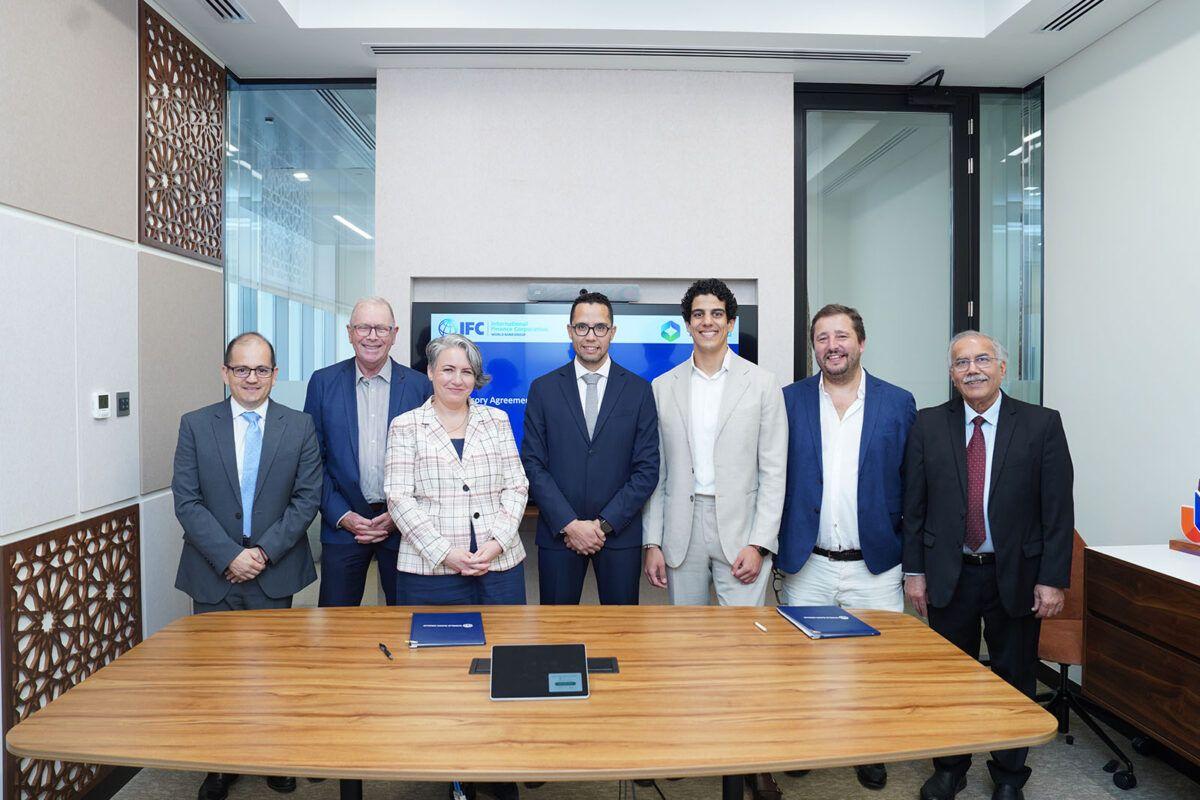
Yamna has signed an advisory agreement with the International Finance Corporation to support its planned $1.3 billion AI-ready data center in Oman.
(For more news, click here)
The growing demand for artificial intelligence and cloud services is driving investment in data centers across the Middle East. However, developing these facilities requires substantial electricity, reliable connectivity and access to long-term financing.
UK-based infrastructure developer Yamna has signed an advisory agreement with the International Finance Corporation (IFC) to support the development of Salalah Al Khadra Digital, a planned AI-ready data center campus in Oman's Dhofar Governorate. The agreement will have IFC, the World Bank Group's private sector arm, advising on sustainability, environmental and social risks, and preparation for green financing.
The project has an estimated first-phase investment exceeding £1 billion, or approximately $1.3 billion, according to an earlier UK government announcement. However, the new agreement does not represent a direct financing commitment from IFC.
Supporting sustainable data center development
Under the agreement, IFC will help Yamna assess the project's sustainability credentials and prepare it for discussions with potential investors, lenders and customers. The advisory services will cover preliminary environmental, social and climate risk assessments, alongside preparations for green and sustainability-linked financing.
IFC will also provide technical expertise related to data center development and renewable energy integration, supporting Yamna's plans to combine digital infrastructure with cleaner energy sources.
Another area of cooperation involves preparing a potential pathway toward EDGE certification, an international green building standard developed by IFC.
The certification evaluates resource efficiency, including energy and water consumption and the environmental impact of construction materials. Qualifying projects generally need to demonstrate at least 20% savings against relevant benchmarks.
For data centers, the requirements also consider energy efficiency through power usage effectiveness, a measure of how much electricity is consumed by computing equipment compared with the facility's total energy use. The advisory agreement does not mean the Salalah project has already achieved certification or secured green financing.
"As demand for AI and digital services accelerates, the infrastructure that underpins them must be built with sustainability at its core," said Wendy Werner, World Bank Group Country Manager in Oman.
Oman expands its AI infrastructure ambitions
The agreement builds on a separate strategic cooperation arrangement signed between Yamna and Oman's Ministry of Transport, Communications and Information Technology in October 2026. That partnership aims to support the development of large-scale AI and hyperscale data center infrastructure, with Salalah Al Khadra Digital positioned as part of the country's broader digital economy strategy.
The UK government announced the proposed investment during Sultan Haitham bin Tarik's state visit to Britain on October 21, highlighting its potential to attract British expertise and investment.
According to Yamna, the development also aligns with Oman's Digital Triangle initiative, which seeks to connect digital infrastructure locations supporting cloud computing, AI and advanced services. Salalah's access to international submarine cable networks and potential renewable energy resources are among the factors supporting the company's choice of location.
Yamna already has experience in Oman's energy sector through its participation in a consortium with EDF Group and J-Power developing a green hydrogen and ammonia project in Dhofar. However, the company has not disclosed specific power supply arrangements linking that development to the proposed data center.
Financing and implementation remain key challenges
The IFC agreement is intended to improve the project's investment readiness rather than provide immediate construction funding. Yamna has not announced a confirmed construction schedule, operational launch date or committed customer agreements for the campus. Detailed computing capacity and electricity requirements have also not been publicly specified.
These factors will be important in determining how the development progresses, particularly as AI data centers require significant investment in electrical infrastructure, cooling systems and high-capacity connectivity.
The advisory partnership represents another step in Oman's efforts to attract international investment into AI infrastructure. Its longer-term significance will depend on whether Yamna can secure financing, complete the necessary development approvals and turn the proposed campus into operational computing capacity.