MENA News
Arab-China Health Forum Explores AI and Medical Technology Partnerships in Cairo

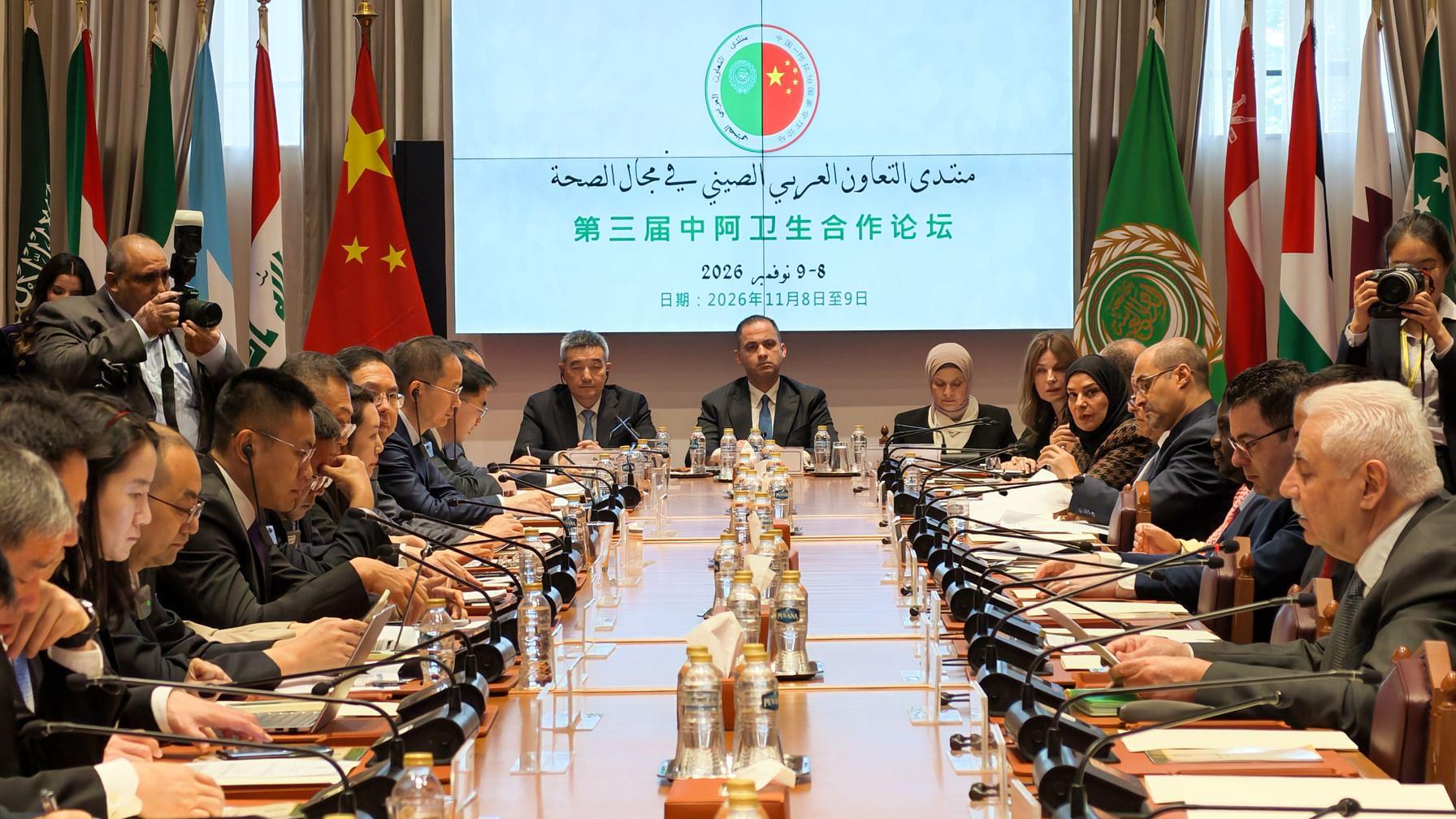
Arab and Chinese health officials are meeting in Cairo to explore cooperation in artificial intelligence, digital healthcare and medical manufacturing.
[For more news, click here]
Artificial intelligence is becoming an increasingly important part of healthcare, from medical imaging and disease detection to hospital management and research. But introducing these technologies into health systems requires more than access to software. Countries also need trained professionals, reliable infrastructure, regulatory oversight and the ability to turn research into practical services.
These challenges are among the issues being discussed at the third Arab-China Health Cooperation Forum, which opened on November 8 at the Arab League headquarters in Cairo.
The two-day meeting brings together health officials, researchers and industry representatives from Arab countries and China to examine opportunities in AI, digital transformation, pharmaceutical manufacturing and public health.
According to the Emirates News Agency (WAM), the forum is being held under the theme “Innovation, Investment and Impact: Towards a New Phase of Arab-Chinese Cooperation.”
Organized in coordination with Egypt's Ministry of Health and Population and China's health authorities, the event is expected to conclude with a joint declaration outlining priorities for future cooperation.
AI and Digital Health Take Center Stage
A major part of the discussions focuses on how artificial intelligence and digital technologies could support healthcare delivery.
Potential areas of cooperation include sharing technological expertise, strengthening healthcare institutions and exploring tools that could improve the efficiency of medical services.
AI has applications across several parts of the healthcare system, including diagnostic imaging, medical research, clinical decision support and the management of patient information.
However, using these technologies in clinical environments presents challenges that differ from those in other industries.
Healthcare AI systems must be evaluated for accuracy, reliability and patient safety, particularly when their outputs could influence medical decisions.
The World Health Organization has emphasized that the adoption of AI in healthcare requires appropriate governance, ethical safeguards and regulatory oversight.
These considerations will be important if cooperation between Arab countries and China progresses from discussions toward the development or adoption of specific technologies.
The forum has not announced a shared AI healthcare platform or confirmed the deployment of new systems.
Medical Manufacturing and Supply Chains Are Also Priorities
Beyond digital technology, officials are examining opportunities to strengthen pharmaceutical production and medical supply chains.
The discussions include developing medical industries, supporting investment and improving the ability of healthcare systems to respond to emergencies and disruptions.
The COVID-19 pandemic exposed the importance of reliable access to medicines, medical equipment and essential supplies, particularly during periods of high global demand.
For Arab healthcare systems, cooperation with Chinese manufacturers could create opportunities to expand access to medical technologies and explore local production partnerships.
An exhibition held alongside the forum is intended to support these discussions.
Arab League Secretary-General Nabil Fahmy inaugurated the Arab-Chinese Exhibition of Medical and Pharmaceutical Supplies and Equipment, featuring 16 Chinese companies.
The exhibition runs until November 11 and showcases medical technologies, pharmaceutical products and potential areas for commercial cooperation.
While the exhibition provides opportunities for companies and health authorities to establish partnerships, no specific investment commitments or manufacturing agreements were detailed in the initial announcement.
Existing Partnerships Provide a Starting Point
The Cairo discussions take place as healthcare cooperation between China and parts of the Arab region continues to develop.
In October, the Department of Health, Abu Dhabi completed an official mission to China involving 32 meetings and site visits across Beijing, Shanghai and Shenzhen.
According to a separate WAM report, the delegation explored collaboration in AI-enabled healthcare, precision medicine, diagnostics, advanced therapies and medical research.
The discussions also examined opportunities for clinical validation, knowledge transfer and partnerships with Chinese healthcare institutions.
Those engagements were separate from the Arab-China Health Cooperation Forum, but they illustrate how some regional health authorities are already exploring technical cooperation with Chinese companies and research institutions.
From Discussions to Implementation
The Cairo forum also addresses healthcare workforce development, universal health coverage and preparedness for public health emergencies.
These issues are closely connected to technology adoption. Hospitals and health authorities need trained personnel and established operating procedures to introduce new digital systems effectively.
The meeting is expected to conclude with a joint Arab-Chinese declaration setting out a roadmap for future health cooperation.
That declaration is intended to be submitted to the Council of Arab Health Ministers for consideration.
For now, the forum's immediate outcome remains a proposed framework for cooperation rather than a set of confirmed technology deployments.
The next question is whether the discussions lead to funded research programs, technology partnerships, manufacturing projects or measurable improvements in healthcare delivery.
For the wider health technology sector, the meeting reflects growing interest in cooperation that combines AI, medical research and industrial capacity.
Its practical significance will depend on how those priorities are translated into projects that healthcare providers and patients can use.