Big Tech
US Midterm Elections Put Data Center Expansion Under Growing Political Pressure

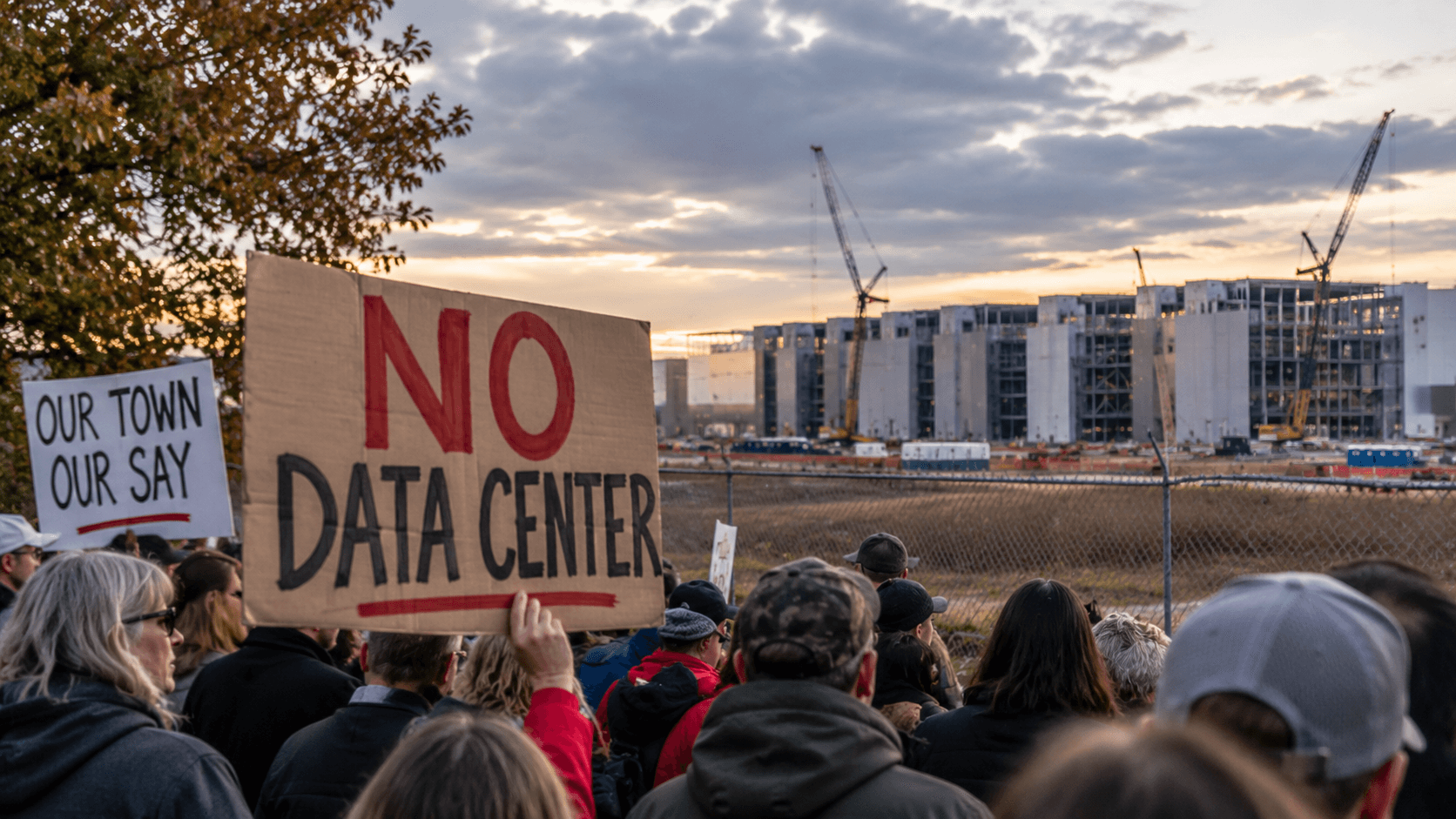
Election results and local ballot measures show how resistance to data center development is becoming a political and commercial challenge for America's AI infrastructure industry.
[For more news, click here]
America's data center expansion faces a new political test. In the November 3 midterm elections, Democrat Gina Hinojosa defeated incumbent Greg Abbott in Texas, while Democrat Amy Acton defeated Vivek Ramaswamy in Ohio. Both incoming governors have backed tougher conditions on data center development. In Ohio, all 10 localities that voted on measures backed by Conserve Ohio to prohibit large-scale data centers approved them.
The results come as technology companies commit billions of dollars to expanding computing capacity for artificial intelligence and cloud services. Local opposition and shifting political priorities are making development approvals less predictable, raising questions about project costs, investment timelines and where companies will build.
In Texas, Hinojosa campaigned for a moratorium on new data center approvals until the state legislature establishes stronger protections for electricity customers and local communities. Her campaign platform calls for an immediate pause, an end to what she describes as excessive tax incentives, protections for water and electricity supplies, and greater public involvement in development decisions. She has also called for union labor and greater transparency around development agreements.
Abbott had already paused new grid connections and environmental permitting while state agencies reviewed the industry's impact. Hinojosa wants the freeze to remain in place until lawmakers pass new protections. She takes office on January 19, 2027, so the duration and scope of any longer-term restrictions will depend on the legislative process.
Texas accounts for approximately 25% of planned US data center capacity, according to Reuters. A change in the state's approach could affect a sizeable share of the country's development pipeline.
Ohio's incoming governor has also outlined specific conditions. In a July 27 campaign announcement, Acton backed a conditional moratorium requiring data centers to cover 100% of their utility costs, use exclusively union labor, operate transparently, meet state environmental standards and negotiate community benefit agreements. She also wants new developments to bring jobs to former industrial areas. Projects that fail to meet those conditions, she said, should not proceed. Neither election means construction will stop, but developers could face additional approval requirements and longer negotiations.
Local Opposition Reaches the Ballot Box
Resistance has moved beyond gubernatorial campaigns. Ballotpedia tracked 41 data center-related measures scheduled for November 3 across 10 states: 28 proposed restrictions on development, while 13 sought to facilitate or support it. Ohio accounted for 21 measures, followed by Illinois with seven. Other communities passed measures introducing additional oversight, including public approval requirements and zoning restrictions.
Local zoning and approval requirements can make proposed sites difficult or impossible to use, even after developers have secured financing and begun planning construction.
Much of the resistance centers on electricity costs, water consumption and land use. A June 2026 report from Lawrence Berkeley National Laboratory estimates that US data centers could consume 649 terawatt-hours of electricity annually by 2030, or 11.8% of projected national consumption. Meeting that demand can require new substations, transmission connections and additional generation capacity. If utilities spread those infrastructure costs across their customer base, households and smaller businesses could end up sharing the expense of serving large industrial customers.
Public opinion research points to growing concern. A Pew Research Center survey found that 50% of American adults considered data centers mostly bad for home energy costs in August 2026, up from 38% in January. Negative views of their environmental impact rose from 39% to 54%. Separately, the University of Pennsylvania's Annenberg Public Policy Center found that 61% of Americans opposed new data centers in their communities, up from 49% in February and March.
Support for AI services does not necessarily mean support for the facilities behind them. For many communities, the questions are practical: who pays for additional infrastructure, how much water will facilities use, and what do residents receive in return?
Delays Put Data Center Investments at Risk
The financial impact is becoming harder to ignore. Data Center Watch reported that local opposition blocked or delayed at least 45 US projects valued at nearly $68 billion between April and June 2026. Even temporary setbacks can increase financing costs, disrupt construction schedules and complicate electricity connections.
Hyperscalers may have to renegotiate delivery schedules, find alternative sites or arrange interim computing capacity. Utilities also face uncertainty over when proposed developments will connect and how much power they will need.
Power availability, infrastructure delivery and local approvals are increasingly shaping site selection. CBRE's North America Data Center Trends report for the first half of 2026 identifies electricity availability and infrastructure delivery timelines as major influences on site selection, leasing activity and pricing. Inexpensive land may lose its appeal if grid connections are years away or permitting remains uncertain. A more expensive location could prove commercially preferable if power is available sooner and regulatory requirements are clearer. Developers may also spread investment across several markets rather than concentrate projects in states where political conditions are difficult to predict.
Texas illustrates the potential scale of that reassessment. Following Hinojosa's victory, industry advisers told Reuters they expected some projects to be delayed, abandoned or accelerated ahead of tighter rules. Developers could also redirect investment to other states or countries. Hyperscalers have greater flexibility to shift planned capacity between locations, while smaller developers have less room to absorb delays.
Can Technology Companies Address the Cost Concerns?
The federal government has sought to address one of the industry's biggest points of contention: who pays for the electricity and infrastructure required by data centers.
On March 4, 2026, the White House announced the Ratepayer Protection Pledge, initially accepted by seven major technology companies: Amazon, Google, Meta, Microsoft, OpenAI, Oracle and xAI. Participating companies commit to building, bringing or buying the additional electricity needed for their data centers and covering the cost of the power infrastructure required to serve them. The commitments include negotiating separate rate structures with utilities and state governments, paying for power delivery upgrades and covering agreed costs even when they do not use the electricity. The pledge also calls for investment in local communities and coordination with grid operators to support reliability.
Participation has since expanded beyond the original seven electricity buyers. The White House now reports more than 300 participating organizations across the power system, including 23 governors, more than 250 utilities and cooperatives, and 48 data center developers.
For utilities, these arrangements could provide greater certainty that the customers driving additional demand will fund new generation and grid upgrades. For developers and investors, they could make electricity costs more predictable and improve the prospects of securing power infrastructure. However, the voluntary pledge does not guarantee grid connections, new generation capacity or local approval. Its practical impact will depend on how commitments translate into contracts, tariffs and infrastructure investment. It also leaves concerns about water consumption, land use and community benefits unresolved.
As demand for AI computing capacity grows, developers will need to account for political and community pressures earlier in the planning process. Access to electricity, suitable land and financing will remain essential, but predictable regulation and local approval could increasingly determine where projects proceed. For companies committing billions of dollars to new facilities, community acceptance is becoming a commercial consideration with direct implications for investment decisions and where the next generation of data centers gets built.
Related Articles
AI Has a Power Problem. Velaura Raised $110 Million to Solve It
NVIDIA’s DSX POD Could Cut AI Factory Deployment From Six Months to 14 Days
Exclusive: Matt Swalley on Why Storage Architecture Is the Next Major Bottleneck for AI Factories