Startups
009 Raises $1.4 Million to Tackle Saudi AI’s Workflow Gap


The Riyadh startup is targeting the integration needed to put AI agents to work inside government and industrial systems.
[For more news, click here]
Saudi Arabia’s Absher already connects people to digital government records and services, while Abu Dhabi’s TAMM uses AI to help complete requests. As our comparison of Gulf government platforms explored, the UAE’s planned Mira concierge extends that ambition to federal services through a conversation.
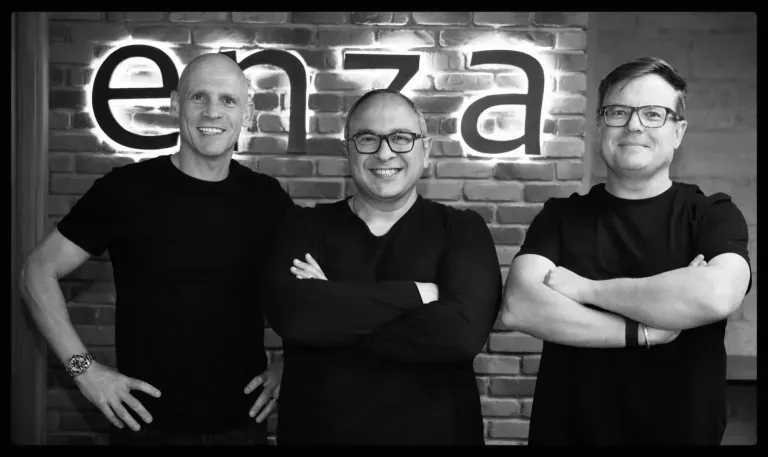
Saudi AI startup 009 has raised $1.4 million in a pre-seed round to develop agents that automate work inside government and industrial organizations. Founded in Riyadh by Abdulrahman Bajaber and Mohammed Hashmi, the company targets sectors including manufacturing, mining and defense.
Its proposition addresses a practical part of the Saudi AI opportunity: connecting software to the records, rules and approvals through which institutions actually operate.
That operational layer is already part of Saudi Arabia’s digital-government agenda. Tech Revolt’s Saudi AI coverage has described the Ministry of Interior’s use of software to interpret requests and distribute tasks across departments.
Map the Work Before Automating It
009 calls its starting point an “agent twin,” a model of an organization’s operations built from its existing systems and historical records. It maps handoffs, delays and repeated work, then tests proposed automation against past cases before deployment. This establishes a baseline for processing time, errors and cost.
In a maintenance workflow, for example, an agent could gather equipment records, check for duplicate requests and prepare a work order for a planner’s approval. The useful outcome would be less time spent collecting information and correcting incomplete requests, allowing staff to concentrate on decisions that require their judgment.
Deployed agents are measured against that baseline, keeping simulated outcomes separate from production results.
Adoption Is Ahead of Organizational Change
McKinsey’s GCC research helps explain the opportunity. Its survey covered 135 public- and private-sector leaders, with Saudi-headquartered organizations representing 53% of the sample. Among 120 respondents answering the core questions, 86% reported AI adoption and 81% had redesigned at least one workflow.
The depth of change varied. Some 57% had redesigned workflows in one to three business functions, while 24% had reached four or more. Only 16% met McKinsey’s highest maturity category, combining redesigned workflows, live AI agents and roles reorganized around them.
Among that small leading group, 84% reported productivity gains, compared with 63% of other respondents.
One private-sector CFO quoted in the research described the purchasing preference:
“I ensure my teams bring plans that encompass full workflows. That is where we’ve found value.”
The opening is to help institutions deepen existing AI adoption and connect it to the way people perform their jobs.
Control Is Part of the Product
Agents and models can run on customers’ own servers, private clouds or networks disconnected from the internet. The deployment model is designed to keep operational data within customer infrastructure.
That could support sensitive workflows where external AI services are unsuitable. Local deployment addresses where processing happens; approval rules determine what the software is allowed to do.
The company describes defined permissions, named human approvers for sensitive actions, activity logs and controls to stop agents or reverse changes. These features form part of the proposed operating model, with staff retaining responsibility for consequential decisions.
The same need for controlled authority underlies Secureify’s planned tools for enterprise AI agents, focused on permissions and monitoring agent activity.
The same approach works around existing enterprise systems, reducing the need for a wholesale replacement project. That connects with the opportunity explored in our coverage of digital government as a market for AI startups: building products that agencies can adopt within systems they already use.
Saudi Arabia’s AI ambitions will need businesses that can deliver this operational work. For 009, the test is whether its approach can produce dependable gains across customers without turning every deployment into a new consulting project.
Related Articles
AI adoption pushes Saudi companies to rethink workforce development
Al Wathba Insurance Deploys Agentic AI, Reports 50% Reduction in Case Turnaround Time
DataRobot and Dell target Middle East enterprises with sovereign agentic AI