Startups
Madinah Tech Forum: Connecting Global Innovation with Real-World Challenges

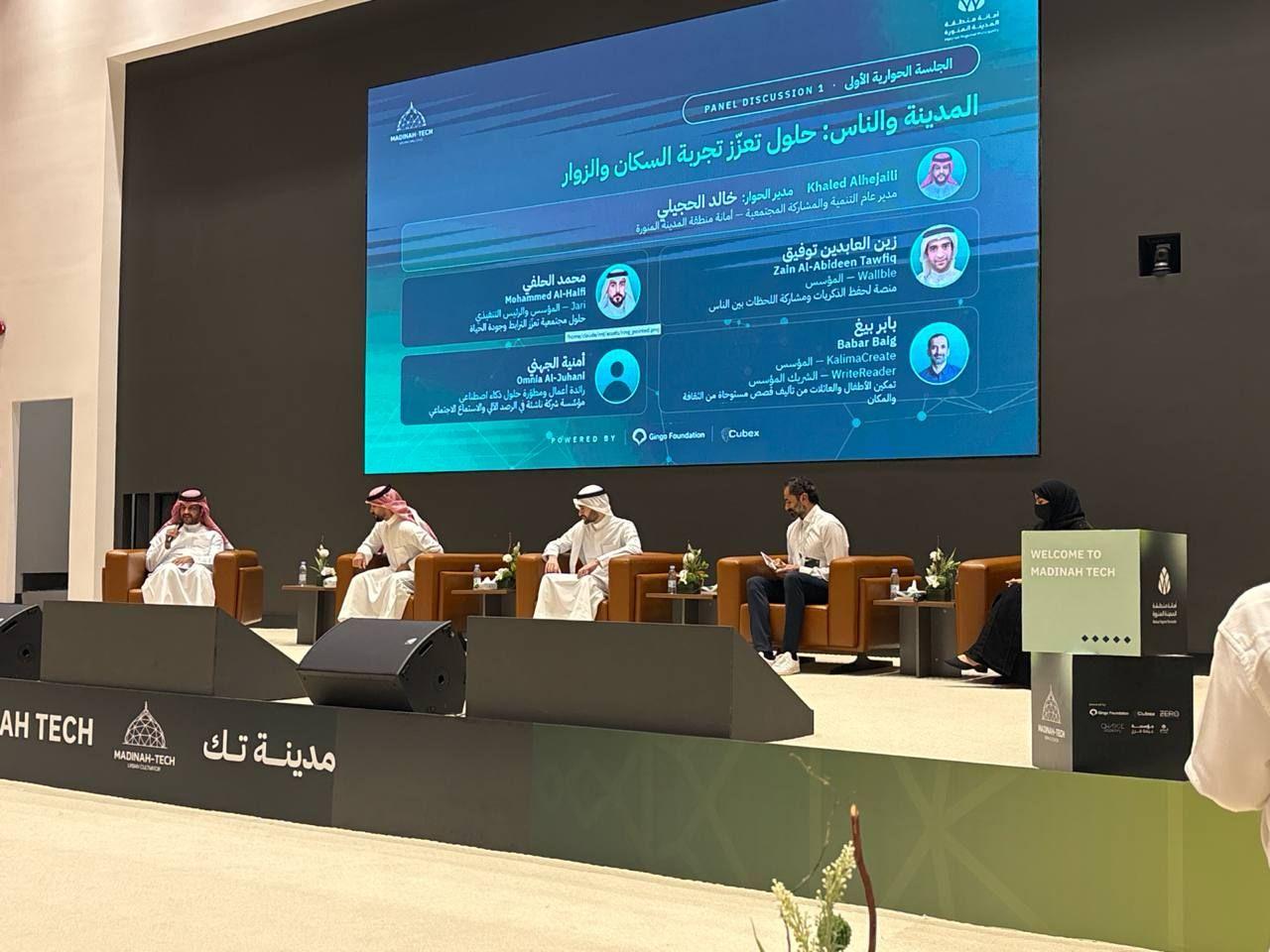
Madinah Tech Forum explored how startups can address urban challenges through practical testing, local partnerships and pathways to commercial adoption.
(For more news, click here.)
Founders, investors, and industry stakeholders gathered in Madinah to explore how emerging technologies and innovative solutions can address urban challenges, support market adoption, and create lasting economic and societal impact.
Madinah is emerging as an environment for innovation, where real-world urban challenges create opportunities for entrepreneurs to develop, validate, and commercialize technologies.
From smart cities and sustainability to cultural innovation, advanced materials, and water management, these challenges open pathways for startups to introduce solutions with the potential to scale beyond a single city or market.
This vision was at the center of the Madinah Tech Cultivator Forum, held on November 3 at the Madinah Municipality Theater.
The event brought together founders from the program’s first two cohorts, investors, entrepreneurs, government representatives, and ecosystem stakeholders to explore how innovation moves from identifying market needs to real-world implementation.
Throughout the forum, founders shared their experiences navigating market challenges, engaging with stakeholders, validating their technologies, and exploring opportunities for pilots and commercial adoption.
Madinah as a Gateway to Real-World Innovation
Launched by Madinah Municipality and operated by Gingo Foundation, the Madinah Tech Cultivator introduces a market-first approach to supporting entrepreneurship.
The program connects founders directly with real-world challenges identified by institutional stakeholders, creating opportunities to explore how innovative technologies can address specific market needs.
Through access to market intelligence, industry expertise, relevant decision-makers, and potential pilot environments, founders gain opportunities to validate their solutions against actual market demand.
The program is equity-free and participation fee-free, with an evergreen structure that prioritizes founders’ readiness and meaningful outcomes over fixed timelines.
Across its first two cohorts, Madinah Tech Cultivator has welcomed 30 startups and engaged 50 contributors who volunteer their expertise to support founders throughout their journey.
In his opening remarks, Saad Ibrahim Shafee, Assistant Deputy Mayor for Corporate Communication and Community Engagement, highlighted the importance of closing the gap between promising innovations and their implementation in real urban environments.
Challenges involving waste management, traffic, irrigation, and urban infrastructure represent opportunities not only to improve the city but also to enable entrepreneurs to develop commercially viable solutions with broader market potential.
Technology, Communities, and Cultural Innovation
The first panel, The City and People, explored how technology can reshape urban experiences, strengthen communities, and unlock new opportunities across cultural and social environments.
Zain-Alabdin Tawfiq, founder of Wallble, shared his approach to developing a platform centered on shared memories and appreciation. He emphasized the importance of understanding problems people have already experienced, rather than relying solely on initial reactions to new ideas.
Muhammad Alhelfy, founder of Jari, discussed the potential of digital platforms to transform neighborhood engagement by connecting residents, businesses, and local institutions. His approach combines community participation, neighborhood ambassadors, and locally relevant content to create sustained engagement.
Babar Baig, founder of WriteReader and KalimaCreate, presented an innovative approach to cultural education through interactive storytelling. Drawing on activities at the Red Sea Museum in Jeddah and a pilot in Madinah, he demonstrated how technology can create new forms of engagement between cultural institutions and younger audiences.
Omnia Al-Juhani explored how data analytics and the classification of social media feedback can help municipalities better understand public needs, identify emerging issues, and support more informed decision-making.
Together, these discussions demonstrated how digital innovation can extend beyond conventional urban infrastructure to influence how communities connect, learn, and interact with their surroundings.
From Emerging Technologies to Market Adoption
The second panel, From Opportunity to Implementation, focused on the challenges and opportunities involved in bringing innovative technologies into real operating environments.
Mohammed Azhar Mohiuddin, founder of BioReform, discussed the commercialization of sustainable packaging solutions. His experience highlighted the importance of combining environmental impact with practical performance, affordability, and scalability.
As he explained, sustainability must also make commercial sense: solutions need to be both affordable and scalable to achieve meaningful adoption.
Abdulrahman Joud, co-founder of Emtethal, explored how artificial intelligence, sensors, and digital monitoring technologies can support food safety and operational compliance, particularly in complex hospitality environments with seasonal workforce demands.
Mohammed Ahmed, co-founder of Flow Guard, presented technology designed to monitor water consumption and identify potential leaks. By analyzing water usage after a building’s overhead storage tank, the solution creates opportunities for more efficient resource management.
During the discussion, Dr. Mohammed Al-Ghamdi, Deputy Mayor for Strategy and Transformation, expressed interest in exploring potential applications of such technologies within municipal operations, including irrigation.
These examples illustrated a central challenge facing innovative startups: developing promising technology is only one part of the journey. Achieving adoption requires understanding market needs, demonstrating value in real operating environments, and building relationships with potential customers and implementation partners.
Beyond Pilots: Creating Pathways to Commercialization
One of the forum’s central themes was the importance of moving beyond innovation showcases toward meaningful market outcomes.
While pilot projects provide valuable opportunities to test technologies, successful validation does not automatically guarantee commercial adoption.
Founders need access to decision-makers, operational environments, relevant industry expertise, and a clear understanding of the requirements for broader implementation.
This is where the Madinah Tech Cultivator’s market-first model plays an important role.
By connecting entrepreneurs with governments, institutions, and industry stakeholders, the program creates an environment in which founders can explore opportunities, validate assumptions, refine their solutions, and work toward potential commercial partnerships.
The focus is not simply on helping startups build products. It is on empowering founders to identify opportunities where their technologies can deliver measurable value.
Building an Innovation Ecosystem with Global Potential
The Madinah Tech Cultivator Forum highlighted the growing role cities can play in enabling innovation and entrepreneurship.
By opening real-world challenges to founders and connecting them with the stakeholders responsible for addressing those challenges, municipalities can become important catalysts for technology adoption and economic development.
For entrepreneurs, this creates access to markets, practical validation opportunities, and potential pathways to scale.
For institutional partners, it creates opportunities to discover emerging technologies, engage with innovative companies, and explore new approaches to longstanding challenges.
Through its collaboration with Madinah Municipality, Gingo Foundation continues to advance a founder-centric, market-first model that connects global innovation with real opportunities for economic and societal impact.
The forum’s reach extended far beyond the theater in Madinah. Thanks to Teleporta Software and its CloudStage technology, the entire event was accessible live to a global audience, allowing speakers and participants from around the world to join online and follow the conversations as they unfolded. Around 150 participants joined remotely, with real-time translation available in multiple languages, including Chinese, Arabic, Russian, and Spanish. By making the discussions accessible across languages and borders, Teleporta helped turn a local gathering into a truly international exchange of ideas, bringing global founders and stakeholders closer to the opportunities emerging in Madinah.
Founders interested in exploring market opportunities, as well as industry specialists interested in contributing their expertise, are invited to engage with the Madinah Tech Cultivator program.