AI
Jensen Huang returns to a different Nvidia and a different Washington

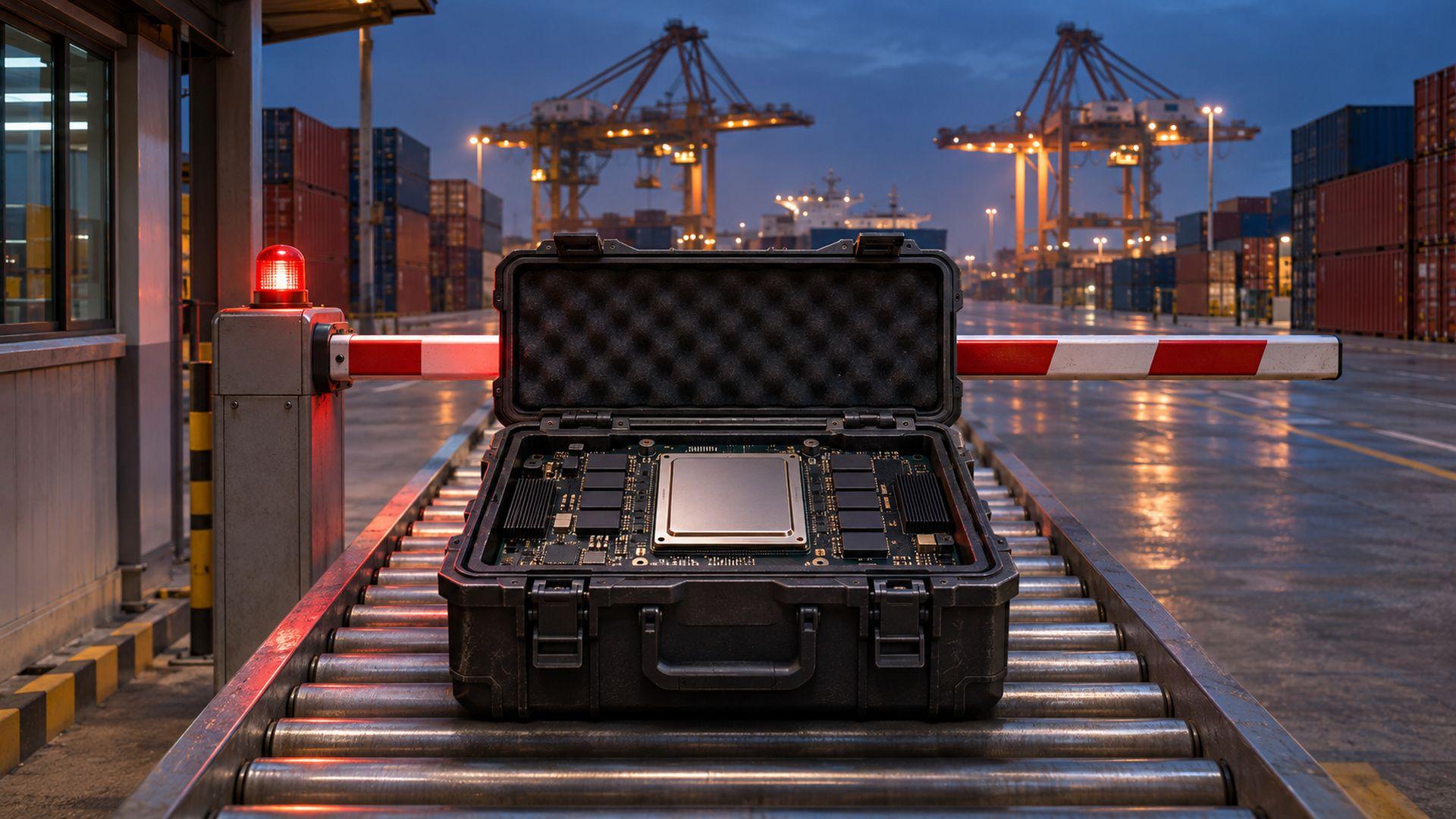
Nvidia’s rebound lifted chip stocks across Asia. The harder test is playing out in the contracts that determine who can finance, rent and run AI servers.
[For more news, click here]
While Jensen Huang was out of Nvidia, Washington tightened the rules on overseas chip sales and remote access. Bankers reportedly paused a $480 million loan for Nvidia chips that China’s ByteDance would use at a facility in Malaysia. The servers were meant to stay in Malaysia. The identity of the customer was enough to make lenders reconsider the deal.
Singapore said it was still working with US authorities to establish who ultimately received chips bought by Megaspeed. A day earlier, Nvidia announced Huang’s return and the US filed a rule adding Megaspeed and six other companies to its Entity List, a register that adds export licensing requirements for transactions involving listed parties. Nvidia’s filing dates the board’s decision to November 22. Huang returned to a company with new oversight inside the boardroom and more scrutiny of the deals outside it. Singapore’s account · Nvidia’s SEC filing
The Board Reversed Itself. The Investigations Continue.
On November 17, Nvidia chair Harvey Jones told investors the board did not intend to reinstate Huang. Six days later, the company announced that directors had voted unanimously to bring him back after receiving input from senior US officials. President Donald Trump told CNBC he had spoken to the board and “convinced ’em.” Trump’s CNBC interview
Nvidia says its independent investigation into reports that Huang was targeted by a foreign intelligence effort will continue. The directors retained former federal prosecutor Joon H. Kim and his firm for that inquiry. A separate board committee oversees export compliance, and Nvidia is recruiting a chief compliance officer.
Silicon Valley’s response showed how much of the industry’s confidence still rests on Huang personally. Elon Musk described some of Nvidia’s supply arrangements as “a handshake with Jensen.” OpenAI chief Sam Altman put the commercial relationship plainly at the DealBook Summit: “Jensen took one of the earliest big bets on us. We took a big bet on Nvidia.” Both remarks help explain why his absence mattered to companies buying AI infrastructure. Altman’s DealBook remarks
In Washington, Democrats won both chambers in the November midterms and take control in January. That gives them greater scope to set hearing agendas and seek testimony and records. Speaker-designate Hakeem Jeffries has already called for stronger export controls in the defense authorization bill. The current Republican committee chairs have confirmed that Huang and Nvidia General Counsel Tim Teter will sit for transcribed interviews on December 1 and 2. The inquiry is already underway ahead of the change in congressional control. Commerce retains authority over individual licenses.
Follow the Tenant, Then Follow the Loan
Nvidia put Megaspeed on its own no-sell list in June 2025. The US designation goes further. Other suppliers and intermediaries now face licensing requirements when a listed company has a covered role in a transaction involving goods or technology subject to US export rules. For chips made outside the US, the new licensing requirement applies if the chip is already covered by US export rules. Entity List rule
The names on the list show why the case goes beyond a chip shipment. Malaysia identified Speedmatrix, Megaspeed’s local affiliate, as a tenant that brought its own servers into Malaysian data centers. Corporate records reviewed by The Straits Times show that Speedmatrix pledged equipment and other assets to Apex, a Singapore subsidiary of Alibaba. Both companies are listed. Alibaba disputes Apex’s designation. The records establish a financial link alongside the tenancy. The question of where the chips ended up remains under investigation.
Bridge Data Centres had set aside 68.4 megawatts at a Malaysian site for Megaspeed. Bloomberg reported in April that Bridge told lenders it had reassigned all of that capacity to another cloud provider, Zenlayer. The letter gave no reason for the switch, which came months before the blacklist. The reassignment meant that capacity had another customer.
The second question was what the banks expected from Bridge itself. In November, as Bridge sought to expand its financing to $6.6 billion, Citi and JPMorgan reportedly sought terms that would make Bridge responsible to its lenders for complying with US chip restrictions. With another customer in place, the operator could still sell the capacity. The proposed loan terms put responsibility for complying with the rules on Bridge.
ByteDance shows the cost from China’s side. Singapore-based Aolani Cloud was seeking the $480 million to buy GPUs for the Malaysian facility that ByteDance would use remotely. The reported pause put funding for that purchase in doubt. Aolani faces uncertainty over how to fund the purchase, and ByteDance may have to delay work, secure capacity elsewhere, or rely more heavily on other hardware. The loan amount measures the financing at stake. The cost to ByteDance in time, computing capacity or revenue remains undisclosed.
Who Gets Cheaper Compute?
Nvidia shares closed more than 31% higher on November 23. Taiwan’s benchmark jumped more than 9% in early trading the following day and South Korea’s Kospi gained 6.5%, while Shanghai and Hong Kong posted much smaller gains at the time of reporting. That rebound shows how quickly investors repriced Nvidia and its suppliers once Huang returned. The ByteDance loan gives a more direct measure of where the export rules are affecting a business decision.
Chinese buyers were a meaningful source of demand. A House disclosure showed requests for about 3.44 million covered chips and approvals for roughly 880,000 as of May 11. Approvals are permissions, and Nvidia’s own shipment figures show what reached the market. It reported $2.4 billion in data center Hopper shipments to China in its latest quarter. Chinese demand helped support the market for certain chips, directly and through overseas cloud rentals. Tech Revolt’s coverage of the licensing disclosure
If capacity set aside for Chinese customers becomes available elsewhere, eligible buyers could get servers sooner or negotiate better rental terms. How much they gain depends on which systems are freed up and whether other buyers are already waiting. Nvidia told investors that B300 rental rates had risen more than 60% since introduction even as the price of AI output fell. A GPU rental rate and the cost of getting useful work from a model can move in different directions. OpenAI’s AMD and Broadcom deals and Anthropic’s use of Amazon’s Trainium also show that Nvidia still faces competition. Labs with more places to run their models are better positioned to benefit. Tech Revolt’s reporting on Anthropic’s infrastructure commitments
Anthropic CEO Dario Amodei argued in June that chip controls should be “expanded, tightened, and coordinated with other likeminded states.” The ByteDance case shows how that strategy can complicate a Chinese lab’s next expansion. It also strengthens the incentive to get more out of domestic chips and existing clusters. Huawei says its Ascend-powered Atlas 950 is in commercial use, and DeepSeek has worked with Huawei to make Ascend chips easier to program. Alibaba says Qwen4-Max cut average task costs by around 60% against its predecessor on an internal benchmark. Those efforts point to the next question for Chinese competitors: how quickly can they train and serve their next generation of models at scale? Amodei’s policy essay · Alibaba’s Qwen4-Max release
What the Gulf Has to Price In
As HUMAIN expands its Saudi data center plans, its preliminary agreement with DataVolt and Nebius at Oxagon shows what an anchor customer can bring. Nebius would take up to 50 megawatts, half the capacity now under construction, giving the developers a prospective buyer while they build. The UAE’s named chip permissions for G42 and Core42 address a different part of the deal. They help eligible recipients acquire equipment, while separate rules govern its use.
For Gulf developers and their lenders, the test is whether a campus can keep paying its bills if an anchor customer loses access. Interest and operating costs continue while the developer looks for a replacement. That is why the ability to bring in another eligible customer belongs in the financing case before construction starts. Tech Revolt’s reporting on AI infrastructure credit
Related Articles
Oracle Reportedly Cancels $7B Tencent AI Chip Deal Amid US Pressure
Core42 Is Building the AI Compute Network That Doesn't Pick Sides Between AMD and NVIDIA