AI
Oracle Opens Its Cloud to More AI Chipmakers

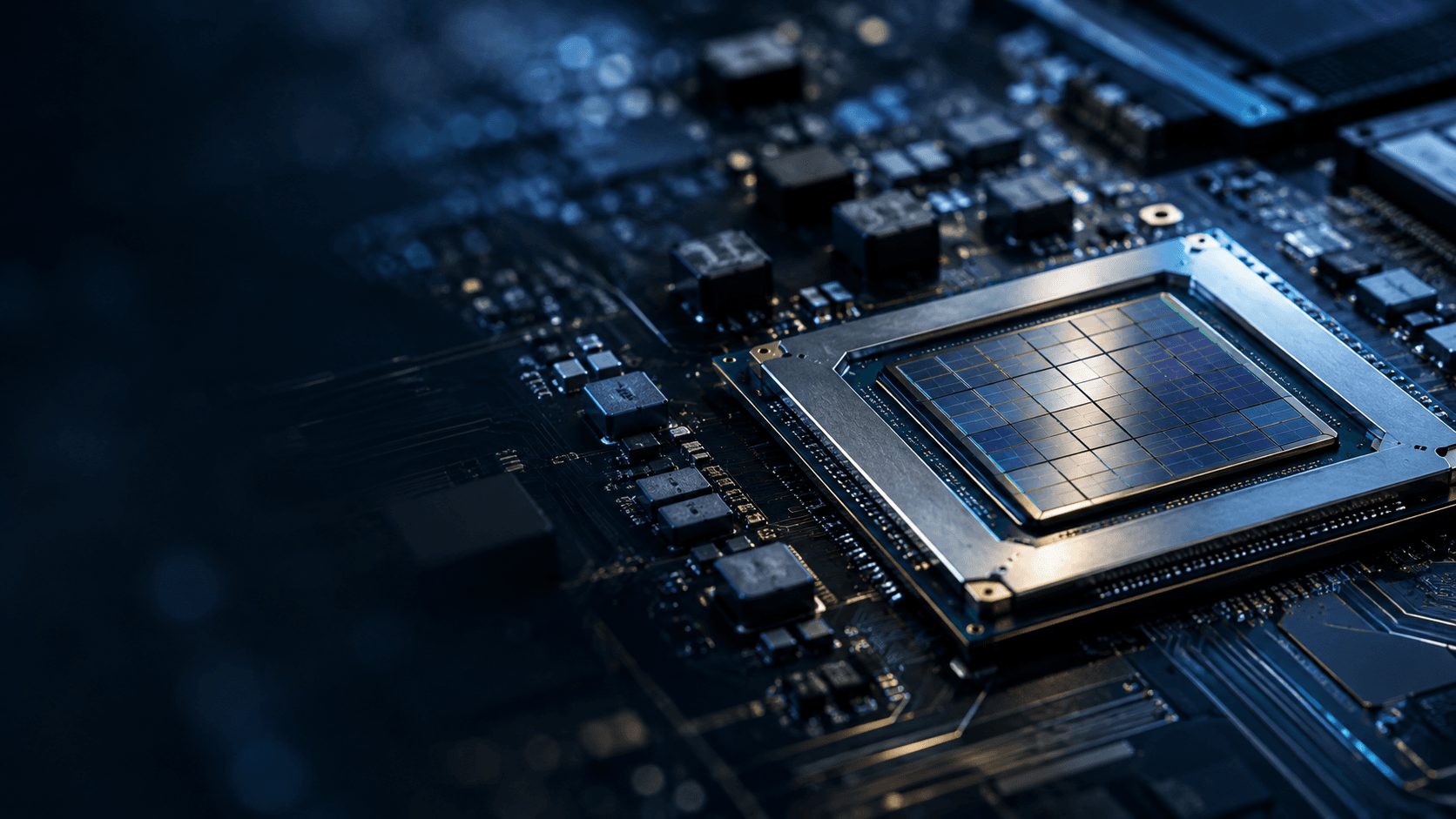
Oracle’s expanding chip partnerships reflect a growing effort to give cloud customers more control over the hardware they use to train AI models and run applications.
[For more news, click here]
Expanding its AI infrastructure, Oracle is adding Google’s custom chips and specialized inference systems from Cerebras and SambaNova to its cloud platform while continuing to grow its existing partnership with NVIDIA. Announced at Oracle AI World in Las Vegas on October 27, the agreements will give enterprise customers more options for running AI workloads through Oracle Cloud Infrastructure (OCI), without requiring them to move their wider cloud operations to another provider.
As businesses move from developing AI models to deploying them across everyday operations, their computing requirements are becoming more varied. Training a model and running it to generate responses or complete tasks can place different demands on hardware, prompting cloud providers to offer more processor options. Oracle plans to introduce its Google TPU and Cerebras services in 2027, while its latest NVIDIA Vera Rubin systems are already available on OCI.
Google TPUs and Specialized Inference Systems Join OCI
Google’s Tensor Processing Units (TPUs) are a major addition to Oracle’s cloud offering. Under the agreement announced by Oracle, OCI will become the first hyperscale cloud platform outside Google to offer the processors. Availability is scheduled to begin in 2027, with capacity expected to increase over several years. Google’s eighth-generation portfolio includes TPU 8t for training AI models and TPU 8i for inference, the process of using trained models to generate responses and predictions.
Businesses already using Oracle’s cloud services could access Google’s hardware without moving their wider operations to another provider. The practical benefits will depend on software compatibility, workload performance, and the cost of running applications on each architecture. Access to another processor family gives customers more options, although it does not guarantee that every application will run faster or cost less.
Cerebras brings a different processor design to the platform. Its systems use a wafer-scale architecture that integrates computing and memory on a large silicon wafer, reducing the need to move data between separate chips. Under their announced agreement, the companies plan to offer Cerebras inference services through OCI in 2027. Oracle also plans to deploy SambaNova’s SN50 inference systems in its data centers, giving businesses another option for running AI models. Both services are planned for 2027 and are not yet fully available through OCI.
The partnerships address different requirements within the AI market. Businesses training large models may need substantial computing capacity, while those running AI assistants and agents may place greater importance on response times and the cost of repeated model calls. Offering different processor architectures could help customers select hardware according to their applications, provided the services meet their technical and commercial requirements.
Rising Demand Brings Higher Spending
Oracle’s expansion comes as its cloud business grows rapidly. In the first quarter of fiscal 2027, the company reported cloud infrastructure revenue of $7.4 billion, up 121% year over year, while total revenue reached $19.3 billion. Capital expenditures were approximately $28.5 billion for the quarter, compared with $8.5 billion in the same period a year earlier. Oracle has forecast capital expenditures of $90 billion to $95 billion for fiscal 2027, according to its quarterly results.
The company reported $664 billion in remaining performance obligations at the end of the quarter, representing contracted revenue yet to be recognized. Fulfilling those commitments will require Oracle to continue expanding its computing capacity. The investment is tied to demand from customers building and deploying AI systems, but the company must still deliver the infrastructure on schedule and generate sufficient revenue from its spending.
NVIDIA remains central to that expansion. Oracle and NVIDIA plan to scale their deployment of Vera Rubin NVL72 systems to multi-gigawatt levels, while Oracle is also making NVIDIA Vera CPUs and additional Rubin configurations available to customers. The CPUs are designed to handle tasks that support AI applications, including executing code and coordinating work between model calls. Together, these systems give Oracle customers options for handling both the processing demands of AI models and the work surrounding them.
For businesses, the arrival of additional chip architectures could broaden the choice of infrastructure available for AI development and deployment. Software compatibility, application performance, service availability, and migration costs will all influence whether a particular processor makes sense for a given workload. Google TPUs and Cerebras inference services are not expected to arrive on OCI until 2027, so their impact on customer costs and performance will become clearer after deployment.
Oracle is continuing to expand its NVIDIA infrastructure while preparing to bring other chipmakers onto the same cloud platform. The immediate test will be delivering the planned services and giving customers enough capacity to run their applications reliably. Their performance in real-world use will determine how much the expanded choice changes the way businesses build and operate AI systems.
Related Articles
Microsoft’s Maia 300 Chip Targets the Cost of Running AI
Exclusive: Matt Swalley on Why Storage Architecture Is the Next Major Bottleneck for AI Factories
Broadcom’s $63 Billion Anthropic Deal Brings Wall Street Deeper Into AI Infrastructure