AI
AIQ and Siemens Energy partner to expand AI-powered autonomous operations

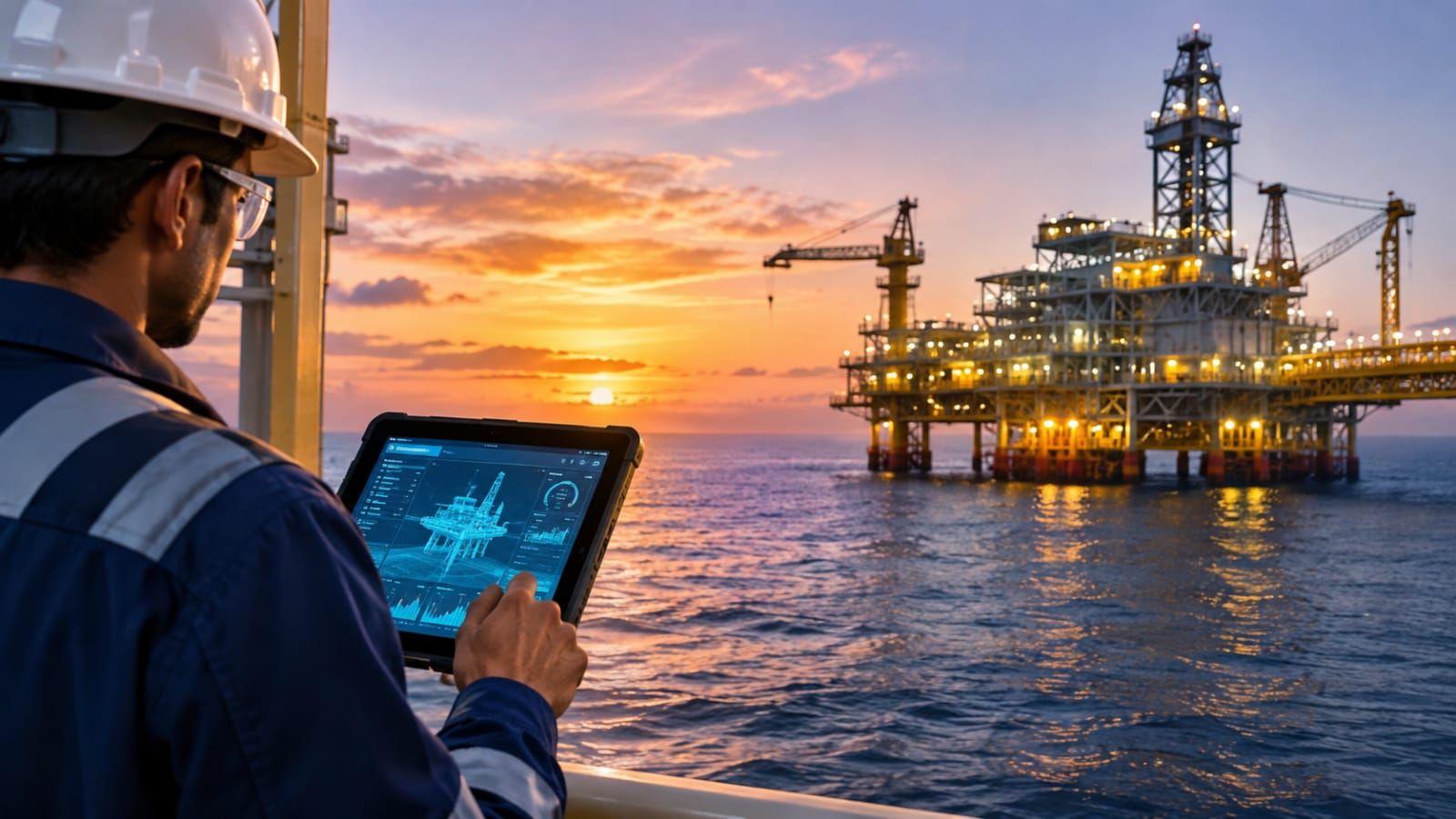
Abu Dhabi-based AIQ and Siemens Energy are developing autonomous operations solutions for the energy industry, combining well-control AI, digital twins and industrial automation. Their collaboration builds on AIQ's existing RoboWell deployments, but a joint rollout has not been announced.
[For more news, click here]
Energy producers have used software for years to monitor equipment and predict maintenance needs. The next challenge is allowing those systems to make operational adjustments with less human intervention, without compromising the safety of facilities where a faulty decision can disrupt production or damage equipment.
Abu Dhabi-based AI developer AIQ and Germany's Siemens Energy have announced a collaboration to develop AI-powered autonomous operations for energy and process industries.
Unveiled on November 5 at ADIPEC 2026 in Abu Dhabi, the agreement brings together AIQ's AI applications and autonomous decision-making tools with Siemens Energy's industrial automation, digital twins and asset performance management technology.
The companies aim to develop a commercial offering for energy operators, initially concentrating on remote operations, drilling-related applications and equipment reliability. They have not disclosed a contract value, named customers or a deployment schedule.
Connecting AI to industrial controls
Industrial AI can identify unusual equipment behavior or recommend changes to improve efficiency. Autonomous operations go further by allowing software to act on some of those findings within defined operational limits.
Digital twins, virtual representations of physical systems using operating data, can help teams test scenarios and assess equipment performance. Combined with automation and AI agents, they could support closer coordination between monitoring, analysis and control.
But connecting new AI applications to equipment already operating in the field is technically complex. Systems must interpret accurate sensor data, handle unexpected conditions and maintain reliable oversight.
RoboWell provides an existing starting point
An early focus of the collaboration is AIQ's RoboWell, an autonomous well-control application designed to adjust production settings using operational data.
One use case is gas lift, where injected gas helps move oil to the surface. Optimizing the amount of gas used can improve production efficiency and reduce unnecessary consumption.
RoboWell is not a newly developed Siemens Energy product. ADNOC announced its deployment across an initial ten wells at the offshore NASR field in July 2024.
At that time, ADNOC reported up to 30% optimization in gas-lift consumption and up to 5% improvement in operating efficiency. These are company-reported results from existing operations, not outcomes of the new partnership.
AIQ and Siemens Energy demonstrated how RoboWell could fit into a broader autonomous operations environment at ADIPEC. The demonstration did not establish that the joint system had entered commercial service.
A wider push toward autonomous energy operations
The deal comes as energy companies look for ways to connect production optimization, predictive maintenance and equipment monitoring rather than operate each application separately.
The International Energy Agency's 2025 Energy and AI report identifies oil and gas as an established user of AI for exploration, production and equipment maintenance. It also highlights the importance of data quality and infrastructure in applying these tools.
For AIQ, Siemens Energy could provide access to a wider industrial customer base. For Siemens Energy, the partnership adds a well-control application with field deployment experience to its automation portfolio.
Khalid Bin Hadi, Managing Director of Siemens Energy UAE, said:
"Accelerating our autonomous operations roadmap requires partners with proven technology."
Deployment will depend on safety and reliability
Industrial autonomy carries risks beyond those of software used mainly to generate information. Incorrect sensor readings, cybersecurity failures or poorly defined control limits can have physical consequences.
Operational technology security guidance from the US National Institute of Standards and Technology emphasizes protecting industrial systems while preserving safety and reliability. New AI controls therefore require careful testing, defined permissions and human oversight.
Neither company has detailed how responsibility for autonomous decisions would be allocated in its proposed joint offering, or published performance benchmarks for that integration.
The agreement signals an ambition to move beyond AI recommendations toward systems that can take limited operational actions. Whether that ambition translates into wider adoption will depend on demonstrated reliability, safety and measurable benefits in real industrial environments.