AI
Dropbox Buys Tigris Data for $350 Million as AI Infrastructure Moves Into the Storage Layer

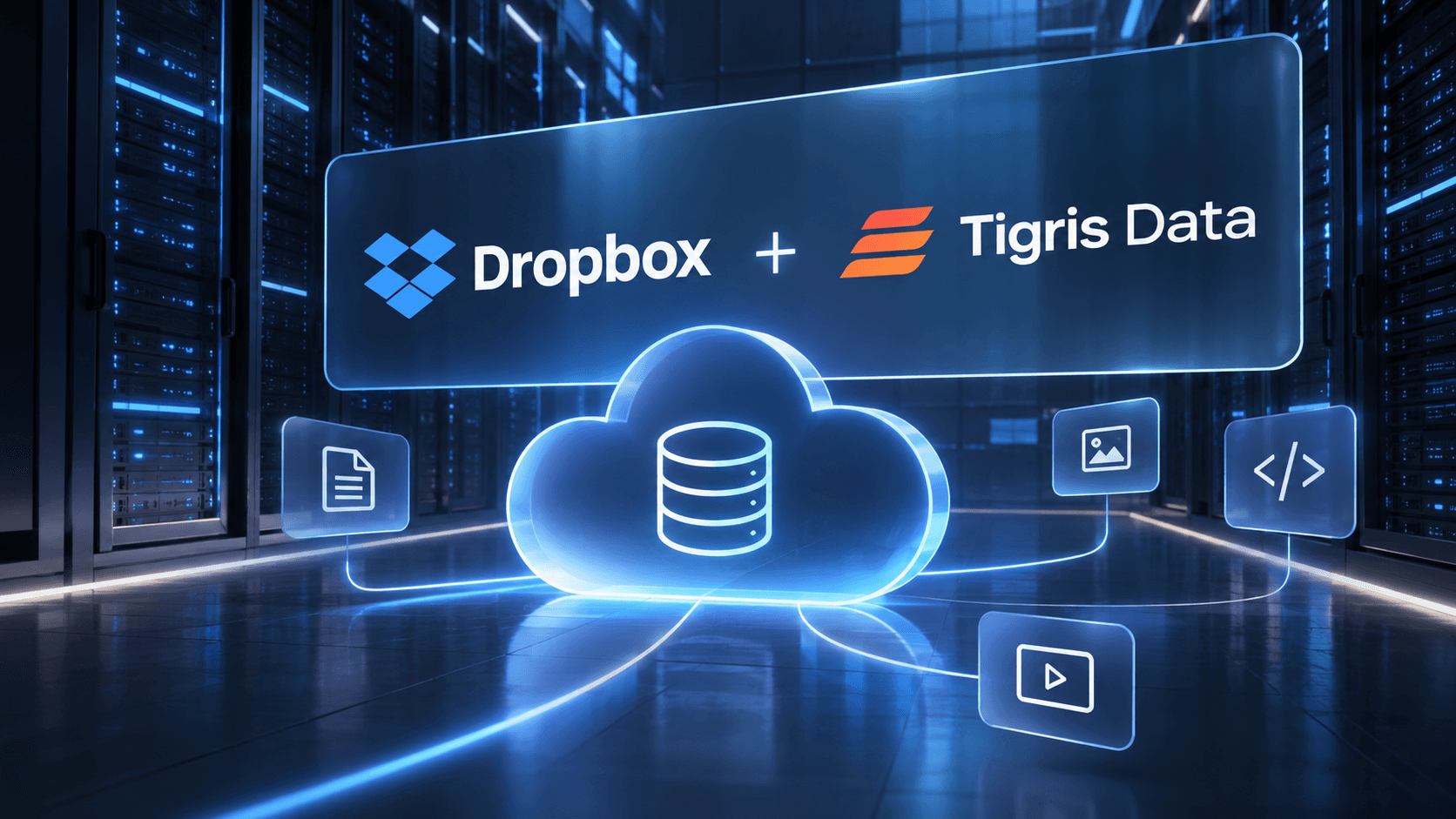
Dropbox will acquire Tigris Data for approximately $350 million, marking a major expansion beyond traditional file storage. The deal will support DBX Agent Cloud, a new infrastructure platform for companies building AI models and agents.
[For more news, click here]
AI infrastructure is no longer a race for GPUs and data centers. Companies are deploying more AI agents, and demand is moving to the data layer, which must deliver faster access to files, context, and memory across increasingly complex workflows. Storage is now an integral component of AI execution.
Dropbox, popularly known for storing files, has spent years trying to change that perception. Its latest acquisition adds to that ambition. The company is expected to acquire Tigris Data, a globally distributed object-storage platform built for AI workloads, for roughly $350 million in cash. The deal, signed on November 3 and announced on November 5, is expected to close in the fourth quarter of 2026, subject to customary conditions. (Dropbox SEC filing)
Simultaneously, Dropbox has also unveiled DBX Agent Cloud, a new storage and data infrastructure platform aimed at developers and businesses building AI applications and agents.
Why Tigris Matters
This acquisition is strategically important for Dropbox, and Tigris is built around distributed object storage. Its platform automatically places data closer to the users and compute resources that need it, helping reduce latency without requiring companies to manually manage copies across different cloud regions. (TechCrunch)
That architecture is increasingly relevant to AI since agents do not work from static prompts alone. They constantly retrieve documents, images, audio, video and other files while completing tasks. The more complex those workflows become, the more important it is for data to be accessible quickly and consistently.
A capable AI model can still perform poorly if the information it needs is slow, fragmented, or difficult to retrieve. That is precisely the infrastructure problem that Dropbox is addressing.
DBX Agent Cloud
DBX Agent Cloud will initially launch with standalone object storage and will be compatible with tools built around Amazon S3, which could make it easier for developers to integrate the service into existing systems. (Dropbox)
Dropbox plans to add more capabilities over time, including infrastructure designed to help AI systems work across documents, images, audio and video. It also wants to introduce filesystem functionality that allows agents to manage files and maintain continuity across tasks and sessions.
This is an important task as AI agents are increasingly expected to operate over longer periods, remember context, move between tools and return to work later. This requires more than model intelligence to process reliably and persistently.
Dropbox Is Rebuilding Its Core Product
Dropbox is redesigning itself and adding more agentic capabilities to its traditional file platform. Users will be able to ask AI to perform supported tasks using their Dropbox content, select between different AI models and connect files to third-party platforms including ChatGPT and Claude. (TechCrunch)
Dropbox says the updated experience has already reached more than 70,000 teams, with eligible Standard and Advanced customers in the US, UK and Australia receiving initial access and wider availability planned for 2027. (Dropbox)
This creates two parallel businesses. One uses AI to make Dropbox more useful to existing customers, and the other makes Dropbox infrastructure useful to companies building AI products of their own. The second opportunity is growing larger as the economy develops.
Much of today’s AI infrastructure is concentrated around a small number of hyperscale cloud providers. Companies typically build on AWS, Microsoft Azure or Google Cloud and rely on their storage and compute services.
Tigris gives Dropbox a way to participate in the AI infrastructure market without trying to recreate an entire public cloud and here it can focus on a narrower problem: high-performance, globally distributed storage designed for AI workloads.
That could appeal to developers who want storage infrastructure that works across regions without tying their entire AI stack to one provider. The fact that DBX Agent Cloud will initially support S3-compatible tooling suggests Dropbox is trying to make that transition relatively low-friction.
Expansion Beyond GPUs
For most of the current AI cycle, conversations have been focused on chips and data centers. AI systems need compute, but they also need storage, networking, data pipelines, observability and governance. Tigris provides Dropbox a path into that layer. For Dropbox, this is a chance to move from being known primarily as a file-storage company to becoming part of the infrastructure that AI systems depend on.
Related Articles
NVIDIA’s DSX POD Could Cut AI Factory Deployment From Six Months to 14 Days
VAST Data and AMD Expand AI Infrastructure Alliance to Tackle the Industry’s Inference Bottleneck
Why Enterprise AI Keeps Stalling on Data Engineering, and How Qlik Is Trying to Fix It