MENA News
DXC and Cisco Aim to Turn Network Insights Into Faster Fixes

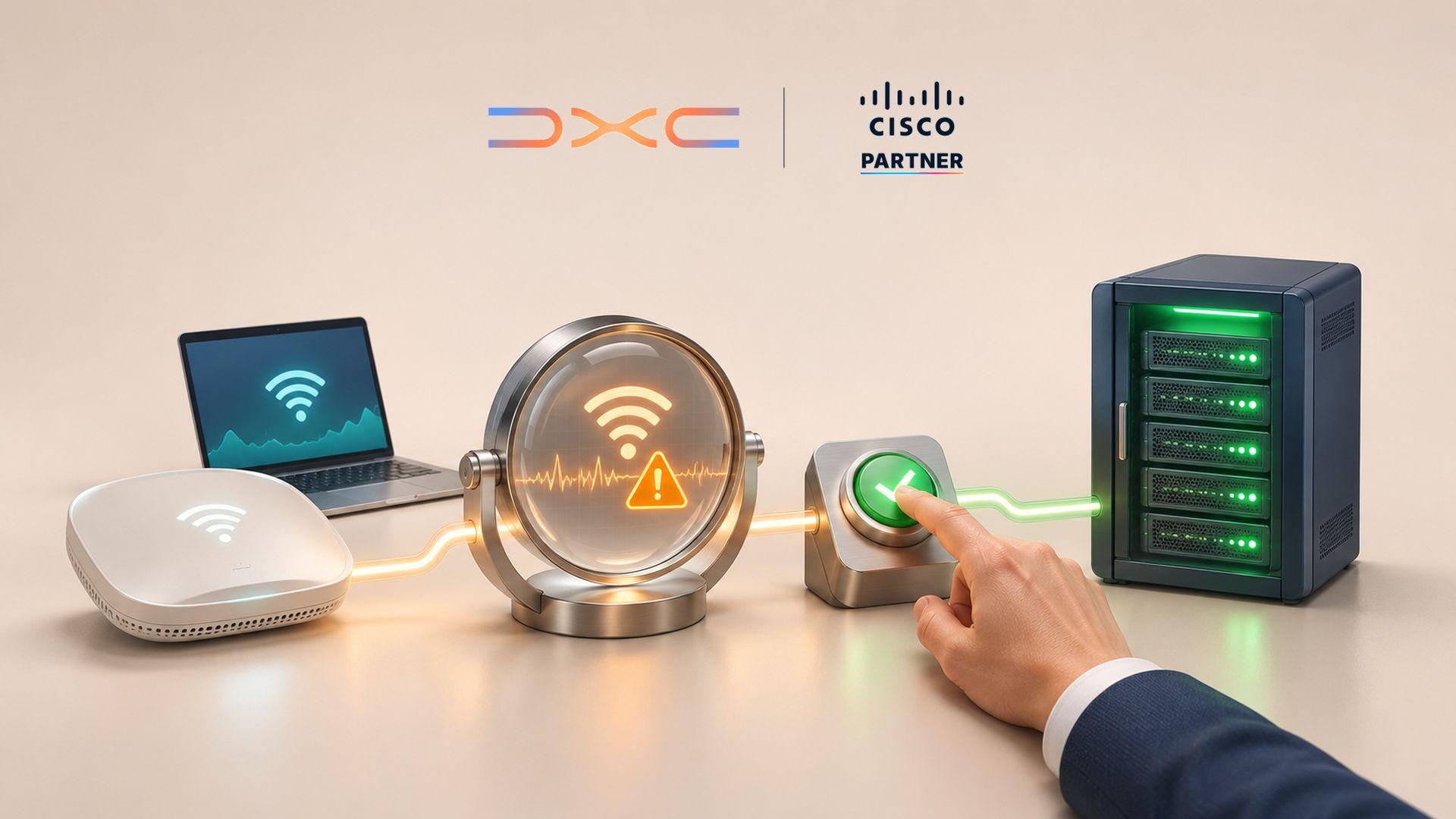
The OASIS integration will start with workplace Wi-Fi in Meraki environments, connecting network investigation with human-approved enterprise responses.
[For more news, click here]
Finding a network fault is only part of restoring an enterprise service. IT teams also need to coordinate the people, applications and infrastructure involved in fixing it.
DXC Technology and Cisco outlined plans to integrate Cisco’s AgenticOps capabilities into DXC OASIS. The effort will focus on workplace Wi-Fi performance incidents in Meraki environments, linking network investigation with approved responses across enterprise systems. (announcement)
OASIS is DXC’s platform for coordinating IT operations across existing tools and environments. Cisco will contribute network intelligence and investigation capabilities, while DXC aims to connect that evidence with service management, applications and infrastructure workflows. Human oversight, approval controls and change tracking remain part of the approach.
From network evidence to approved action
The collaboration brings together Cisco AI Assistant, Experience Metrics and platform-native actions with DXC’s operational expertise. The objective is to help teams identify the cause of a problem, organize a response and spot emerging service issues earlier through continuous monitoring.
Experience Metrics gives that investigation a practical starting point: how well people and devices can use the network. In a product update, Cisco said the capability had become generally available in Meraki Dashboard. For wireless connections, it covers successful connections, time to connect, channel availability and coverage. This helps teams prioritize problems by their effect on users.
The link to broader workflows matters because evidence from a network platform still has to reach the teams and systems responsible for restoring service. DXC’s role is to coordinate that work, allowing investigation to draw on the enterprise’s wider operational context.
Dan Gray, president of Global Infrastructure Services at DXC Technology, said:
“Enterprise teams don’t need more alerts. They need faster paths to resolution.”
The integration also uses Model Context Protocol, or MCP, tools to connect AI systems with operational information. Cisco announced general availability of its Meraki and Catalyst Center MCP servers earlier in November, supporting uses such as ticket triage, wireless investigations and reporting.
Extending an existing operations platform
The Cisco effort builds on DXC’s existing agentic operations work. In October, DXC announced a partnership with LangChain to advance OASIS, which uses LangGraph to coordinate agents and LangSmith to evaluate and observe their behavior. DXC said OASIS was already in production and scaling toward 125 customer environments.
That earlier work provides a foundation for connecting specialized network capabilities with enterprise operations. It also puts the emphasis on how agents are managed: their access to customer context, the authority they receive and the points where human judgment is required. Sensitive actions can pause for human approval, with decisions, tool calls and outcomes traced so operators can review how a response was reached.
DXC cited a broader agentic AI pilot in which incident resolution fell from one to two hours to five to seven minutes. The company presented that result as evidence of its wider approach, without identifying it as a measured outcome of the Cisco integration.
The wider market is also moving toward investigations that span connected systems. AWS’s March launch of DevOps Agent brought monitoring data, application code and deployment records into incident analysis across cloud and on-premises environments. That approach reflects the importance of giving AI tools evidence from the systems involved in a disruption.
Starting with Meraki, the companies aim to establish a model that can extend to additional Cisco technologies. Its practical value will depend on how effectively network evidence, approved actions and enterprise workflows work together. For businesses, the opportunity is less time lost between identifying a service problem and getting the right response underway.