MENA News
Major Healthcare Updates from the UAE: Lunit and M42 explore Early Lung Cancer detection using AI

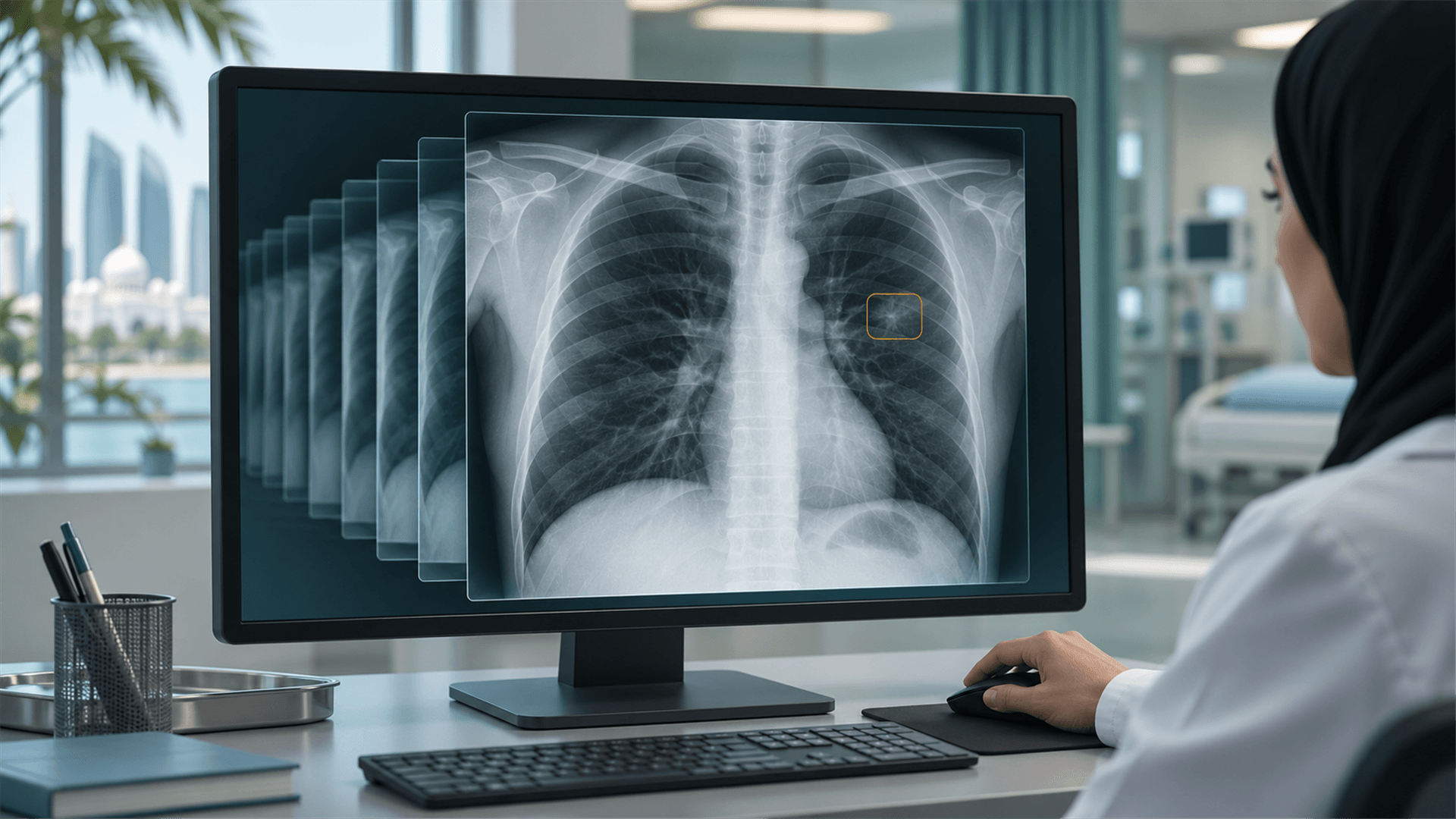
The partners want to find overlooked warning signs in existing X-rays, with M42 to submit a proposed program to Abu Dhabi’s health authorities.
[For more news, click here]
Abu Dhabi is building AI into everyday healthcare through its connected patient records. An AI physician assistant is already available through Malaffi to help doctors retrieve medical histories. Lunit and M42’s proposed lung-cancer initiative extends that work to reviewing X-rays, creating another opportunity to identify overlooked warning signs.
Abu Dhabi-based healthcare group M42 and South Korean medical AI company Lunit have agreed to develop an AI-powered lung-cancer early-detection initiative. The partners would use Malaffi, Abu Dhabi’s health information exchange.
The November 23 announcement describes a proposed program. M42 will prepare and submit it to the Department of Health Abu Dhabi (DoH) and the Abu Dhabi Public Health Center (ADPHC).
The partners want to apply Lunit INSIGHT CXR to previously captured chest X-rays, looking for suspicious findings that may have gone undetected. The aim is to identify people who could benefit from further clinical evaluation. Lunit will provide technical expertise and support deployment and integration.
“Medical AI has the potential to create new clinical value from imaging data that healthcare systems already possess,” said Brandon Suh, CEO of Lunit.
Putting connected records to work
Malaffi is operated by M42’s Abu Dhabi Health Data Services (ADHDS). Its November progress report lists 3,144 connected facilities, 14 million unique patients and 4.5 billion clinical records. Those records span multiple types of healthcare information. They say access is restricted to trained, authorized healthcare professionals and care teams, with user activity logged.
DoH and ADHDS announced the physician assistant on November 10. The lung-cancer proposal would add a different clinical application to Malaffi: reviewing existing images for potentially overlooked findings.
The agreement also follows Lunit’s announcement that it would supply chest X-ray and mammography AI to Saudi Arabia’s Ministry of National Guard Health Affairs. Under that project, solutions by stc will act as systems integrator, embedding the tools in the health system’s existing medical imaging workflow.
Together, the announcements show Lunit pursuing both hospital-workflow integration and broader health-network applications.
Lunit also has an established UAE relationship. In March 2025, it announced a five-year agreement to deploy mammography AI across SEHA’s network, following a proof-of-concept evaluation begun in 2022. The M42 collaboration would extend its regional activity into a different early-detection approach.
From an image finding to patient care
Reviewing archived X-rays is distinct from established lung-cancer screening. ADPHC identifies low-dose CT as the approved screening test for people at high risk. Suspicious findings still require further investigation. The proposed AI review could provide an additional route to clinical assessment. Its role alongside the existing screening pathway would need to be defined.
There is relevant evidence for Lunit’s technology. A 2023 randomized trial involving 10,476 health-check participants found actionable lung nodules in 0.59% of the AI-assisted group, compared with 0.25% without AI assistance. Radiologists interpreted the X-rays, with CT used to confirm actionable findings. That result supports potential detection value, while leaving the performance of the proposed Abu Dhabi program to be established.
The announcement does not specify the eligible image volume, implementation timetable or arrangements for contacting patients and managing referrals. Those details will determine how a flagged image becomes a completed clinical assessment.
For Abu Dhabi, the opportunity is to extract additional clinical value from an existing health-data network. Delivering that value would require reliable image analysis to be connected with clinical review, patient contact and access to follow-up care.