Deep Tech
Europe's €50B tech fund confronts the limits of digital sovereignty

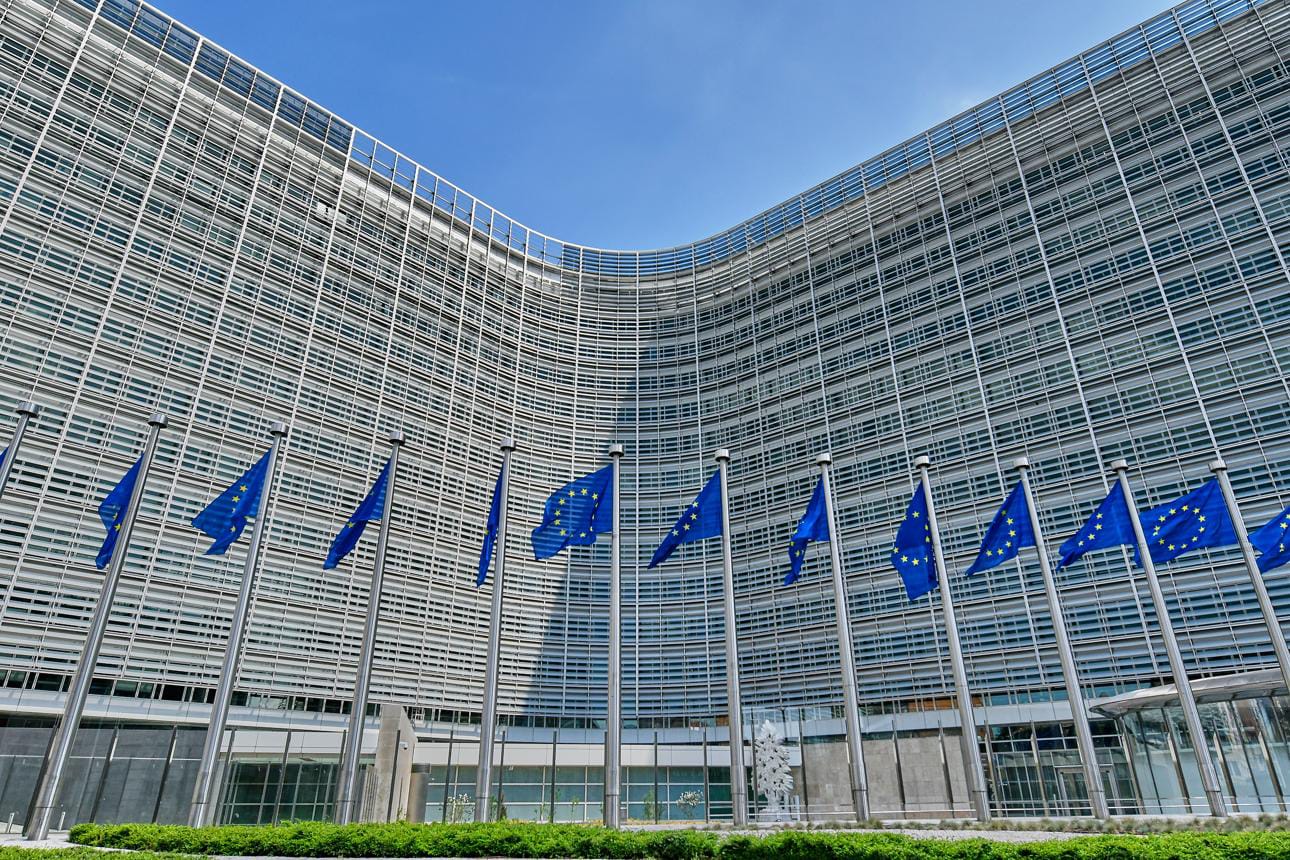
Europe's proposed €50 billion fund could help its AI and quantum companies scale, but foreign cloud dominance and weak private financing complicate its sovereignty ambitions.
[For more news, click here]
European public funding for quantum technology reached €8.6 billion in 2025, exceeding the €5.3 billion reported for the United States. Yet Europe's private quantum investment stood at just €1.1 billion, compared with €7 billion in the US, according to Reuters. Research strength and government support do not automatically produce globally competitive businesses.
The European Commission proposed a Quantum Act and laid the groundwork for a Sovereign Tech Equity Fund targeting up to €50 billion. The fund would back AI, quantum and other critical technologies, while the legislation addresses industrial capacity and procurement. The €50 billion remains a target, not approved funding. The bigger test is whether Europe can turn that capital into companies, infrastructure and technological capabilities it can control over the long term.
Europe's problem is scaling companies, not finding ideas
Around one-third of the world's quantum companies are based in the European Union, according to the Commission. But turning research into major suppliers requires patient capital, manufacturing and customers.
Instead of grants or small startup investments, the proposed Sovereign Tech Equity Fund would make larger, longer-term equity investments, potentially alongside the European Investment Bank, national governments and private investors. Equity stakes would not guarantee control of supply chains.
The funding shortage extends well beyond quantum computing. A 2026 European Central Bank analysis estimated that US-based venture capital funds held about €930 billion in total assets, compared with roughly €150 billion for EU-based funds. This imbalance can make it harder for European firms to finance expensive expansion rounds without turning to overseas investors or buyers.
As Tech Revolt previously explored in its coverage of Berlin's sovereign AI ecosystem, Europe is trying to connect startups, investors and industrial partners. The challenge is whether those networks can consistently finance companies past the research and pilot stages.
For the proposed fund, success should therefore be measured less by the amount announced than by whether companies build commercially competitive products, retain strategic expertise and secure long-term customers.
€50 billion cannot replace Europe's existing technology stack
The dependence Brussels wants to reduce is already embedded in everyday operations. Synergy Research Group estimates that Amazon, Microsoft and Google control about 70% of Europe's cloud infrastructure services market, while European providers collectively hold around 15%. Moving critical workloads can take years.
A fund supporting domestic AI companies cannot immediately replace the foreign cloud platforms, advanced chips, software ecosystems and development tools those companies may still use. Even an AI model trained or hosted in Europe can depend on imported processors, external software and technology subject to another country's rules.
Tech Revolt previously covered France's plan to move government computers away from Microsoft systems, illustrating how dependence on foreign software has become a practical public-sector issue rather than only a debate about data location. However, complete technological self-sufficiency is neither a realistic short-term goal nor the only way to improve resilience. Governments can protect sensitive workloads, diversify vendors, retain control over encryption keys and require contractual exit rights while continuing to work with international suppliers.
The scale of Europe's cloud market also puts the headline fund value in perspective. €50 billion shared across AI, quantum and other strategic technologies would be substantial support for selected companies, but it would not automatically reverse decades of infrastructure investment or market concentration.
Quantum procurement may prove as important as investment
The European Commission's proposed Quantum Act outlines a broader strategy than funding alone. It would coordinate research, help companies test and commercialize products, strengthen supply chains and prepare digital systems for post-quantum cryptography. Together, these measures aim to support the path from scientific discovery to commercial adoption.
The proposed procurement rules would restrict participation in certain sensitive quantum contracts to EU-controlled providers and eligible international partners, rather than imposing a blanket ban on all foreign components. That distinction matters because public purchasing can provide the early customers that emerging European suppliers need, while excessive restrictions could reduce competition or limit access to more mature technology.
Commercial readiness is another constraint. Quantum systems have potential applications in advanced materials, secure communications and scientific computing, but many promised advantages remain experimental. Europe must avoid confusing research leadership with proven industrial deployment.
As Thierry Carrez of the OpenInfra Foundation discussed in a Tech Revolt interview on Europe's digital sovereignty, resilience also depends on open infrastructure, interoperability and the ability to operate systems without being tied to one supplier. Those principles apply whether the technology is cloud computing today or quantum services in the future.
For the Gulf, the debate has a parallel. As Tech Revolt's reporting on AI ownership and US technology rules has shown, financing or hosting critical systems domestically does not necessarily remove foreign dependencies. Europe faces the same distinction on a different scale: owning a technology company is not equivalent to controlling every component it needs.
Ultimately, the strongest indicators of progress will be European companies reaching industrial scale, customers adopting their systems, public institutions retaining operational control and suppliers remaining replaceable. The proposed €50 billion fund could finance part of that transition, but its impact will depend on how the money is deployed and whether regulation, procurement and private investment reinforce it.
Europe's goal is not simply to spend enough to compete with the US and China. It is to ensure that when strategic technologies become essential, European governments and businesses still have credible choices over who supplies and controls them.
Related Articles
Exclusive: Emma Cloney Says Europe's Sovereign AI Push Is No Longer Theoretical