Deep Tech
AMD Plans PsiQuantum Investment to Scale Quantum Computing

The expanded partnership targets the conventional computing behind quantum machines, combining infrastructure development with an initial focus on drug discovery.
[For more news, click here]
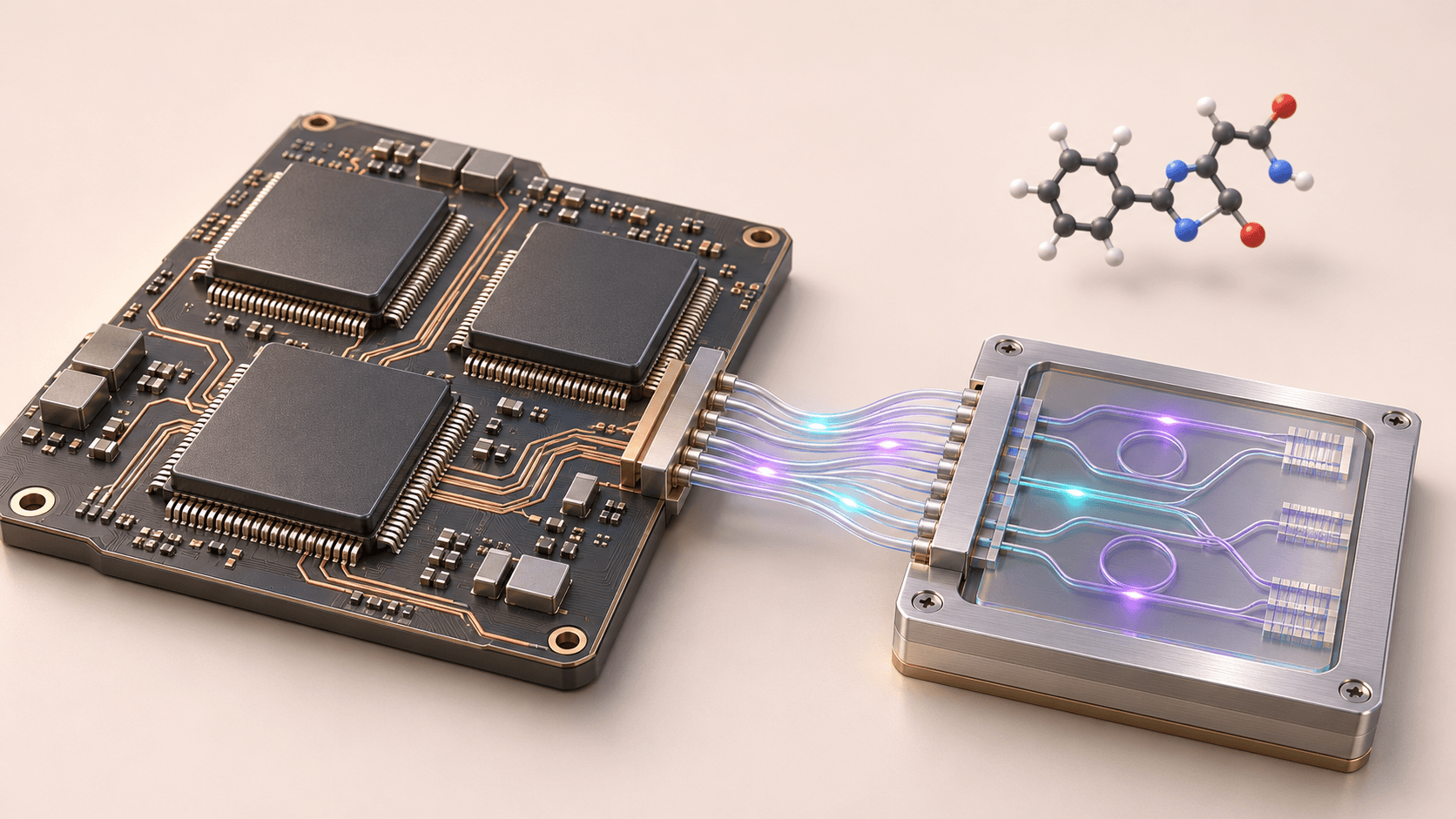
Concept illustration of classical and photonic computing supporting drug research. Image: Tech Revolt, AI-generated.
Useful quantum computing depends on more than the quantum processor. Conventional computers must coordinate calculations, interpret error signals and support the scientific work.
That supporting infrastructure is central to AMD's expanded partnership with PsiQuantum. AMD also plans an equity investment in the company, which develops photonic quantum computers. The plan, reported by Reuters, extends an existing technology relationship between the companies.
Building the systems around the processor
PsiQuantum's approach uses silicon photonics to build quantum systems around light. Its chips draw on established semiconductor manufacturing, while using optical fiber that connects modules. The aim is to assemble larger machines from components that can be manufactured and linked at scale.
The collaboration expands existing work with Versal programmable chips to include Instinct GPUs, EPYC CPUs and ROCm software. These are intended to support future fault-tolerant quantum systems, which use error correction to protect their calculations.
Those conventional chips perform different jobs. AMD describes CPUs as coordinators of hybrid computing systems, while GPUs accelerate simulations and other parallel calculations. Programmable chips handle tasks requiring rapid responses, including control and error decoding. Designing these parts together could help quantum processors work within larger scientific computing environments.
AMD chief technology officer and executive vice president Mark Papermaster said in the announcement:
“We see that same opportunity with quantum computing, where leadership in classical computing is essential to building systems at scale.”
Drug research and error correction
Drug discovery is an initial focus. The companies say their work is helping researchers model molecules used in cancer drug research. These early results come from conventional computers running AMD hardware. Separate research posted to arXiv focuses on making quantum calculations more reliable. Researchers developed an AI-based tool called PRISM to help identify errors when particles of light are lost. Catching these errors quickly is important because they can affect the results of a calculation.
The researchers designed the tool to work on an AMD chip. Their work shows how conventional computing could help support a quantum machine. The complete tool still needs to be shown working at that speed, with further development needed for larger systems.
The Department of Energy's quantum priorities call for scientific applications to be benchmarked against advanced supercomputing methods. Chemistry and materials are defined priority areas, while biochemistry is an emerging quantum application area. This provides a relevant test for the partnership's ambitions: better results on meaningful research problems.
A broader quantum infrastructure strategy
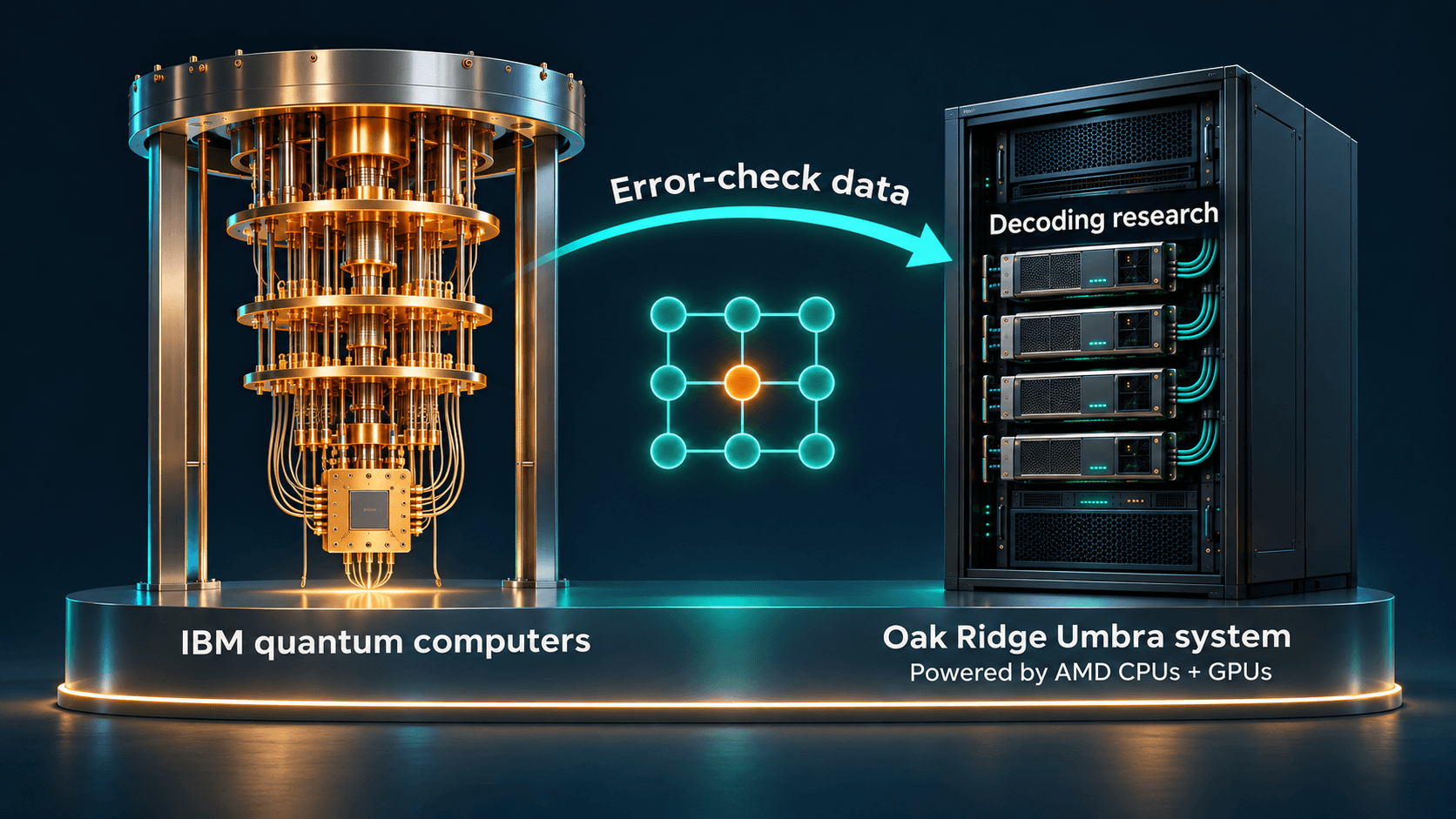
AMD is pursuing similar integration elsewhere. It outlined work with IBM and Oak Ridge National Laboratory on a shared platform for quantum error-correction research. That effort combines quantum processors with AMD-powered conventional computing, reinforcing the company's role in the systems surrounding quantum hardware.
PsiQuantum also has established financial and industry backing. The Commerce Department finalized an award of up to $100 million in September to address photonic computing and manufacturing challenges. This followed the preliminary funding plans announced in May.
They raised $1 billion at a $7 billion valuation in their 2025 series E funding. NVIDIA's venture arm participated, alongside a separate technology collaboration. The companies plan to share more at SC26 in Chicago, running November 15 to 20. For AMD, the opportunity is to supply more of the computing needed around quantum systems. For researchers, the potential lies in connecting specialized quantum capabilities with established tools. That will matter commercially if the combined systems can produce reliable results on useful scientific problems.