Deep Tech
GITEX World RobotiX to showcase humanoids and embodied AI in Dubai

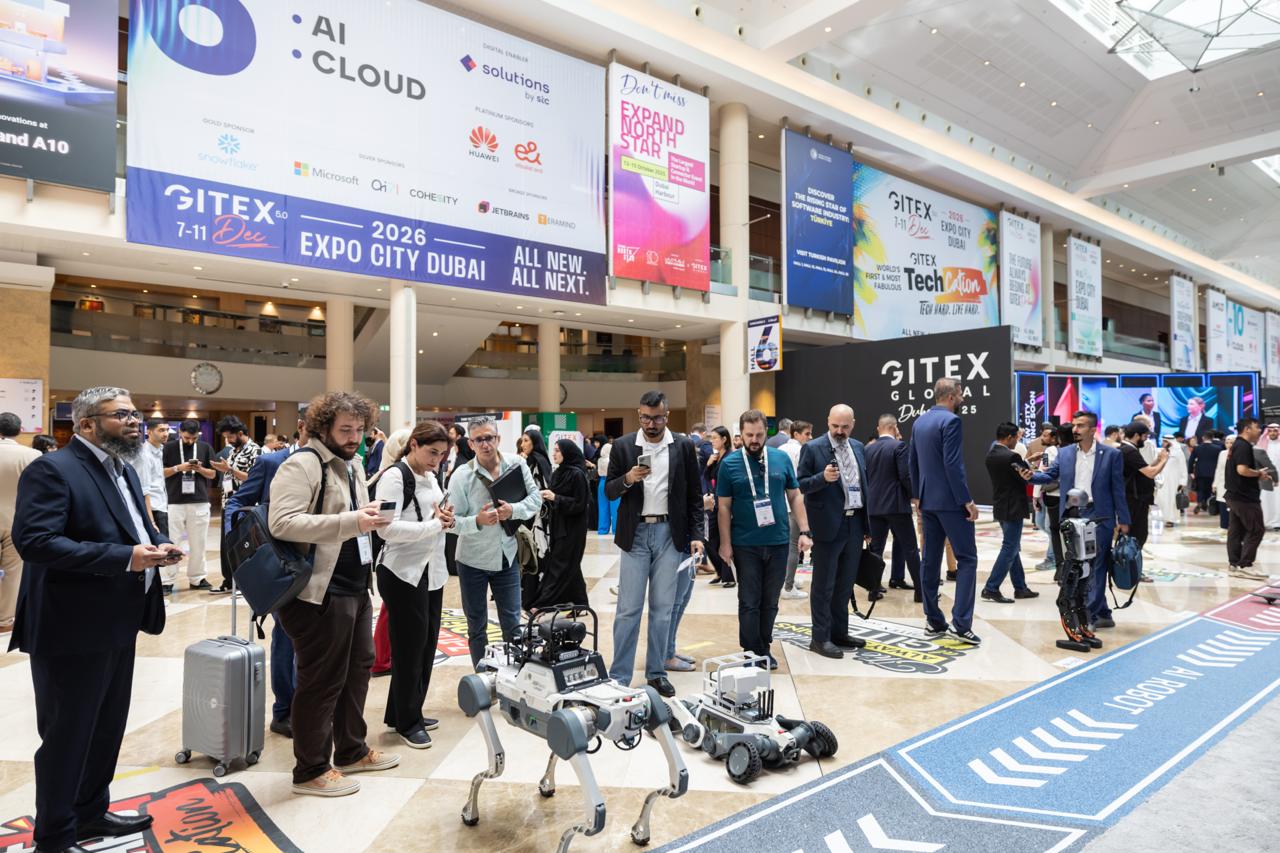
GITEX GLOBAL will introduce World RobotiX in Dubai this December, featuring industrial humanoids, autonomous machines and new robotics technologies as companies explore wider commercial adoption.
(For more news, click here)
Advances in artificial intelligence are improving machines' ability to interpret their surroundings and perform complex tasks, but reliability, operating costs, and integration into existing workplaces remain major barriers to widespread deployment.
Dubai will bring these developments into focus when GITEX World RobotiX, a new showcase within GITEX GLOBAL 2026, takes place from December 8 to 11 at Dubai Exhibition Centre, Expo City Dubai. The event will feature humanoid robots, autonomous industrial systems, service robots and the computing technologies supporting embodied AI.
The exhibition comes amid rapid growth in the humanoid robotics market. According to Counterpoint Research, global shipments exceeded 22,000 units during the first half of 2026, an increase of nearly 300% from a year earlier. The research firm expects annual shipments to surpass 50,000 units, although entertainment and research applications still account for much of the market.
Industrial robots move closer to commercial deployment
Chinese robotics manufacturer Unitree will participate in the exhibition alongside UBTECH, AiMOGA, DEEP Robotics and UAE-based Micropolis Robotics. Unitree accounted for approximately 31% of global humanoid shipments during the first half of 2026, according to Counterpoint Research, while UBTECH has been deploying humanoid systems in automotive manufacturing environments.
One of the event's regional debuts will be MOS 2, a wheeled dual-arm robot developed by China's Lumos Robotics. Designed for industrial work, the system can reportedly handle payloads of up to 50 kilograms and operate for more than eight hours.
Lumos says an earlier generation of its MOS robots completed more than 1,000 hours of continuous operation at Mitsubishi Electric's Changshu factory, performing material handling, quality inspection and screwdriving. These performance figures are company-reported rather than independently verified results.
"Our demonstrations are designed to show the philosophy behind our products: robots need to do more than move. They need to perform useful tasks reliably in real environments," said Cecile Wei, PR Director at Lumos Robotics.
The company will also demonstrate its NIX S3 robot, designed for agile movement and dynamic performances. Meanwhile, UAE-based Mangobot plans to present autonomous patrol systems, multilingual robotic receptionists and wearable exoskeletons, offering demonstrations of how robots could support human workers.
Lootah Robotics will exhibit humanoid, quadruped, cleaning and telepresence robots from several manufacturers, including Unitree, AGIBOT, Pudu Robotics and EngineAI.
Humanoid robots expand into public-facing services
Beyond industrial applications, the exhibition will introduce robots designed to interact directly with consumers.
Chinese company Light Origins plans the first public demonstration of its bunny-shaped robot, which is being developed for household applications. Raydiculous, from the Chengdu Humanoid Robot Innovation Centre, will make its Middle East debut with TP01, a humanoid capable of communicating in Arabic and English, alongside DINOBOT, a walking robotic dinosaur designed for interactive experiences.
These demonstrations reflect the expanding range of potential robotics applications, although a public demonstration does not necessarily indicate that a system is ready for widespread commercial deployment.
UAE-based Besomi will also introduce six humanoid and mobile robots under its Besomi Rangers initiative. Its exhibition area will include a Robotics & AI Lab, where visitors can explore programming and engineering through hardware developed with technology partners including Arduino and Qualcomm.
AI computing becomes central to robotics development
The exhibition will also highlight the computing systems that allow robots to process information and make decisions without relying entirely on remote infrastructure.
Chinese technology company JWIPC plans to launch robotics controllers built on NVIDIA's Thor module, designed to support real-time AI processing in humanoids, robotic arms and autonomous mobile robots.
Songying Technology will demonstrate ORCA OS and ORCA Lab, software environments connecting simulation, synthetic data generation, training and deployment. Taiwan-based Vecow will introduce industrial edge AI platforms and expand its regional presence through a dedicated UAE team.
The focus on hardware and software infrastructure reflects a wider challenge for robotics developers: making sophisticated AI models operate reliably on physical machines with limited power, processing capacity and response time.
Dubai is also pursuing longer-term robotics adoption through its Robotics and Automation Program, which targets the deployment of 200,000 robots by 2032 across sectors including manufacturing, logistics and services.
GITEX GLOBAL 2026 will begin with a summit at Dubai World Trade Centre on December 7, followed by the main exhibition at Expo City Dubai. For the robotics industry, the upcoming demonstrations offer an opportunity to assess how quickly embodied AI is progressing from technical capability toward dependable, commercially useful systems.