AI
Google brings Gemini 4 Hydrogen to Search with smarter answers and visual results


Google is rolling out Gemini 4 Hydrogen across Search worldwide, introducing improved understanding of complex questions, more relevant website links and visual responses powered by artificial intelligence.
[For more news, click here]
People are increasingly turning to search engines for detailed answers rather than simply looking for a list of websites. This shift is changing how search engines process information and present results, with artificial intelligence taking on a larger role in the experience.
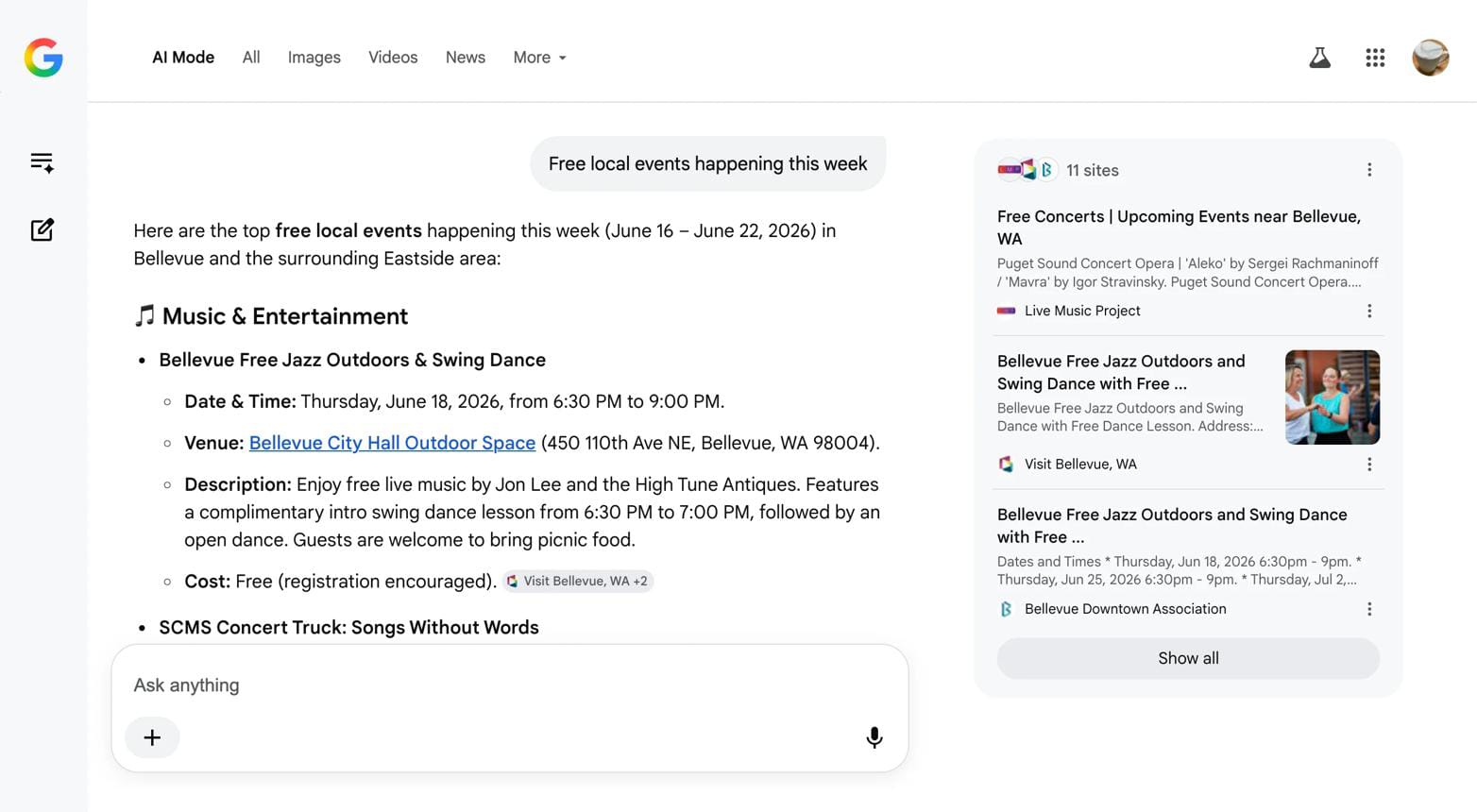
Google announced it is bringing Gemini 4 Hydrogen to Google Search globally, introducing improvements designed to help users explore complex topics and receive more detailed, visually organized answers. The model is becoming the default in Google's AI Mode and will also support AI Overviews for particularly difficult questions. The update focuses on understanding user intent, finding relevant information across multiple sources and presenting results through images, comparison tables and interactive tools.
Robby Stein, Vice President of Product at Google Search, described Hydrogen as "the biggest model upgrade to Search yet."
Better understanding of complex search queries
Instead of requiring users to separate their requests into several searches, Gemini 4 Hydrogen is designed to understand the different parts of a question and generate a response that addresses them together.
For example, someone searching for a new laptop could specify a budget, preferred specifications, battery requirements and intended use in a single request. The system can interpret those conditions and organize the information into a comparison rather than relying entirely on a conventional list of search results.
Google says the model's stronger reasoning and instruction-following capabilities help it identify what users are trying to accomplish, even when their questions are not clearly structured. The improvements extend across the languages currently supported by AI Mode, allowing more users to ask detailed questions in their preferred language.
Connecting users to more relevant websites
Gemini 4 Hydrogen also improves Google's existing query fan-out technology, which breaks complex questions into smaller topics and runs multiple searches to gather relevant information.
The technique was already part of Google's AI Mode, but the company says Hydrogen can use more advanced reasoning to explore related subjects and identify websites that users might not discover through a single search.
Google is also expanding how information appears in AI-powered results. Instead of relying mainly on written explanations, responses can include images, structured information, comparison tables and tools adapted to the question being asked.
These changes are particularly relevant for searches involving product comparisons, travel planning and research, where users often need to examine several options before making a decision.
However, the company has not released independent measurements showing how much the update improves search accuracy or increases traffic to external websites. The benefits described so far are based primarily on Google's own product assessments.
What the update means for online search
The introduction of Hydrogen comes as AI-generated responses continue to change how people interact with search engines and the websites that provide information.
While Google says its improved query fan-out system will help users discover a wider range of sources, publishers remain concerned that detailed AI-generated answers could reduce the need to visit individual websites.
A 2025 Pew Research Center study found that users clicked on traditional search results in 8% of visits when an AI summary appeared, compared with 15% of visits without one. Only 1% of visits involving AI summaries resulted in a click on a link within the summary itself.
Those findings predate Gemini 4 Hydrogen and do not establish how the new model will affect website traffic. They nevertheless highlight the challenge Google faces in balancing more complete AI-generated answers with its role in directing users to information across the web.
Hydrogen is also being introduced across other Google products, including the Gemini app, Google AI Studio and developer APIs. According to Google DeepMind, the model is designed to deliver faster responses and more efficient execution across everyday and more complex AI workflows.
For Search users, the immediate change is a more conversational and visual way to explore information. The broader question is whether increasingly capable AI answers can improve the search experience while continuing to support the websites that supply much of the information behind them.