Technology
SpaceX's Million-Satellite Plan Could Reshape the Future of Space Technology

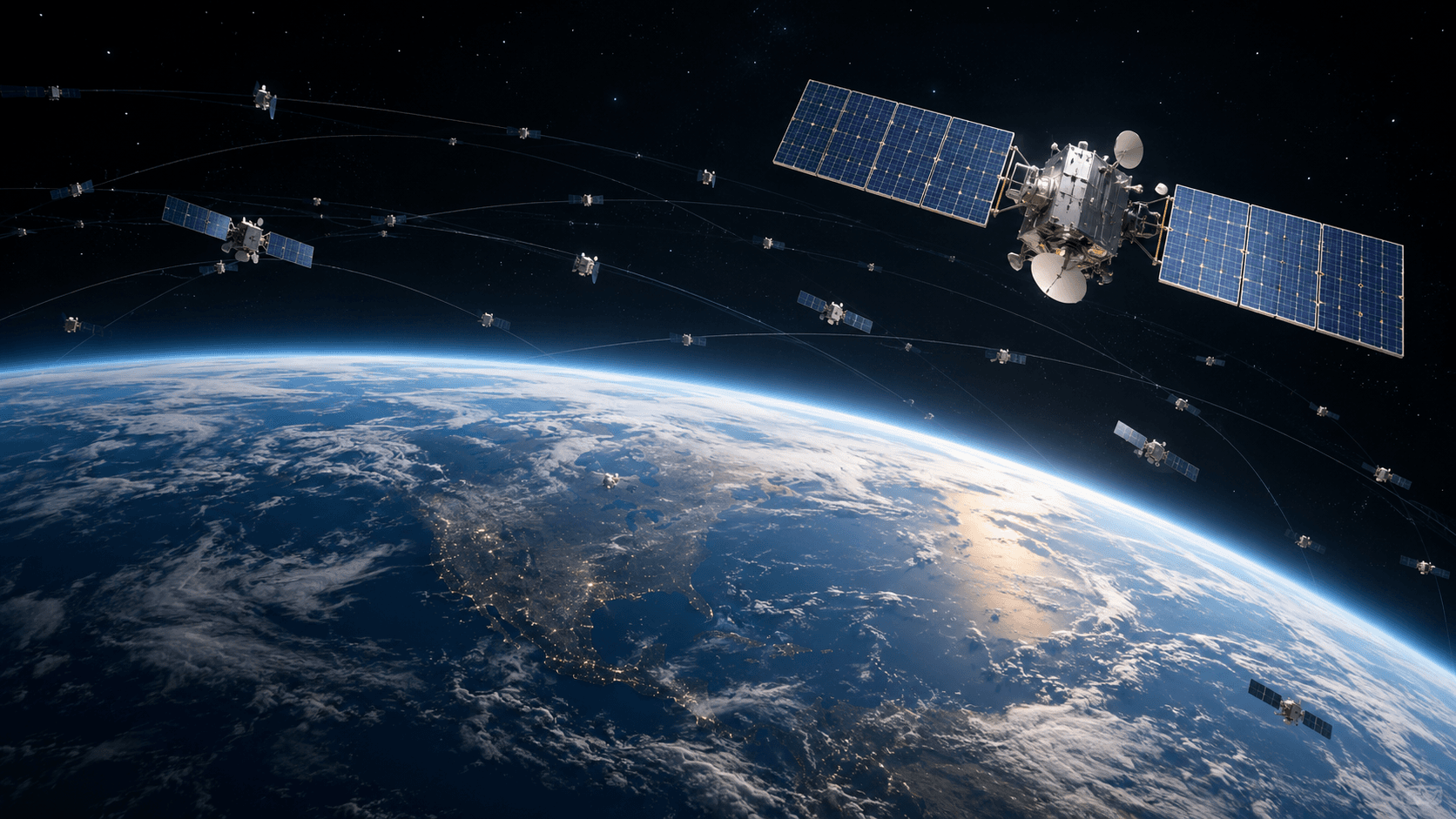
The FCC's approval of the proposed Starmind constellation gives SpaceX permission to pursue orbital data centers, adding computing to its existing launch and satellite businesses as technology companies explore alternatives for meeting growing AI demand.
[For more news, click here]
SpaceX has received authorization from the US Federal Communications Commission (FCC) to deploy up to one million satellites designed to operate as orbital data centers. Its proposed Starmind constellation would carry computing hardware into low Earth orbit, where satellites would use solar power and optical links to process data for use on Earth. The approval gives SpaceX a route into a new area of technology infrastructure, building on its existing launch operations and Starlink satellite network.
Already operating a major launch business and one of the world's largest satellite communications networks, SpaceX has two important parts of the proposed system in place. Adding computing capacity could allow the company to offer launch, connectivity and processing services within the same business, potentially giving it an advantage as AI developers and cloud providers look for additional computing resources. However, SpaceX has yet to demonstrate that orbital data centers can operate at a cost that makes them commercially attractive compared with facilities on Earth.
What the FCC Has Approved
Under its November 25, 2026, order, the FCC authorized SpaceX to deploy up to one million non-geostationary satellites at altitudes between 500 and 1,002 kilometers. Optical inter-satellite links, which use lasers to transfer data between spacecraft, will handle the constellation's primary communications. The commission also authorized Ka-band radiofrequency communications for limited backup and emergency telemetry, tracking and command operations.
SpaceX must place at least one operational satellite in its assigned orbit by November 25, 2033, followed by 10% of the approved constellation, or 100,000 satellites, by November 2035. Deployment must reach 50% by November 2038, with the remaining satellites scheduled to follow by November 2040. The 15-year license period begins once the first satellite is certified as operational.
Objections from Amazon's Kuiper Systems, Viasat and the American Astronomical Society focused on radiofrequency interference, orbital congestion, satellite disposal and the effects of large constellations on astronomical observations. The FCC granted SpaceX's application with conditions but did not resolve every concern raised during the review. Its decision also deferred SpaceX's request for flexibility over alternative disposal methods, requiring further information before satellites can use disposal arrangements other than atmospheric reentry.
The Economics of Computing in Space
Growing demand for AI computing has increased pressure on electricity supplies and the infrastructure needed to support large data centers. Developers are facing difficulties securing grid connections and suitable sites, while the cost of powering and cooling computing facilities continues to attract attention. SpaceX argues that solar-powered satellites could draw on sunlight in orbit, reducing their dependence on conventional electricity supplies.
Its developing Starship launch system is expected to play an important role in making deployment more affordable by carrying large amounts of computing hardware into orbit. Each satellite, however, will need processors, power systems, communications equipment and thermal management hardware. SpaceX's proposed designs include deployable liquid radiators to remove heat generated by computing systems, while optical links would allow satellites to exchange data across the network.
Operating in space introduces costs that terrestrial data center operators do not face to the same extent. Electronic components need protection against radiation, equipment must withstand temperature changes and hardware cannot be serviced as easily as it can on Earth. Replacing damaged processors or entire satellites could become expensive, particularly if the network requires frequent maintenance. Data transmission between satellites and ground stations will also affect which computing applications are practical.
Other Companies Are Exploring the Same Idea
Google has been developing Project Suncatcher, a research program examining whether its AI processors can operate aboard solar-powered satellites connected through optical links. In October 2026, the company put four of its Tensor Processing Units (TPUs) into orbit aboard a satellite built with Planet Labs. The mission is intended to test how the processors perform in space rather than demonstrate a commercially operational data center.
Blue Origin has separately filed an FCC application for Project Sunrise, a proposed constellation of 51,600 satellites, while Starcloud has sought authorization for a network of 88,000 satellites. Their proposals indicate growing interest in orbital computing, although the projects are at different stages of development and none has established a commercial network comparable to terrestrial data centers.
SpaceX's launch capabilities and Starlink network could help it deploy and connect its computing satellites without relying entirely on outside operators. Even so, potential customers will need to know which workloads can realistically be moved into orbit. Applications requiring constant communication and very low response times may face limitations, while workloads that can tolerate delays could be more suitable. SpaceX has not yet detailed its customer offering or explained how it intends to price access to the proposed computing capacity.
The FCC's decision gives SpaceX permission to pursue one of the largest proposed satellite networks in the commercial space industry, with the first operational satellite due by November 2033. Whether the company can meet its deployment milestones, manage the costs and attract customers will determine how significant a role orbital data centers eventually play in the AI computing market.
Related Articles
Google Puts AI Chips in Orbit to Test a New Kind of Data Center
SpaceX Plans $74 Billion AI Data Center Push as Compute Moves Closer to Power
SpaceX Secures $40 Billion in Debt as AI Infrastructure Spending Surges